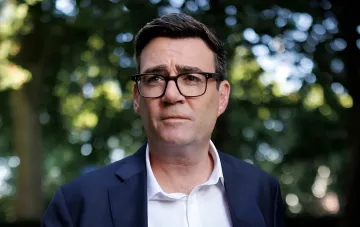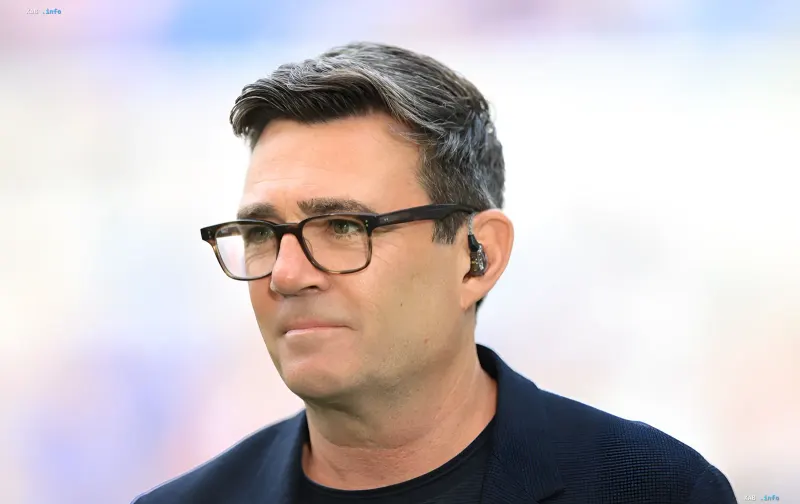
Major changes are brewing in British politics. Andy Burnham has officially taken the helm of the UK Labour Party and is set to assume the office of Prime Minister in the near future. This change of power comes against the backdrop of his predecessor, Keir Starmer, failing to implement necessary reforms in key areas of the country's life during his two years in office. Burnham is expected to revitalize the Labour Party's image and restore voter confidence.
From Liverpool to London: The Path to Power
Andy Burnham is no stranger to high politics, although in recent years he has been best known as the Mayor of Greater Manchester. Hailing from industrial Liverpool, he comes from a middle-class family. His Irish roots played a significant role in shaping his worldview: Burnham attended state Catholic schools, which, according to his own words, significantly influenced his views.
The politician received his higher education at Cambridge University, where he studied English literature. He began his career within the Labour Party, rising from a Member of Parliament's assistant to an advisor to the Minister of Culture. In 2001, Burnham was first elected to Parliament and subsequently joined the government teams of Tony Blair and Gordon Brown. Over the years of service, he held high posts: Chief Secretary to the Treasury, Secretary of State for Culture, Media and Sport, and Secretary of State for Health.
Following Labour's defeat in the 2010 elections, Burnham twice attempted to become the party leader but failed both times. In 2017, he shifted focus to regional politics and became the Mayor of Greater Manchester. This position allowed him to distance himself from the party's failures at the national level and build a reputation as an effective regional leader. It was this success that became the key factor in his return to high politics.
"King of the North" and His Program
In the British media, Andy Burnham has long been called the "King of the North" for his consistent fight against London's dominance in the country's economic and political life. His ideology is described as a soft left-centrist direction with a pragmatic and socially oriented slant, aimed at protecting the interests of the working class.
The main thesis of his program is radical decentralization. Burnham is convinced that excessive concentration of power in the capital harms the country and seeks to transfer more financial and administrative powers to the regions. In economics, he advocates for active state intervention and investment in the public good.
Among Burnham's main achievements as Mayor of Manchester are the return of public transport to community control and the launch of the unified Bee Network. This is an integrated transport network that combined local buses, trams, and trains under a single tariff and brand. Furthermore, he consistently advocates for large-scale construction of affordable municipal housing and strict regulation of the rental market.
Security and Migration
On issues of internal security, Burnham combines strengthening police work with overcoming poverty as the root cause of crime. He managed to pull the Greater Manchester Police out of a deep crisis by changing its leadership and returning patrols to the streets of the communities.
In migration policy, Burnham is trying to find a balance. He advocates for a tightly controlled system that should be flexible and tied to the real needs of local labor markets.
Foreign Policy and Relations with Ukraine
Although Andy Burnham traditionally positions himself as a politician focused on the domestic agenda and previously promised to minimize foreign visits, his team's position on foreign affairs is quite clear. In his programmatic column for The Times, he outlined the priorities of the new government: strengthening national security, protecting existing alliances, and deepening cooperation with European neighbors.
On security issues, Burnham fully supports the United Kingdom's membership in NATO and advocates for maintaining the country's active role in the pan-European security system. In relations with the European Union, he tries to combine his own pro-European convictions with sober pragmatism, not planning to force painful political processes.