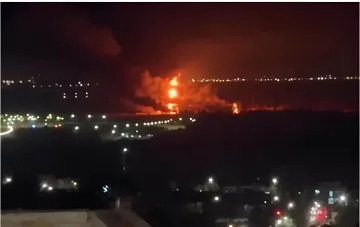
In the night of October 14, 2026, a powerful explosion was recorded at the oil terminal of the Novoshakhtinsk Oil Products Plant in the Rostov region, resulting in the destruction or damage of at least one more reservoir structure. This facility belongs to the large commercial structure 'Yug Rusi' and has recently been at the epicenter of heightened attention from regional and international observers amid an ongoing series of incidents at critical fuel infrastructure facilities of the Russian Federation.
Background and previous attacks on the terminal
Recall that the current incident occurred just a few days after a large-scale emergency at the exact same facility. In the night of October 10, this same oil terminal was subjected to a drone attack, which triggered a prolonged and massive fire. At that time, experts and monitoring channels recorded serious damage to technological chains, but official Russian agencies refrained from detailed comments regarding the nature of the destruction and the extent of the damage.
Contradictory data
Regarding the causes of the current explosion in the night of October 14, significant discrepancies are observed in open sources. While Ukrainian and independent monitoring channels point to a systematic continuation of strikes on Russian oil refining as part of the ongoing military conflict, Russian official figures as of the morning of October 13-14, 2026, have not presented a unified position. Some sources allow for the detonation of residual explosive objects after the previous October 10 attack, while other experts do not rule out new external influences or technological accidents due to violations of safety regulations during firefighting.
Political context and international reaction
Events around the Novoshakhtinsk plant are unfolding against the backdrop of an extremely sensitive geopolitical background. Just a few hours before the first series of explosions on October 10, US President Donald Trump publicly announced the achievement of certain agreements with the leadership of the Russian Federation regarding the supply and sale of Russian diesel fuel. Nevertheless, despite diplomatic maneuvers and Washington's statements, Ukrainian military and political circles demonstrate the unwavering nature of their strategy.
Strategy of strikes on refineries and market consequences
Informed sources in the Ukrainian authorities have repeatedly emphasized that until a full and comprehensive energy truce is achieved, strikes on Russian oil refining facilities will inevitably continue. As a clear example, experts cite the situation with the Moscow Oil Refinery, which after a similar attack in September was forced to completely stop the technological oil processing cycle. New explosions in the Rostov region deal another blow to the export potential and stability of the domestic fuel market of the Russian Federation.