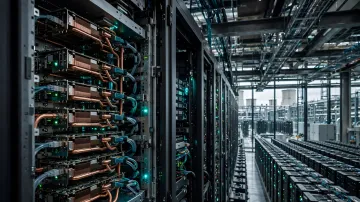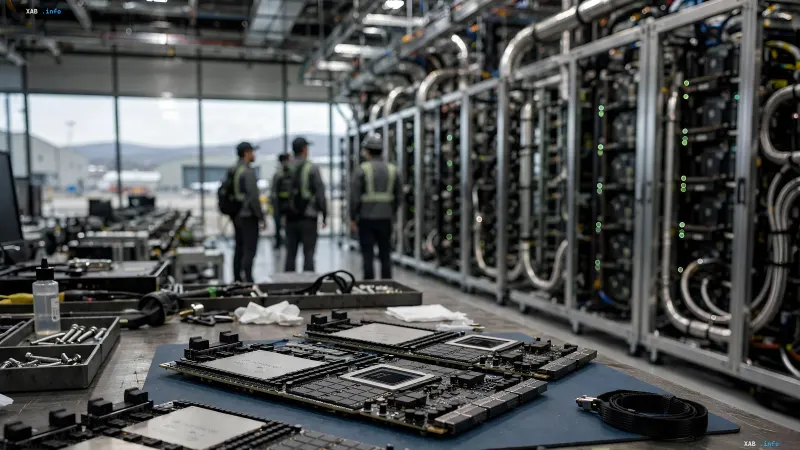
Apollo and Goldman Sachs have announced the completion of a debt securities offering totaling 44 billion dollars, designed to finance the acquisition of graphical processing units and related server hardware for the benefit of SpaceX. In a press release, the deal participants called it the largest GPU procurement financing in history. The funds will go toward creating the space company's ground-based computing infrastructure utilizing Nvidia Vera Rubin chips, the next generation of accelerators for artificial intelligence and high-performance computing tasks.
Oversubscribed Offering and Anchor Investors
The offering was oversubscribed: demand from institutional investors exceeded the initial offering volume, prompting the organizers to increase the issue size. Anchor financing commitments were provided by funds and accounts managed by BlackRock, Goldman Sachs Asset Management, and capital advised by KKR. Joint global coordinators for the transaction were Apollo and Goldman Sachs, emphasizing the strategic nature of the operation for both banks.
Leasing Model Instead of Direct Purchase
An important feature of the transaction structure is that SpaceX is not acquiring the computing power into ownership via a direct purchase scheme. Instead, the hardware is transferred to the company under a lease: delivery of the accelerators and related equipment is expected in the first half of 2027, from which point lease payment schedules are to begin. This model allows SpaceX to gain access to powerful computing resources without a one-time outflow of a massive volume of its own capital, spreading financial obligations over the entire lease term.
Connection to October's $40B Deal
As Reuters previously reported, back in October an affiliated entity of Apollo agreed to purchase AI accelerators and server hardware with subsequent transfer to SpaceX under a lease. The total amount of principal payments for that deal was estimated at 40 billion dollars. Thus, the new 44 billion offering represents a debt instrument providing financing for this and related operations, and has become the largest single issuance tied to GPU procurement to date.
Strategic Context: Computing Infrastructure for Space and AI
The creation of ground-based computing infrastructure based on Nvidia Vera Rubin chips points to SpaceX's large-scale plans in data processing related to launches, telemetry, and likely artificial intelligence tasks for autonomous systems. For Nvidia, the deal confirms growing demand for next-generation accelerators from corporate clients expanding beyond cloud providers. For Apollo and Goldman Sachs, the 44 billion offering becomes one of the largest projects in their structured financing portfolio for technological infrastructure for 2026–2027.
Prospects and Risks
The equipment delivery timeline — the first half of 2027 — means that six to nine months remain before the actual commissioning of the computing power. During this period, SpaceX will continue operating on its existing infrastructure. The leasing model reduces short-term pressure on the balance sheet, yet creates long-term payment obligations tied to hardware costs and debt market rates. The success of the project's implementation will depend on the timely delivery of Nvidia Vera Rubin chips and how quickly SpaceX can integrate the new capacity into its operational processes.