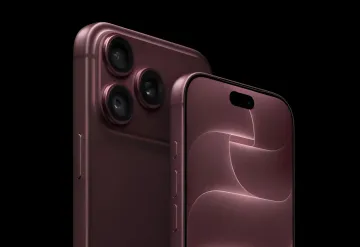
A new entry has appeared in the Geekbench 7 benchmark database for a device with the identifier iPhone 19,3 and a V64AP motherboard, whose testing revealed the specifications of Apple's new flagship processor, the A20 Pro. Although the chip is mistakenly labeled as an Intel Pentium II/III in the listing description, the combination of hardware specifications and textual markings clearly indicates that the test was run on an iPhone 18 Pro Max equipped with the new A20 Pro chipset. According to data published in September 2026, this mobile processor became the most powerful central processing unit ever registered in Geekbench 7 in single-core mode.
Single-core test record
The six-core A20 Pro scored 4,042 points in the single-core scenario of Geekbench 7, making it the absolute leader of the benchmark in this category. For comparison: the closest competitor — the flagship M5 Max chip installed in the 16-inch MacBook Pro — stopped at 3,785 points. A difference of more than 250 points confirms Apple's sustained trend, in which the company's mobile chipsets demonstrate higher single-core performance than its own computer processors. A similar picture was observed a year earlier as well: at its release, the A19 Pro also outperformed the base M4 and was nearly on par with the M4 Max in single-threaded power.
Multi-core workloads and graphics: where the M5 Max is still ahead
In multi-core mode, where all computational blocks are engaged, the mobile A20 Pro chipset scored 11,691 points. Here, the 18-core M5 Max expectedly delivered a decisive victory, which is explained by its substantially larger number of computational cores and a more powerful cooling system. Experts emphasize that the advantage of mobile SoCs is characterized by short bursts of peak performance (burst performance): during prolonged, complex tasks, M-series Max chips significantly outpace mobile solutions thanks to active cooling and a higher power consumption limit. In graphics tests and professional scenarios, computer chipsets also maintain their dominance over mobile GPUs.
Contradictory data
The only inconsistency in the primary data is related to the Geekbench 7 listing itself: in the device description, the processor is mistakenly listed as an Intel Pentium II/III, which formally contradicts the other characteristics of the record. On the one hand, the textual chip label in the database looks like an artifact or a metadata entry error. On the other hand, all other hardware specifications, the device identifier (iPhone 19,3) and the motherboard number (V64AP) clearly indicate that the test was run on an iPhone 18 Pro Max with the A20 Pro chip. Thus, the discrepancy concerns only the processor name in the listing, not the actual benchmark results, which remain unchanged.
Which smartphones will get the A20 Pro
According to available data, the new A20 Pro chipset will be used not only in the classic flagship iPhone 18 Pro Max, but also in the standard iPhone 18 Pro, as well as in the company's first foldable smartphone — the iPhone Duo. This means that the record single-threaded performance will not be an exclusive feature of a single model, but a baseline level for an entire generation of Apple devices. Specialists note that the dominance of mobile chips in single-core tests has already become a familiar trend for the company, but they warn against premature conclusions about its overall superiority over desktop solutions in professional and sustained workloads.