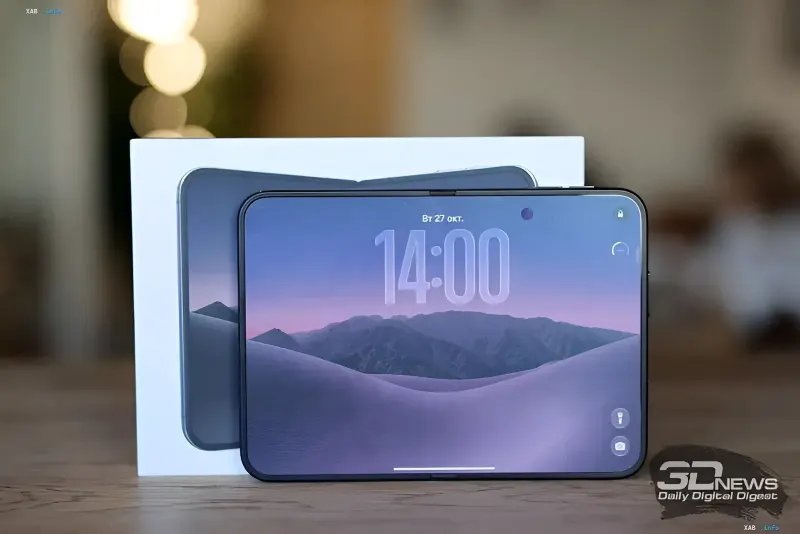
Against the backdrop of record financial results for the fourth quarter of fiscal 2026, Wall Street's attention has shifted to the company's main new product — the foldable iPhone Duo. In an interview with Reuters, Apple CEO John Ternus explicitly acknowledged that there is currently a shortage of the device and did not deny the existence of internal screen cracking issues. At the same time, he emphasized that such cases are "after all few," and returns due to display malfunction were processed for only a "very insignificant percentage" of sold devices.
A Record Quarter with No Duo Figures
Apple reported record financial results for Q4 of fiscal 2026, with metrics generally exceeding Wall Street analysts' expectations. However, sales data for the iPhone Duo are absent from the latest quarterly report, which is explained by simple chronology. The reporting period covers July through September, while sales of the foldable smartphone started only in October. That is why Wall Street is showing natural interest in how sales of the new product are progressing, especially in the context of revenue forecasts for the current quarter, where the iPhone Duo's contribution may already prove noticeable.
A Shortage That Is Not Rushing to End
Regarding shipments, Apple cannot yet say when supply and demand for the new model will balance out. "Today, there is a shortage of the Duo. Production volumes are ramping up successfully, and we are doing everything possible to get the device to everyone who wants one as quickly as possible, but at this point, we cannot predict exactly when supply and demand will equalize," John Ternus stated. The company did not name specific timelines, limiting itself to stating that production is being scaled.
Delivery Timelines: Late January Unchanged
The practical picture confirms management's words: delivery timelines for the iPhone Duo when ordering in the official Apple online store still point to late January. Notably, this timeline has not changed since October 16, when the first batch of devices via pre-orders sold out completely. Thus, since the start of sales and the exhaustion of the first batch, the logistical window for buyers has effectively "frozen" at a single value, indirectly indicating a persisting gap between demand and available volumes.
Screen Cracks: The Problem Exists, But Is "Insignificant"
On the issue of screen cracks appearing on the iPhone Duo, Ternus was brief and essentially reiterated what the company had stated earlier. The problem does exist, but affects only a very small number of devices. Returns due to display malfunction were processed for only a "very insignificant percentage" of iPhone Duos, the CEO stated. Apple replaces such units with new ones. The wording is important: the company does not deny the fact of the defect itself, but positions it as statistically insignificant, which is typical for vendor reactions to early reports of display issues in foldable form factors.
What This Means for the Market
Collectively, Ternus's statements paint a picture of a classic launch of a sought-after new product: high demand outpacing production ramp-up, and early quality signals that the company aims to minimize. For investors, the key question remains how quickly Apple will be able to balance supply and demand and whether the shortage will impact current-quarter revenue. For consumers, the practical conclusion is unequivocal: when buying an iPhone Duo, one should focus on delivery timelines in the official store, which at the time of publication still point to late January, and if screen cracks are discovered, the device is subject to replacement with a new one.