A new era of privacy: sound instead of light
In a world where the boundaries between public and private spaces are increasingly blurred, Apple is proposing a radical solution to the problem of covert video recording. According to a published patent, the company intends to replace traditional visual recording indicators with audio alerts and haptic feedback. This innovation aims not only to warn those around the user that recording is taking place but also to address the "human factor," where a user might forget to turn off the camera after finishing a recording.
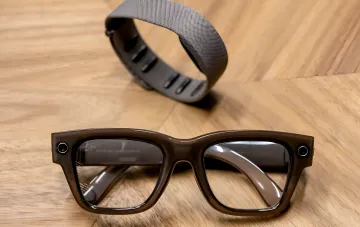
The technology described in the document involves using built-in speakers and vibration motors to generate notifications. Unlike visual indicators, which can be unnoticed in the dark or under bright sunlight, an audio signal is impossible to ignore. This is particularly relevant for the upcoming generation of wearable devices, such as smart glasses, where physical space for noticeable LEDs is extremely limited.
Inclusivity and accessibility as a priority
One of the key advantages of the new system is its inclusivity. Traditional light indicators are useless for people with visual impairments, who might unknowingly record without realizing it. Audio and haptic signals (vibration) make the recording process controllable for all users, regardless of their physical abilities. This aligns with Apple's global strategy to improve the accessibility of its products for people with disabilities.
Protection against cyberattacks: the "speaker-microphone" scheme
A significant portion of the patent is dedicated to cybersecurity, which is especially important in the era of smart glasses that could become tools for espionage if compromised by malware. Apple proposes an innovative device self-diagnosis scheme. The essence of the method is that after playing an audio signal indicating the start of recording, the device's built-in microphone instantly "listens" to and analyzes that sound. If the microphone does not detect the signal that the speaker should have played, the system concludes that a hack or sensor blockage by hackers may have occurred and locks the camera.
Contradictory data
While the patent describes the possibility of constant audio accompaniment during recording, experts and Apple developers themselves note potential issues with this approach. Constant beeping or noise during recording could irritate those around the user and, more importantly, degrade the quality of the audio recording, rendering it unusable. In this regard, the document emphasizes initial and control signals rather than continuous audio accompaniment. However, the exact implementation of this feature in mass-market devices may differ from what is described in the application, as Apple often patents technologies that ultimately do not find their way into finished products.
Prospects for implementation in Apple Watch and Vision Pro
The patent application mentions that the technology could be applied to a wide range of devices, including Apple Watch. This opens new horizons for using smartwatches not just as fitness trackers but as full-fledged surveillance cameras with an enhanced level of security. Nevertheless, the main focus of development remains on smart glasses, where privacy issues are most acute. It is important to remember that the existence of a patent does not guarantee the immediate appearance of the feature in stores, and consumers may have to wait several years to see this technology in action.