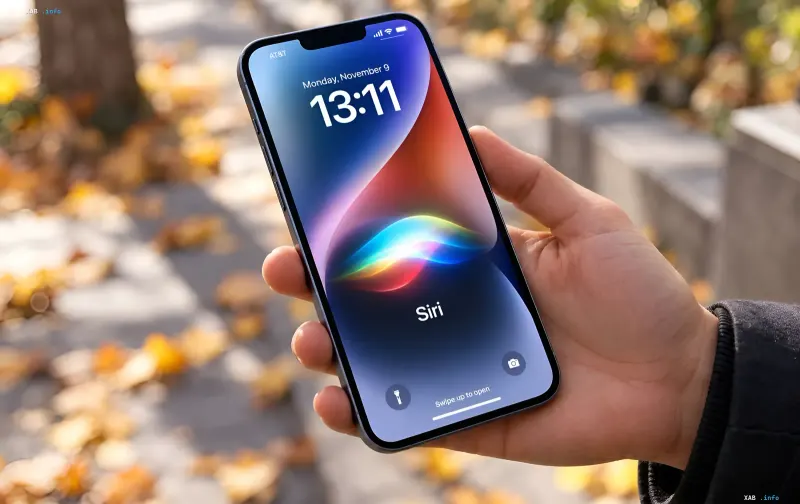
Apple is preparing a massive update for its Siri voice assistant that will dramatically expand its capabilities: from deep control of the native ecosystem to integration with third-party services and autonomous background task execution. At the same time, the company has revised its fundamental approach to developing future versions of its operating systems, giving engineers more time for experimentation. This is reported by RBC-Ukraine based on an analytical article by Mark Gurman for Bloomberg.
Siri Goes Beyond Simple Commands
According to Gurman, the updated Siri is already capable of analyzing context displayed directly on the device screen, processing personal data from email or messages, and performing basic actions. In the iOS 27.3 beta, the company has started testing expanded intra-app features. The assistant will gain deep control over the native ecosystem: sorting tabs in Safari, organizing folders in Files, undoing sent messages in iMessage, and advanced editing in Photos.
Third-Party Services Connect to Voice Control
In upcoming spring updates, Apple plans to open up the ecosystem to external developers. Services like OpenTable or Uber Eats will be able to create their own plugins, allowing users to book a table or order food using voice commands exclusively. This means Siri will no longer be confined to Apple apps and will become a universal voice interface for a significant portion of daily digital tasks.
Autonomous Background Tasks Without User Intervention
Of particular note is a feature reportedly slated for release, according to Gurman: Siri will analyze passwords saved in the system, identify compromised combinations, and automatically change them on relevant websites without any human intervention. Such a level of autonomy for a voice assistant is rare in the industry and highlights Apple's drive to transform Siri from a "question-and-answer" tool into a proactive agent.
Apple Restructures Operating System Development Cycle
Against the backdrop of AI transformation, the company has altered the very process of software creation. Traditionally, development was divided into eight-week phases, where half the time was spent writing code and the other half on feature integration. In the new cycle for iOS 28 and macOS 28, engineers have been given six weeks for creative exploration and experimenting with new technologies, while the integration phase has been cut to two weeks. According to employees, this schedule provides more opportunities to test bold ideas before finalizing functionality.
Limitations Noted by Analysts
Despite the visible evolution, analysts emphasize that Apple's current solutions remain predominantly query-based. While competitor products are already capable of maintaining the context of complex multi-step work over long periods without additional user prompts, Siri still requires an explicit trigger for every action. This is a key distinction Apple must overcome in upcoming releases to avoid falling behind in the race for autonomous AI agents.