Apple is developing its first smart glasses under the internal code name N50. According to a report by Bloomberg insider Mark Gurman, the device's presentation is scheduled for the WWDC conference in June 2027, with mass sales expected to start before the end of that year. The gadget fundamentally differs from augmented reality headsets: it lacks a projection screen, relying instead on the Siri voice assistant and built-in cameras integrated directly into the frame.
Hardware Architecture: Cameras, Indicator, and Titanium Frame
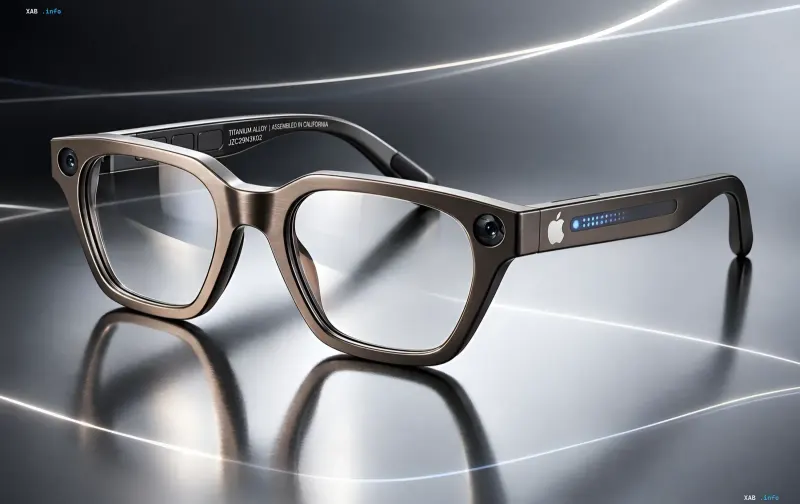
According to Gurman, the cameras in the N50 are built directly into the frame body, alongside an indicator light that signals to others when the device is actively recording or charging. At the time of the report's preparation, Apple engineers are testing various color options and body styles, paying special attention to material selection, sensor quality, and acoustics. In the image published with the article, the glasses are made of titanium alloy with the engraving «TITANIUM ALLOY | ASSEMBLED IN CALIFORNIA», indicating the device's premium positioning and assembly localization in California.
Abandoning the AR Screen: Focusing on Voice and Vision
Unlike augmented reality headsets such as Apple Vision Pro, the N50 smart glasses do not project images in front of the user's eyes. Instead, all interaction is built on a combination of cameras and an updated Siri capable of analyzing the surrounding environment in real time. Users will be able to recognize buildings, translate text and live conversations, navigate terrain, and receive recipe suggestions simply by looking at groceries in the refrigerator. Thus, Apple is betting on "second eyes" and a voice interface rather than a virtual display.
Siri as the Control Center and the Role of Third-Party Developers
The device will work exclusively paired with an iPhone — Android smartphone support is not provided. At the same time, creating separate applications specifically for the glasses will not be necessary: all logic is tied to the connected phone. For the correct operation of service management functions and basic communication, third-party developers must integrate Siri voice control support into their current iPhone applications. According to Gurman, the recent Siri AI update received a framework for deep interaction with third-party apps, and developers have already been given access to new tools to ensure their products are ready for WWDC 2027.
Timelines and Risks: Software Lags Behind Hardware
Although Apple has already finalized most of the hardware components for the upcoming glasses, the project faces internal hurdles. According to Mark Gurman, software and AI system development is falling behind schedule. These software delays could ultimately affect the final release timeline in 2027. Nevertheless, the company intends to unveil the N50 at WWDC in June 2027 and launch sales before the end of that same year.