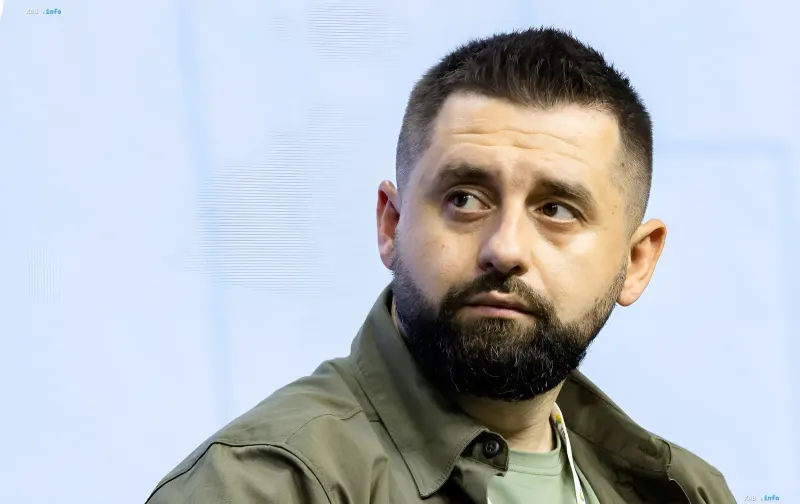
In the political hierarchy of Ukraine in 2026, the figure of the head of the 'Servant of the People' faction, David Arakhamia, occupies a unique position that goes far beyond the formal powers of a parliamentary group speaker. According to an in-depth analysis by RBC-Ukraine, it is Arakhamia who has become the key architect of domestic policy and the unofficial 'director' of the Verkhovna Rada, taking on functions that were previously concentrated in the hands of the Head of the President's Office.
From Yermak's personnel errors to a new management system
Political scientists and sources in the president's circle note a fundamental shift in the approach to personnel appointments. If previously Andriy Yermak, according to insiders, 'ruined himself' by trying to control all spheres and appoint people everywhere, now Arakhamia is implementing a strategy of dispersing responsibility. He understands that he must be personally responsible for every appointee; therefore, in the latest massive government reshuffle, he did not play a key role in choosing the Prime Minister, but he secured the appointment of 'his own' people to key posts.
In particular, thanks to Arakhamia's efforts, Vitaliy Kim took the post of Minister for Veterans Affairs, while Vitaliy Bezgin and Andriy Butenko received the portfolios of Minister for Communities and Territories and Minister of Education, respectively. At the same time, the appointment of Energy Minister Yuriy Koretsky, according to sources, was a personal initiative of Volodymyr Zelenskyy, who noticed his potential back in 'Naftogaz'.
Architecture of the future parliament and coalition
In a situation where the 'Servant of the People' majority in the next convocation of parliament is becoming unlikely, Arakhamia takes on the task of building a new configuration of power. His mandate now extends not only to deputies of his own party but to all other factions to ensure voting for government initiatives.
Insiders predict the formation of a complex coalition that may include the 'Zelenskyy Bloc', the 'Budanov Bloc', and situational projects where Arakhamia's own interests will be represented. He is effectively working ahead of time, preparing the ground for the future convocation of the Verkhovna Rada, where his role as 'parliament director' will become even more significant.
Unofficial diplomacy and negotiation track
A special place in Arakhamia's portfolio of powers is occupied by diplomacy. Unlike formal procedures, he engages in 'real' diplomacy without notes and official statements. His mandate allows him to suddenly appear in various parts of the world, conduct negotiations, and make deals where necessary. To some extent, his powers are even broader than those Yermak had, who was limited by the frameworks of working groups and summits.
The public part of his activities is also noticeable: Arakhamia was part of the Ukrainian delegation at meetings with Donald Trump in Ankara and Washington. However, his main work takes place in the shadows, in the format of unofficial negotiations, which often turn out to be more effective than protocol meetings.
Contradictory data
There are discrepancies in assessing the degree of Arakhamia's influence on key personnel decisions in the government. On the one hand, sources claim that he actively participated in the Cabinet reshuffle and secured the appointment of his people to ministerial posts. On the other hand, it is emphasized that he did not play a key role in choosing the Prime Minister, and some appointments, such as Yuriy Koretsky's, were entirely the president's initiative. This creates a picture where Arakhamia is an influential player but not the sole center of decision-making.