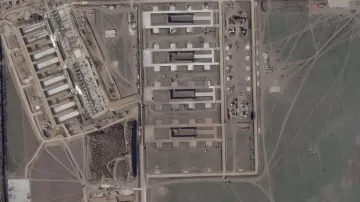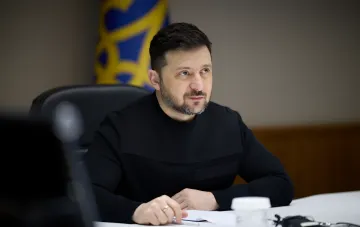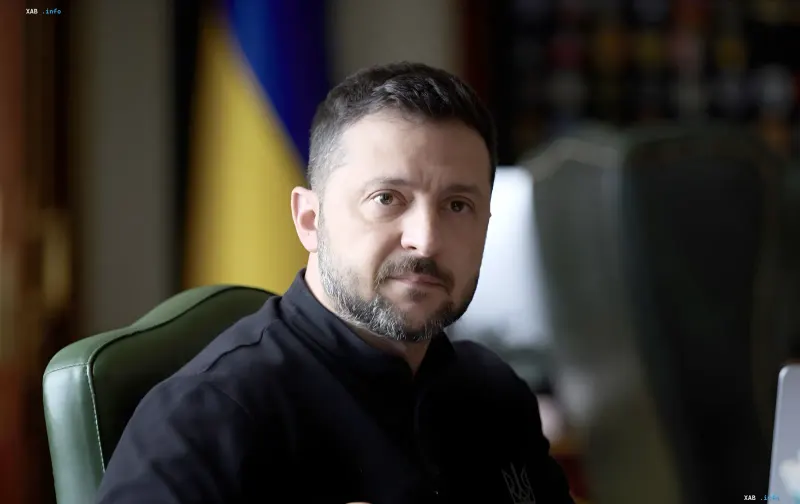
According to The Atlantic, in early 2026, a group of Ukrainian officials reportedly presented President Volodymyr Zelensky with a secret plan for a massive attack on Moscow airports and the surrounding area using up to a thousand drones per day. According to sources, the concept was based on cheap autonomous drones equipped with artificial intelligence-based guidance systems capable of independently finding and striking targets without the participation of a manual operator. The stated goal of the operation is to paralyze civil aviation in the Russian capital for a long period. "The idea is to close Moscow's airspace to civilian flights for a long period," the publication quotes one of the officials familiar with the details of the plan.
President's concerns and pause in preparations
As The Atlantic's interlocutors claim, in winter, when the plan was first reported, Zelensky expressed serious concerns about possible consequences. In particular, the President, according to the source, feared that drones might hit a civilian airliner, and as a result of the strikes, passengers, airport staff, and crew members could be killed or injured. Nevertheless, in an attempt to find a pressure point on Russia capable of returning the parties to the peace process, Zelensky allegedly allowed the preparation of the operation to continue for several months in the spring and early summer of 2026.
Code name M&M's and the role of Mykhailo Fedorov
By mid-spring, according to the publication, the secret operation had advanced significantly and received the code name M&M's. However, planning was suspended in July following the dismissal of Defense Minister Mykhailo Fedorov, whom sources describe as the "main organizer" of the project. The Atlantic claims that Fedorov worked on the plan for most of the year: he reportedly helped assemble a team of Ukrainian programmers to develop AI-guidance systems and secured funding from Ukraine's European partners for the mass production of autonomous drones. One source expressed hope that the new Defense Minister, Yevhen Hmara, would resume the implementation of the plan, noting that while technically feasible, it would require approximately three months and a new team.
Contradictory data
It is important to emphasize that all key claims about the existence of the M&M's plan rely exclusively on anonymous sources from The Atlantic and are not confirmed by independent verified data. Furthermore, an official from the Office of the President of Ukraine directly denied the existence of such a plan in a comment to the publication. Thus, one side (anonymous officials familiar with the "plan") claims its development and suspension, while the official presidential representative denies the very fact of its existence. Differences also concern the chronology: sources cite the winter period as the moment the plan was presented, spring months as the preparation phase, and July as the point of suspension, however, these dates cannot be independently verified.
Context: attacks on Moscow on the night of August 18–19
The publication by The Atlantic coincided with a real escalation: on the night of August 18, Moscow and the Moscow region were subjected to a massive drone attack, resulting in about 10,000 people in the Moscow region being left without electricity — this is the first such report from "Mosoblenergo" since the beginning of the year. On the night of August 19, Moscow was again attacked by drones, causing several airports, including those in Moscow, to temporarily restrict operations. These events, against the backdrop of the leak about the "M&M's plan," have intensified the discussion on how far real preparations for strikes on the air hubs of the Russian capital have gone.