The Association of Ukrainian Cities (AUC) has sent an appeal to President Volodymyr Zelensky calling for the retention of 64% of the personal income tax (PIT) and reverse subsidy funds in local budgets during the drafting of the State Budget for 2027. This was reported by RBC-Ukraine, referencing the text of the appeal from the association's board. The document is signed on behalf of 1,094 communities that are members of the AUC, making it one of the largest signals from local self-government regarding financial risks associated with preparations for the 2026/2027 heating season.
Reason for Appeal: Threats to Community Operations Ahead of Winter
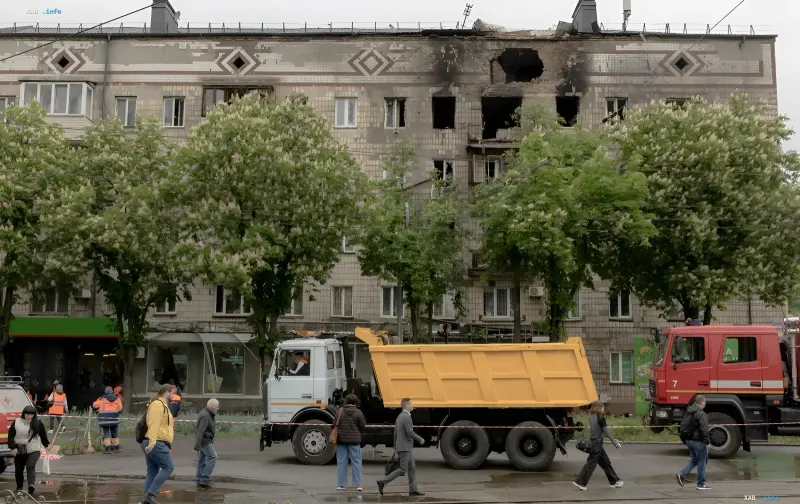
In the appeal, local self-government representatives list three groups of problems that, in their assessment, threaten the work of communities on the eve of the heating season: intense Russian shelling, the blocking of budget payments, and the need to preserve the reservation of critical infrastructure workers. "On behalf of 1,094 member communities of the Association of Ukrainian Cities, we ask for your help in preserving the capability of communities to strengthen Ukraine and achieve a joint Victory over the enemy," the text addressed to the president states. The association emphasizes that preserving the financial resources of communities must ensure the functioning of local self-government and create conditions for the further development of the country.
Air Defense Named a Priority Need
Among the primary needs of communities, the AUC highlights the strengthening of air defense, in particular providing units with ammunition and technical solutions to counter intense shelling throughout Ukraine. These same problems—shelling, blocked payments, and the reservation of employees of municipal, energy, and transport enterprises—were previously voiced in the Verkhovna Rada by the Chairman of the Association of Ukrainian Cities, Kyiv Mayor Vitali Klitschko. According to his formulation, "community funds are blocked, making it impossible to carry out payments vital for the safe life of residents."
Blocked Payments: UAH 20 Billion in Treasury Accounts
The association calls the blocking of local budget funds a key financial problem for local self-government. It was previously reported that about UAH 20 billion in payments to communities has been blocked, and the AUC warned of the risks associated with this ahead of winter. This is why the association's board had already appealed to the prime minister demanding the immediate unblocking of community payments and offering proposals for preserving the heat supply system ahead of the 2026/2027 heating season. In the new appeal to the president, these demands are supplemented by a request to enshrine in the 2027 budget the mechanism for distributing 64% of the PIT and reverse subsidy in favor of local budgets.
Reservation of Critical Infrastructure Workers
Separately, the AUC board appealed to the government demanding the preservation of reservations for employees of housing and communal, energy, and transport enterprises. This concerns specialists upon whom, according to the association's assessment, the uninterrupted operation of critical infrastructure depends—including under conditions of preparation for the heating season and the elimination of the consequences of Russian attacks. Municipalities insist that without preserving this reservation and without unblocked payments, communities will not be able to guarantee the safe functioning of communal systems during the winter period.
What's Next
Thus, the AUC's appeal to the president boils down to three practical demands: to retain 64% of the PIT and the reverse subsidy in local budgets in the 2027 budget, to unblock frozen community payments, and to preserve the reservation of critical infrastructure workers. The association links all three positions to the need to ensure the work of local self-government and preparation for the 2026/2027 heating season amid ongoing shelling. The results of considering these demands at the level of the Cabinet of Ministers and the President's Office have not been reported as of the time of publication.