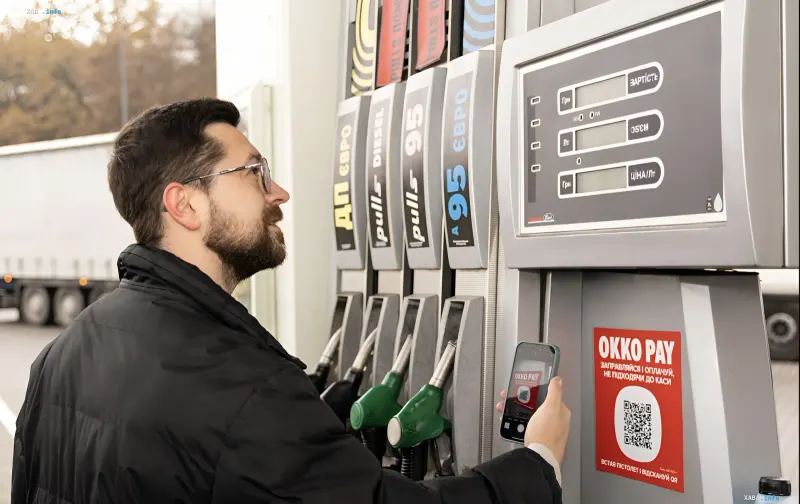
The liquefied petroleum gas (LPG) market in Ukraine is experiencing one of its most tense periods in recent years. According to Serhiy Kuyun, director of the A-95 Consulting Group, the price of autogas at filling stations could soon cross the 60 hryvnias per liter mark, and this level, according to him, is not the limit. The expert made these remarks in a detailed commentary on the RBC-Ukraine podcast 'TSE BAZA', where he thoroughly analyzed the mechanisms that led to an acute resource deficit in the domestic market.
European market 'drained': global redistribution of volumes
The key factor, according to Kuyun, was the global redistribution of liquefied gas volumes. After a long period of stable and low prices, the market faced a serious shortage of resources specifically in Europe, where Ukrainian importers traditionally sourced their supplies. 'The southern route closed. Everyone went to look for that gas in Europe, and it's not there. Therefore, there is a deficit, and we see at the pumps that this resource is very often missing now,' the expert stated. Thus, the Ukrainian market found itself under double pressure: domestic demand persists, while traditional import channels are simultaneously narrowed in both the southern and European directions.
Blockade of the southern route via the Danube
An additional blow to logistics was the suspension of imports along the southern route, particularly via the Danube River. According to Kuyun's information, traffic along this route stopped due to security risks, effectively depriving some market participants of one of their key supply channels. As a result, filling station networks that previously relied on southern imports are forced to rebuild their logistics and compete for limited volumes in the European market, where the deficit is already fully felt.
Who suffers the most: regional operators versus direct importers
The uneven impact of the deficit on various market segments, according to the expert, is becoming increasingly noticeable. Regional companies that purchase gas in small wholesale lots on the domestic market and lack access to direct import contracts suffer the most from the fuel shortage. Filling station networks that operate as direct importers are in a more stable position, but they are also forced to purchase resources at significantly higher prices. This creates pressure on retail margins and, consequently, on the final cost per liter for drivers.
The Sonatrach factor: Algerian producer has already raised prices by 20%
The dynamics at the level of global producers deserve special attention. Kuyun recalled that in October, the leading Algerian producer Sonatrach already raised prices by 20%. Against the backdrop of continuing shortages, a new price list from this company is expected, which, according to the expert, will serve as an additional stimulus for further price hikes. 'I think that 60 UAH per liter, if we haven't crossed it today, we will cross it in the near future. And this is not the limit, because just in the coming days we expect price lists from the leading producer — the Algerian company Sonatrach,' Kuyun stated. Thus, even with the stabilization of logistics channels, price pressure from producers will persist.
Prospects: tension in the LPG market will continue
The combination of factors — the deficit in Europe, the closure of the southern route, rising prices from global producers, and the structural dependence of part of the market on small domestic wholesale — creates a picture in which short-term relief is unlikely. The expert does not rule out that if current conditions persist, the price may continue to move upward after overcoming the psychological barrier of 60 hryvnias. For the final consumer, this means that saving on autogas, which has long been its main advantage over gasoline, is gradually narrowing, while for business, it means rising operating fuel costs. The next indicator will be the new Sonatrach price list, which market participants expect in the coming days.