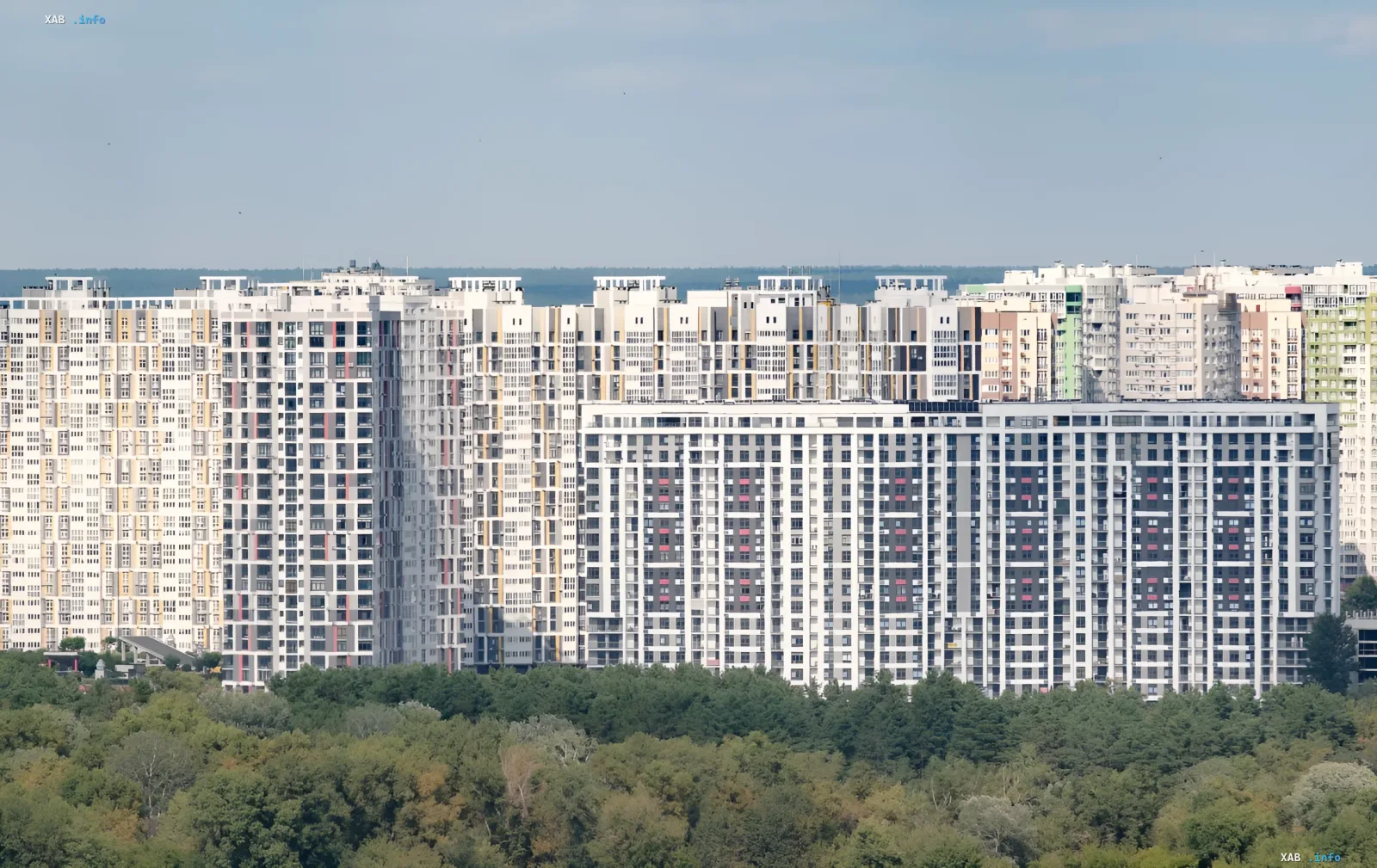
Regular strikes on Ukraine's energy infrastructure have turned the question of energy security in residential complexes from a marketing advantage into a basic design requirement. Systemic developers are mass-implementing technical solutions that are not provided for in state building codes — from rooftop boiler houses to artesian wells and armored film on window units. According to RBC-Ukraine, the industry is effectively forming a new, "wartime" housing standard, getting ahead of the regulatory framework.
Rooftop Boiler Houses and Backup Generators: The InterGAL-Bud Strategy
Elena Ryzhova, Commercial Director of the developer InterGAL-Bud, told RBC-Ukraine that the builder equips its residential complexes with rooftop gas boiler houses. This allows the buildings to be independent of centralized city heating networks and to flexibly regulate heat supply depending on the needs of a specific stairwell or section. In addition to heating, the company installs backup power sources for critical infrastructure and the uninterrupted operation of key engineering systems — elevators, pumping stations, ventilation and fire safety systems. As a result, even when a building is completely disconnected from the city grid, residents retain a basic level of comfort and safety.
Elevators, Water and Armor: The DIM Group's Comprehensive Approach
A similar resilience strategy is followed by the DIM group of companies. The company's Marketing Director told RBC-Ukraine that, within current projects, technical solutions are being implemented that guarantee the operation of elevators, heating and water pumping during blackouts. A separate direction has become complete independence from the city water utility: in a number of complexes, buildings are connected to their own artesian wells, which eliminates the risk of water supply disruptions when the main networks are damaged. Another innovation, according to a DIM representative, is protection against the consequences of shelling — the company is exploring ways to apply special armored film to window units directly at the window manufacturing stage, rather than as a post-installation solution.
Monolithic Frame as a Building's "Armor": The Experience of PBG "Kuznechnaya"
In addition to utility autonomy, developers are focusing on the structural resilience of buildings, which is laid down at the stage of designing the frame. PBG "Kuznechnaya" explains that the company builds housing primarily using a monolithic-frame technology with high-strength concrete of its own production. According to specialists, this is one of the most reliable structural systems, guaranteeing high spatial rigidity and the building's resilience to local damage. The main advantage of this scheme is the ability to redistribute loads between load-bearing elements even when individual structures are partially destroyed, which is critically important under conditions of military risks and possible strikes on nearby infrastructure.
Context: Distributed Generation and Readiness for Outages
The developers' strategy fits into a broader trend of increasing the resilience of Ukraine's energy system. As RBC-Ukraine previously reported, the country is gradually moving toward more distributed generation: in particular, DTEK is considering replacing large power plants with a network of smaller generation facilities, which should make the system more flexible and less vulnerable to targeted attacks. At the household level, the picture is complemented by sociological survey data: 40% of Ukrainians surveyed are ready to consider moving if living conditions deteriorate significantly, with the majority considering a move within the country. Under these conditions, the presence of autonomous engineering systems in a new build is no longer just a "feature" for the buyer, but a factor influencing the decision on where to live.
What This Means for the Market
The formation of a "wartime" housing standard creates a gap between state regulations and the market's actual requirements. Developers investing in autonomous solutions gain a competitive advantage: their complexes attract buyers for whom energy security has become no less important than location or layout. At the same time, the implementation of such systems increases construction capital costs, which may in the future affect pricing in the new-build segment. The industry is effectively writing its own rules, which in the future may be legitimized at the level of updated building codes.