September 2026, like any autumn month, offers no definitive answers about what the weather will be like in the coming weeks. In one year, the first ten days of September feel like summer; in another, the first frosts arrive by the 15th. Our ancestors had no satellite imagery or numerical forecast models, so they developed an entire system of observing nature: the behavior of birds, the state of spider webs, the color of the leaves, and the abundance of berries. The Styler project (RBC-Ukraine) has collected and analyzed the most well-known autumn signs, comparing them with data from modern meteorological and botanical research.
Spider webs in the air: a signal of warmth or just a coincidence
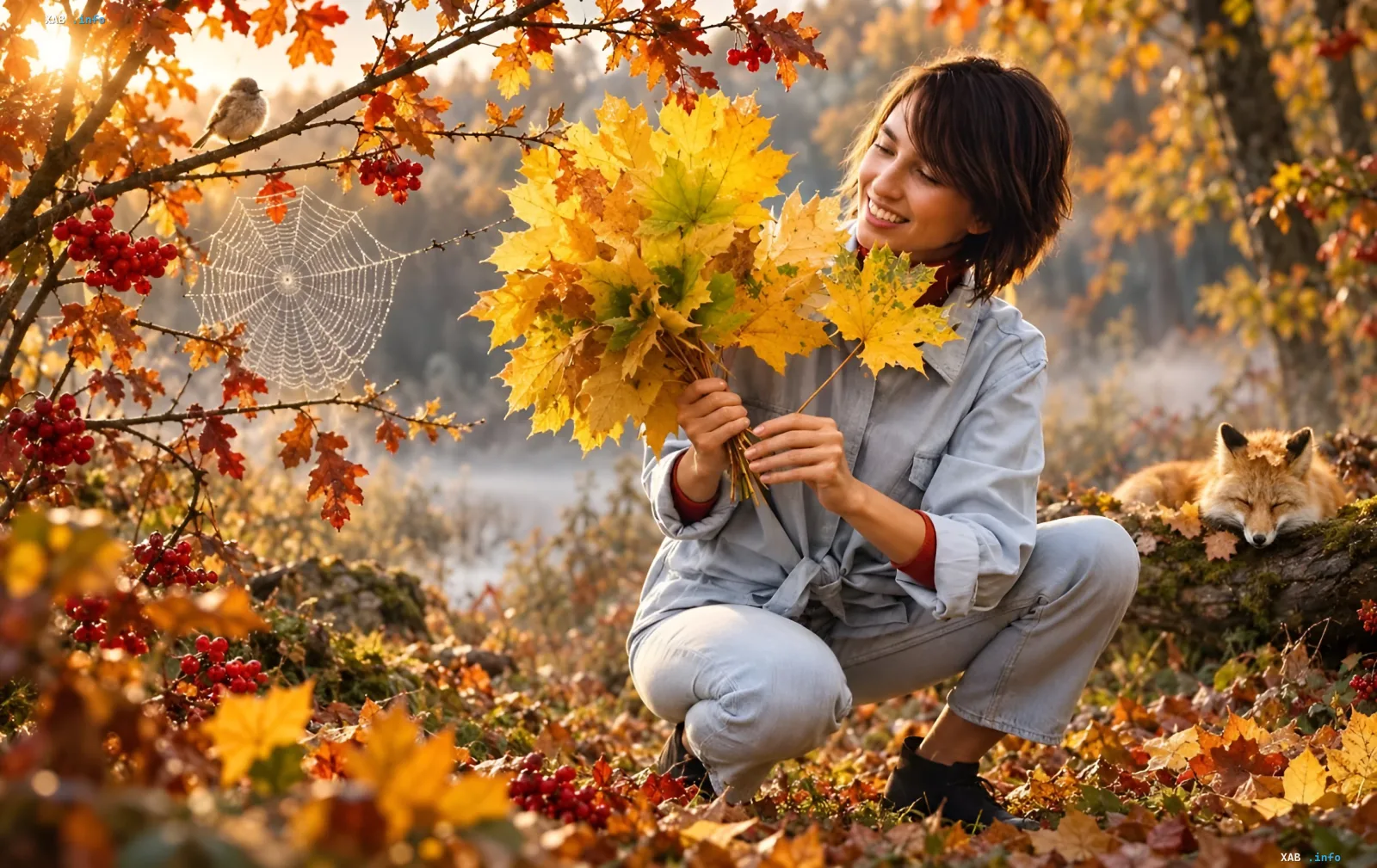
One of the most enduring folk signs goes like this: if on a calm, sunny day thin strands of spider web drift through the air, and dense webbing is visible on the grass and branches, the weather will remain warm and dry for at least several more days. In the folk calendar, this "flying spider web" was considered a sure sign of a prolonged Indian summer. From a scientific standpoint, the logic is partially visible: spiders do indeed weave their webs more actively in conditions of low humidity and calm winds, when the threads are not torn apart by the breeze. However, spider webbing in itself is not a meteorological instrument: its quantity is influenced by temperature, humidity, spider population density, and a host of local factors that make it impossible to forecast the weather a week ahead.
Leaf color: what RHS and the US National Weather Service say
The seasonal change in leaf color is triggered by the shortening day length and the gradual drop in temperature: chlorophyll breaks down, and carotenoids and anthocyanins emerge to the surface. According to the Royal Horticultural Society (RHS), the intensity of autumn coloration depends directly on the weather conditions of the preceding weeks. The US National Weather Service (NWS) clarifies: the most saturated and vivid colors form under a combination of warm, sunny days and cool, but not freezing, nights. It is precisely this "golden mean" that produces the striking yellow-and-red carpet we see in September and October. If, on the other hand, autumn arrives abruptly, with early frosts, the leaves often fall still green or pale yellow, not having had time to accumulate pigments.
Fog, rowan, and a "harsh winter": where observation ends and myth begins
Dense morning fog was firmly associated in folk tradition with the approach of lasting cold. In reality, fog is the result of a complex interplay of temperature, humidity, wind speed, and the state of the air near the ground. It can form in both warm and cold weather, so as a standalone indicator of future temperature trends it is unreliable. A similar situation applies to the abundance of rowan, viburnum, acorns, and nuts: in many cultures a bountiful harvest was interpreted as a harbinger of a harsh winter. Such beliefs are recorded in the folklore of various peoples, yet none of these signs has a statistically confirmed correlation with temperatures weeks or months later. Early November in the folk calendar was perceived as a signal of rapid cooling, but this is more of a generalized observation of a multi-year cycle than a working forecasting tool.
What actually works: NOAA data and regional specifics
The most reliable way to determine when lasting cold will arrive remains the current weather forecast, based on observations and numerical models. NOAA emphasizes that the timing of the first autumn frosts varies significantly depending on the region, the elevation of the terrain, and the specific year. Even within a single country, the difference between northern and southern latitudes can amount to several weeks. Therefore, for gardeners and vegetable growers for whom it is critical to protect plants from frost, the reference point should be the actual temperature and the short-term forecast, not a single natural sign.
Contradictory data
It is worth noting here the discrepancy between folk interpretation and science. On the one hand, centuries of experience observing nature do indeed capture stable seasonal patterns: leaves turn yellow under a certain set of temperatures, spiders are more active in dry weather, and fog is more common in calm conditions. On the other hand, none of these signs possesses the predictive power sufficient for planning agricultural work or preparing for frosts. RHS and NWS confirm the link between weather conditions and leaf coloration, but they stress that this is a reverse relationship (the weather affects the color, rather than the color predicting the weather). Thus, folk signs are best regarded as a cultural heritage and a reason to observe nature attentively, not as an alternative to meteorological services.
So, spider webs on the branches, golden foliage, and dense morning fog are wonderful reasons to pause and look more closely at autumn. But when it comes to deciding when to cover the beds or bring in the last tomatoes from the greenhouse, trust the thermometer and the forecast. Nature hints at the mood of the season, not the exact date of the first snow.