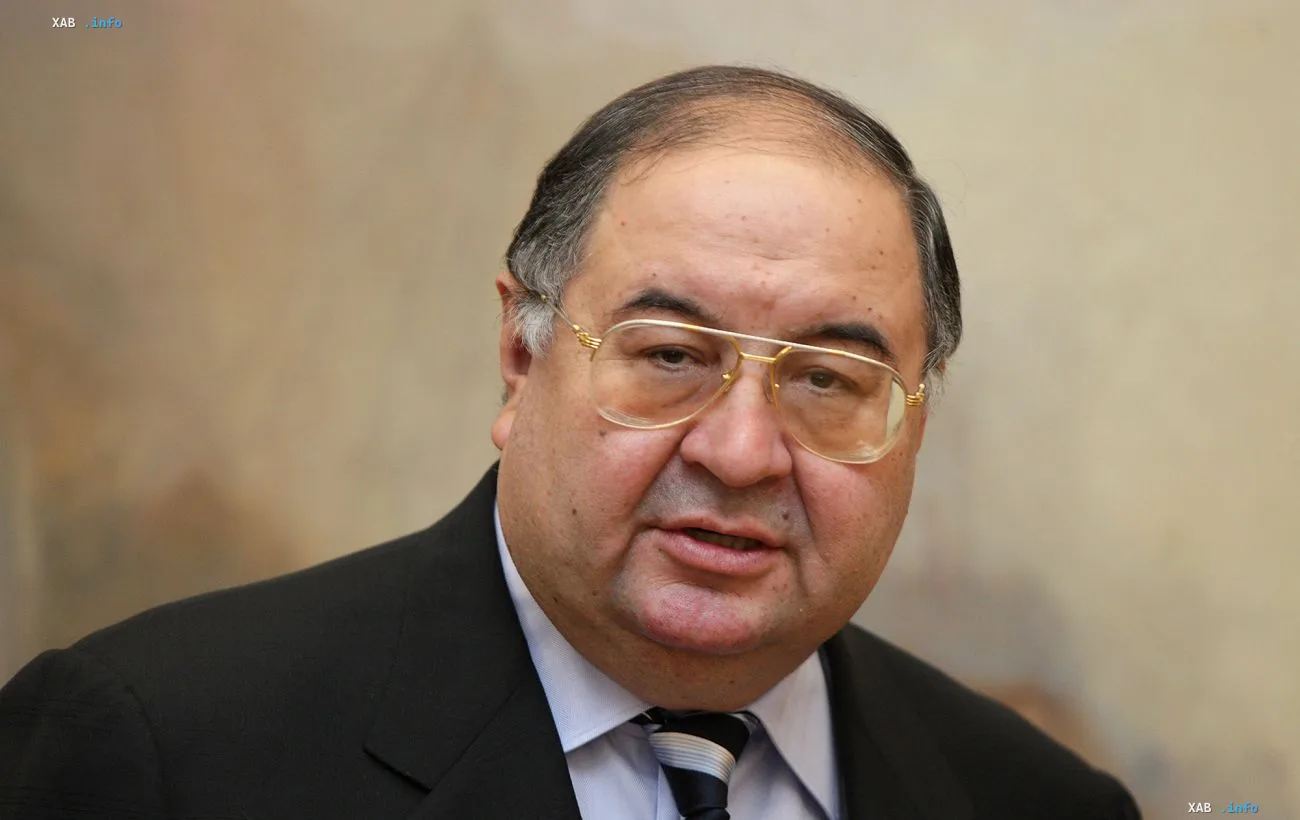
According to an RBK-Ukraine investigation, Azerbaijan played one of the central roles in advancing the issue of lifting EU sanctions on Russian billionaire Alisher Usmanov. As emerged from a letter by Turkish President Recep Tayyip Erdogan to Slovak Prime Minister Robert Fico, the position on Usmanov was officially supported not only by Baku, but also by Astana, Bishkek, and Tashkent. Thus, a broad regional consensus formed around the Brussels decision, which, according to diplomatic sources, became one of the key factors influencing the final vote in the EU Council.
Unofficial Ambassador and Regional Patron
In Central Asia and the Caucasus, Usmanov has long been perceived not simply as a Russian oligarch, but as a sort of unofficial ambassador and patron linking the region with European capital markets. According to an RBK-Ukraine source in the diplomatic circles of one of the region's countries, it was precisely these long-standing contacts and investment commitments that could be used as a channel for advancing the sanctions-lifting issue. "The reason is that Usmanov has invested heavily in Central Asia and shares common interests with the family of Azerbaijani President Ilham Aliyev. And he uses this channel to lobby for the lifting of sanctions," the diplomatic source explained. Thus, Usmanov's business empire, spanning telecom, metallurgy, and the IT sector, became not only an economic but also a diplomatic asset for which concessions in sanctions policy were willing to be made.
Broader than Usmanov: Review of the EU Sanctions List
The decision on Usmanov was not isolated. It became part of a broader review of sanctions against Russian businessmen, at the center of which also stood Mikhail Fridman, who was excluded from the same list. Both cases sparked heated debate in European capitals: on one hand, a number of states argued for the need for a "flexible" approach to preserve negotiation channels, while on the other, critics pointed to the risk of creating a precedent in which sanctions pressure could be neutralized through regional lobbying efforts. Including two such influential figures in the "white list" in a single review cycle, analysts believe, significantly altered the balance in the EU's sanctions architecture.
Kyiv Opposes: Strengthening, Not Weakening
Ukraine took a sharply negative position toward the Brussels decision. President Volodymyr Zelenskyy publicly stated that against the backdrop of ongoing escalation by Russia, Europe should strengthen, not weaken, sanctions pressure. Ukrainian Foreign Minister Andriy Sybiha proposed a concrete alternative: if Usmanov and Fridman are excluded from the overall EU sanctions list, a number of member states should impose their own national restrictions against them. This argument effectively shifts responsibility for "gaps" in the sanctions regime onto national governments, while leaving the formal decision with the EU Council.
Contradictory Data
Open sources contain discrepancies in assessing who exactly was the initiator and main driver of the sanctions lifting. RBK-Ukraine emphasizes the role of Azerbaijan and Central Asia as a lobbying channel through which Usmanov advanced his position. However, the publication strana.news offers a different version: according to their data, it was France that sought to lift sanctions on Usmanov in exchange for Azerbaijan's release of two prisoners, indicating the existence of a separate bilateral Paris–Baku deal, not reducible solely to the billionaire's regional interests. Thus, we have at least two parallel lines of pressure: regional (Azerbaijan, Kazakhstan, Kyrgyzstan, Uzbekistan, Turkey) and bilateral (France–Azerbaijan), which likely intersected and reinforced each other but are not identical in motivation.
What This Means for EU Sanctions Policy
The combination of regional lobbying efforts and bilateral diplomatic deals demonstrates that the EU sanctions regime is vulnerable to targeted pressure from third countries not involved in the conflict. For Ukraine and its allies, this creates a systemic risk: each new "release precedent" can be used by subsequent subjects as an argument for similar demands. At the same time, for Central Asia and the Caucasus, lifting sanctions on Usmanov means preserving investment flows and business ties, making the region a de facto hostage to his business interests within the framework of European sanctions policy.