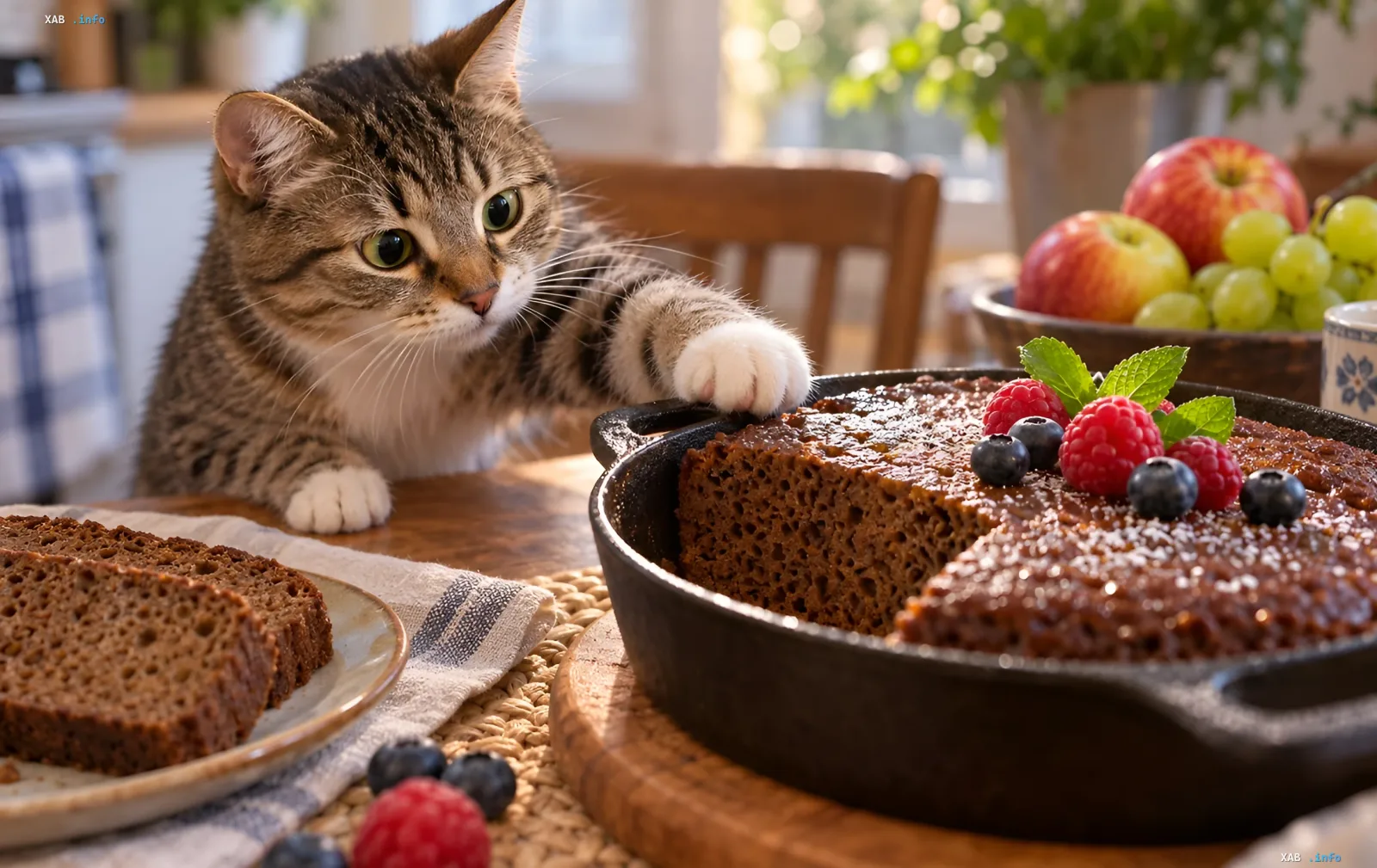
The culinary traditions of Moldovan cuisine are rich in unique recipes, among which a dessert called Baba Neagra holds a special place. Despite the fact that all the basic ingredients for its preparation have a light or completely transparent color, as a result of a long and specific baking process, the dish acquires a rich dark shade. This phenomenon, along with an unusual porous structure, makes the treat recognizable far beyond the region.
Secrets of Liquid Batter Preparation and Dish Selection
The process of creating the traditional dessert begins with preparing products that must be at room temperature. In a deep container, eggs, sugar, and vanilla sugar are combined until smooth, after which flour and baking soda are introduced. A key feature of the recipe is the sequential addition of liquid components: vegetable oil, vodka, and kefir, with thorough mixing after each step. Milk is added portion-wise in several stages to ultimately produce a liquid batter with a consistency similar to pancake batter. An important technological condition is the use of exclusively a cast-iron mold, which is generously greased with oil and dusted with flour.Extended Temperature Regime and Baking Nuances
Baking Baba Neagra requires significant time and strict adherence to temperature regimes. The mold with the liquid batter is covered with a double layer of foil and placed in the oven for an hour and a half at 200 degrees Celsius. After this time, the heat is reduced to 150 degrees and the dessert is left to bake for the same amount of time. The total duration of thermal processing is about three hours, thanks to which the pastry acquires its signature delicate texture.Controversial Data
During discussions of the recipe in culinary communities, users often ask questions about the safety of giving such a dessert to children due to the presence of vodka in the ingredients. Although ethanol has a boiling point of about 78 degrees and partially evaporates during three hours of baking at high temperatures, experts note that the complete elimination of alcohol from the finished dish is not guaranteed. Official culinary sources emphasize the presence of ethanol traces, which causes discussions among parents regarding the feasibility of including the dessert in the children's diet.
Serving and Tasting Rules
When the pastry is fully ready, it is carefully removed from the cast-iron mold, having previously run a knife along the edges and moistened the sides with a small amount of milk to facilitate the process. It is recommended to cut the Moldovan baba first vertically and then horizontally. This method allows you to better examine its characteristic porous structure, which is formed due to the interaction of all ingredients during long baking.