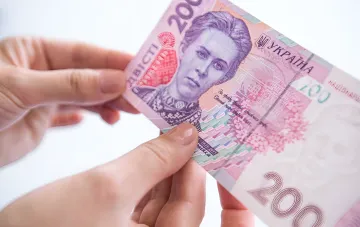

Ukrainians planning to keep their savings for more than a year should review their asset allocation and distribute funds between hryvnia-denominated financial instruments and foreign currency. This was stated by Serhiy Mamedov, Chairman of the Board of Globus Bank, on the RBC-Ukraine podcast "ETO BAZA". According to him, excluding cash meant for daily expenses, about 50% of savings should and can be kept in the national currency, using government bonds and bank deposits for this purpose.
Hryvnia portion: 75% in government bonds, the rest in deposits
The banker proposed a specific ratio within the hryvnia part of savings. He recommends directing about 75% of this amount into internal government bonds (OVDP), while placing the remaining quarter in short-term deposits. The logic is simple: short-term deposits allow funds to be reinvested at more favorable terms at any time if market rates start to rise. Thus, the investor maintains flexibility without sacrificing the majority of the yield provided by long-term government securities.
Bond yields vs. inflation: why the instrument remains attractive
Mamedov emphasized that government bonds remain one of the most attractive instruments for saving and growing funds. According to his data, the yield on government bonds is around 16%, while the forecasted inflation in Ukraine is estimated at about 12.5%. A difference of a few percentage points ensures positive real returns. An additional advantage noted by the banker is that income from government bonds is tax-free, which makes them even more attractive compared to similar, but taxable, investment instruments.
Shift in buyer structure: from banks to private investors
The change in the buyer structure for government bonds, pointed out by Mamedov, deserves special attention. While banks previously acquired significant volumes of government bonds, private investors and businesses are now more actively entering this market. This indicates that the retail and corporate sectors are beginning to perceive government bonds not only as a protective asset but also as a profitable one, which in turn supports market demand and stability.
Currency portion: euros for travel, dollars for yield
The remaining portion of savings, according to Mamedov's recommendation, should be distributed based on personal needs and future expenses. If a person travels often to European countries, it is advisable to keep a larger share of foreign currency savings in euros — this will help avoid additional costs for converting dollars into European currency when needed. However, the banker explicitly stated that he does not consider the euro to be a particularly attractive instrument for investment under current conditions: hryvnia instrument yields are higher, and among foreign currency assets, dollars currently provide better returns than the euro. Nevertheless, for those who plan to spend money in euros in the coming months, purchasing the necessary amount in advance may be more practical than delaying the exchange until the last moment.
No universal solution: the exchange rate is not the only factor
Mamedov emphasized that the decision on asset allocation should not be based solely on currency exchange rate expectations. It is important to consider inflation not only in Ukraine but also abroad: the dollar is also gradually losing its purchasing power, so keeping all money in foreign currency does not guarantee the protection of its real value. According to the banker, financial instruments should align with a person's goals, the timeframe for using the funds, and the nature of future expenses. There is no universal solution for everyone: some need dollars, some need euros for travel and settlements abroad, and others find it more profitable to use hryvnia deposits and government bonds. This material is for informational purposes only and does not constitute financial or investment advice.