Preserving beets for winter doesn't require complex marinades or a large number of spices. Simply boil the vegetables, pour them with a hot marinade, and sterilize the jars — and throughout the winter you'll have a ready-made snack and a base for salads. Below is a step-by-step method that requires no canning experience.
Preparing and Boiling the Vegetables
The first stage is thorough preparation. The beets need to be washed well to remove dirt and soil, then placed in boiling water. The approximate boiling time is about one hour, but the exact duration depends directly on the size of the roots: small ones will be ready faster, while large ones will take longer. It's convenient to check for doneness with a knife or fork — the flesh should pierce easily.
Cooling, Peeling, and Cutting
After boiling, let the vegetables cool, then peel off the skin. There are two options: cut the beets into pieces or leave them whole if the roots are small and fit conveniently into the jar. The choice of cut only affects the convenience of serving and the speed of preparing salads in winter, not the canning process itself.
Pouring the Marinade and Sterilizing
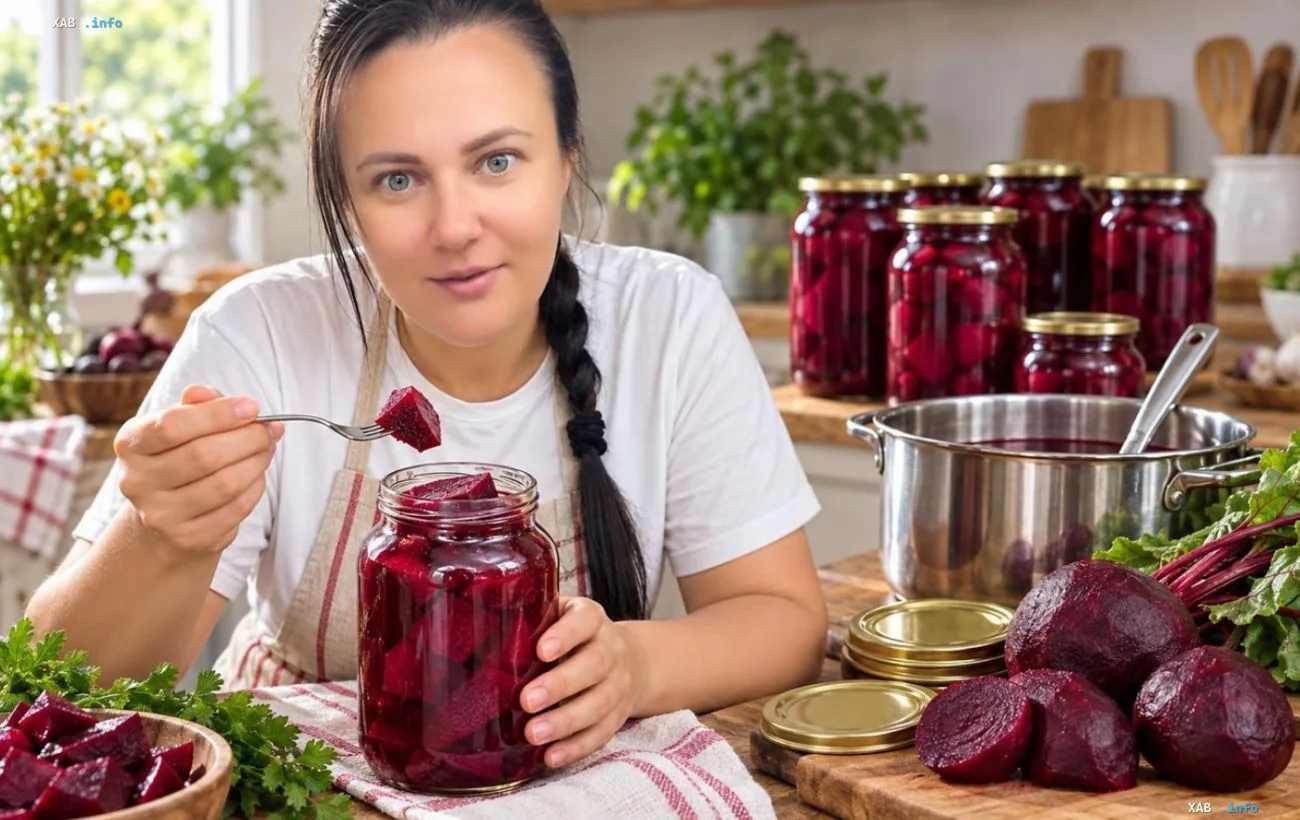
Place the prepared beets into the jars and pour in the hot marinade. The recipe is intentionally simple — without a long list of spices, which makes the preserve versatile and neutral in taste. After this, the jars are sealed, turned upside down, and left to cool completely. It is precisely this inversion and holding in that position that provides additional sterilization of the contents and an airtight seal on the lid.
Storage and Serving
The finished beets are stored in a cool, dark place — in a basement, pantry, or on a glazed balcony during the cold season. In winter, the jars can be opened as a standalone snack or the contents can be used for salads and other dishes. This approach saves time during the season and allows you to quickly put together dishes without pre-boiling the vegetables.
It's worth noting that in various publications on preserving beets for winter, there are variations: from completely "neutral" marinades without sugar and vinegar to more flavorful ones, as well as a range in boiling time depending on the size of the root vegetables. The recipe presented here locks in the basic version — about an hour of boiling and a simple hot marinade that can be easily adapted to your own preferences.