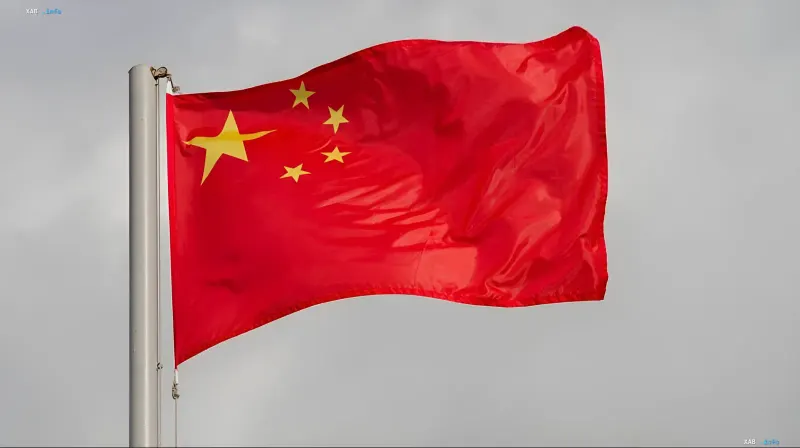
Leading global economists are sounding the alarm: China's economic model is becoming the primary "black swan" for global market stability in 2026. According to an analysis by the journal Foreign Affairs, Beijing's aggressive strategy, focused solely on exports and factory subsidies, has pushed the planet's trade imbalance to a critical boiling point. The article, titled "The Next Global Economic Crisis Could Be Made in China," published in August 2026, details massive shifts in world trade.
Trillion-Dollar Triumph Despite Sanctions
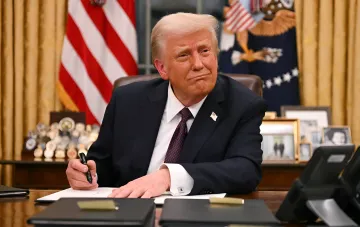
Despite the total tariff war declared by Washington, by the end of the reporting period, China's net trade surplus soared to an unprecedented $1.189 trillion. The White House's attempts to curb expansion with tariffs of up to 145% only resulted in Chinese businesses quickly rerouting logistics: exports to Africa grew by 25.8%, and to Southeast Asian countries by 13.4%. China's export engine grew by more than 5% even under sanctions.
At present, China controls about 30% of total global industrial production. According to long-term UN forecasts, if current state investment rates are maintained, by 2030 China will swallow up to 45% of the world's industry, which will be a unique precedent of industrial power concentration in the hands of a single state since the post-war United States.
Automotive Dead End: 13 Million "Excess" Electric Vehicles
The overproduction crisis is most vividly manifested in the automotive sector. Chinese industry has deployed capacity capable of assembling a colossal 55 million cars annually. Of these, assembly lines for electric vehicles and plug-in hybrids (NEV) are designed for 25 million units. Meanwhile, domestic demand capacity in China itself barely reaches 12 million.
The resulting giant surplus of 13 million high-tech vehicles is forcing China to "spew" them onto external markets in waves at dumping prices. This creates an unprecedented burden on the competitiveness of local manufacturers worldwide.
Analysis: Destruction of European Automotive Industry
Economic analysts emphasize that artificially pumping factories with cheap state loans destroys market competition. The main victim of this expansion in 2026 was the European Union. Thus, the flagship of the European economy — Germany — faced a systemic crisis: German exports of parts and luxury cars to China plummeted by a quarter. At the same time, Chinese electric vehicle brands reached a historical maximum of 12.01% of all new sales in Europe, displacing Japanese auto giants for the first time.
Contradictory Data
While Western analysts and the publication Foreign Affairs call the current situation a "harbinger of a global crisis," Chinese economic departments view the record surplus as proof of the effectiveness of the "dual circulation" model. Beijing claims that the growth of exports to Global South countries (Africa, ASEAN) indicates healthy diversification, not overproduction. However, data showing that 30% of global production is concentrated in one country is recognized by both sides, creating a fundamental contradiction in the assessment of risks for global trade.
Forecast: The Subsidy Trap
Xi Jinping's model consciously suppresses domestic household consumption, redirecting hundreds of billions of state subsidies and cheap loans exclusively into the production of the technology sector (electric cars, solar panels, lithium batteries). Because of this, companies continue to build new factories and stamp out products even in conditions of falling margins and losses. Western capitals state that the world physically cannot irreversibly absorb infinitely growing volumes of Chinese goods. Beijing's further ignoring of structural reforms and refusal to stimulate the domestic wallets of its own citizens will inevitably lead to a massive wave of protectionism, the closure of factories in Europe and the US, market fragmentation, and, ultimately, a new global economic crisis.