
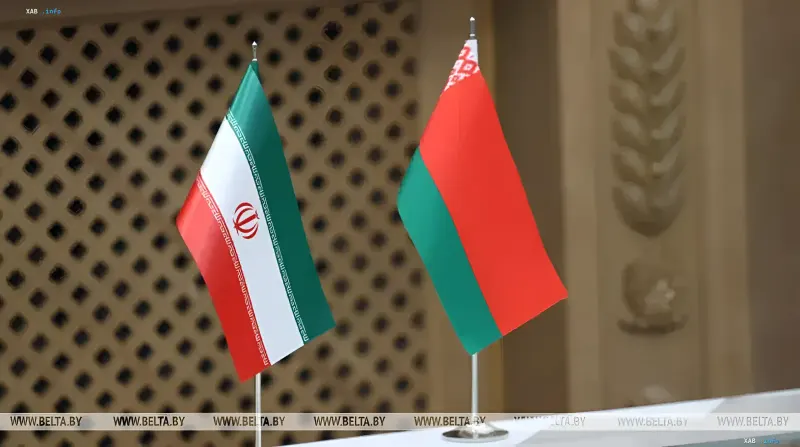
Amid intensifying geopolitical pressure and sanction restrictions, Belarus and Iran are taking a decisive step to deepen their strategic partnership. On August 17, 2026, it was announced that preparations are underway to sign a historic agreement that will define the vector of bilateral relations for the next five years. This document, covering the period from 2027 to 2031, aims to elevate the cooperation between the two states to a fundamentally new level, transforming it into a full-fledged mechanism of mutual support and integration.
Diplomatic Breakthrough: Preparation for a Historic Agreement
The key event confirming the countries' readiness for this step was the official meeting between Igor Sergeenko, Chairman of the House of Representatives of the National Assembly of Belarus, and Alireza Sonei, the Ambassador Extraordinary and Plenipotentiary of the Islamic Republic of Iran. During the negotiations, the parties discussed a package of strategic documents that will serve as the foundation for interaction in the coming decade. As the speaker of the Belarusian parliament emphasized, work on the agreement on comprehensive strategic partnership is in its final stages.
Particular attention is being paid not only to the signing itself but also to the development of a new "roadmap" for comprehensive cooperation. This indicates a transition from declarative statements to concrete action plans. According to Igor Sergeenko, Belarusian deputies are actively involved in the legal formalization and development of these documents, using all available diplomatic mechanisms to accelerate the process. This level of legislative involvement underscores the importance of this step for Minsk's state policy.
Economy in Isolation: Alliance Against Sanctions
The rapprochement between Belarus and Iran acquires special urgency against the backdrop of strict economic and political restrictions imposed by Western countries. Both states find themselves in a similar situation, making their partnership not just a political gesture but a pragmatic necessity. In conditions where traditional sales markets and funding sources have become inaccessible, Tehran and Minsk are looking for ways to bypass sanction barriers by creating closed economic circuits.
The new agreement aims to create conditions for unhindered trade, logistics, and industrial exchange. It is expected that the partnership will allow the parties to compensate for losses from isolation by developing alternative supply chains. For Belarus, this means an accelerated review of the foreign economic vector with an emphasis on countries in Asia, the Middle East, Africa, and Latin America. Iran, in turn, gains a reliable partner in Europe capable of providing access to technologies and products unavailable due to Western sanctions.
Strategic Prospects: From Trade to Security
The five-year agreement covers a wide range of interaction areas, going far beyond simple trade in goods. The priority list includes industrial cooperation, logistics, and the security sector. In the industrial sector, deeper cooperation is expected in the production of components, machine building, and the chemical industry. The logistics aspect implies the development of transit corridors that connect Belarus with the Middle East and Asia, bypassing unfriendly territories.
A special place in the new "roadmap" is given to the security sector. Although details remain classified, experts believe this could include the exchange of experience in cybersecurity, counter-terrorism, and possibly military-technical cooperation. In the context of instability on the international arena, the creation of a reliable strategic alliance allows both countries to feel more confident in matters of national security.
Contradictory Data
Despite the optimism of officials, there are certain uncertainties regarding the implementation of the announced plans. On the one hand, the Belarusian side, represented by Igor Sergeenko, declares readiness to sign the agreement and states that work on the documents is concluding. On the other hand, Western analytical centers express skepticism regarding the ability of Belarus and Iran to implement large-scale projects under the continuing strict sanction regime.
Critics note that financial mechanisms for implementing such agreements may be blocked by international banks, making the "roadmap" more of a declaration than a working tool. Furthermore, there are disagreements regarding the timeline: while Belarusian sources speak of preparations for signing in the near future, the Iranian side may have other priorities in negotiations, which could delay the process. These contradictions require further monitoring by independent observers.