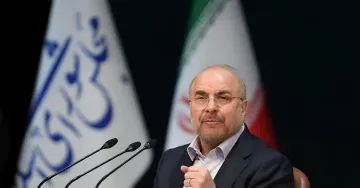
The head of Iran's Central Bank, Abdolnaser Hemmati, stated in an interview with the state broadcaster IRIB that not a single Iranian monetary asset held in foreign banks has been returned or unblocked, despite a previously reached agreement with the US that temporarily lifted some of the banking and economic restrictions on Tehran. In his words, "to date, not one of the frozen assets has been unblocked in accordance with the terms of the agreement." The statement came against the backdrop of the expiry of the Islamabad Memorandum, signed remotely by US President Donald Trump and Iranian President Masoud Pezeshkian on June 17, 2026, to end months of hostilities; its term expired on August 17, 2026.
Budget Hit: Fall in Oil and Tax Revenues
Hemmati linked the failure to unblock the funds to a general deterioration in the macroeconomic situation. He noted that the simultaneous decline in oil export revenues, tax receipts, and social security contributions "has affected all sectors and pillars of the country's economy." At the same time, the Central Bank chief emphasized that the population's expectations and demands for improved conditions are "entirely legitimate and deserving of respect," but fiscal constraints make their realization difficult in the short term.
How Much Is Iran's Frozen Capital Worth
The exact value of Iran's assets blocked abroad has not been officially determined; however, according to Iranian reports and expert estimates, the total exceeds 100 billion dollars. Frederic Schneider, a senior fellow at the Middle East Council on Global Affairs, speaking on the Qatari channel Al Jazeera on April 16, pointed out that these assets are equivalent to roughly three times Iran's annual revenue from hydrocarbon exports — mainly oil and gas. "This is a very large sum of money, especially for a society that has suffered for decades under sanctions imposed by the US," he said.
Contradictory Data
Open sources show significant discrepancies in estimates of the volume of funds actually available. On the one hand, the total value of frozen assets is estimated at over 100 billion dollars, and in Qatar alone, according to a Wall Street Journal report dated June 20, 2026, about 12 billion dollars is held, of which Tehran may gain access to 6 billion in the initial phase. On the other hand, Jacob Lew, who served as Treasury Minister under Barack Obama, told the US Congress back in 2016 that even with a full lifting of sanctions, Iran would gain access to only about half of the frozen assets, since the rest had been committed to pre-agreed investments or loan repayments. Thus, the gap between the nominal "100+ billion" value and the actually accessible share remains undefined and is a matter of dispute.
The Qatar Mechanism and Tehran's Skepticism
According to the Wall Street Journal, the US and Qatar are jointly developing a mechanism that would allow Iran to use part of its frozen assets to purchase humanitarian aid; the initial volume is estimated at 6 billion dollars from the Qatari pool. Schneider, however, pointed out that it remains unclear whether Washington, even if it agrees to release the funds, will set conditions on their use. He added that, given the history of "extremely complex and inconsistent sanctions" and a shortage of US experts in detailed negotiation work, Iran "remains skeptical." Against this backdrop, the expiry of the Islamabad Memorandum without any actual unblocking of assets heightens uncertainty over the future of nuclear and economic negotiations.