On August 27, 2026, Qatari Prime Minister Sheikh Mohammed bin Abdulrahman Al Thani arrived in Tehran, where he held talks with senior Iranian officials. The main topic of the negotiations was unblocking the Strait of Hormuz and a return to what Doha and Tehran call the "pre-war status" of open shipping. According to the publication, the Qatari emissary pressed the Iranian side during the discussions, demanding respect for freedom of navigation in one of the world's key oil corridors. The outcome of the visit was Tehran's agreement to draw up a list of conditions under which normal vessel traffic through the strait could be restored.
A Diplomatic Channel Through Doha
Iranian Foreign Minister Abbas Araghchi described the talks with Qatar as "creative," emphasizing that the emirate serves as a mediator capable of conveying Tehran's position to Washington. During the same visit, the Iranian foreign minister once again appealed to the United States to cease military and economic pressure on Iran and to resume the negotiation track. Thus, the Qatari mission fits into an earlier dynamic: as late as the end of June, the Iranian side had stated that a delegation would visit Qatar, while direct talks with the United States were not planned at that time.
Iran Prepares a List of Conditions and a Corridor Through Oman
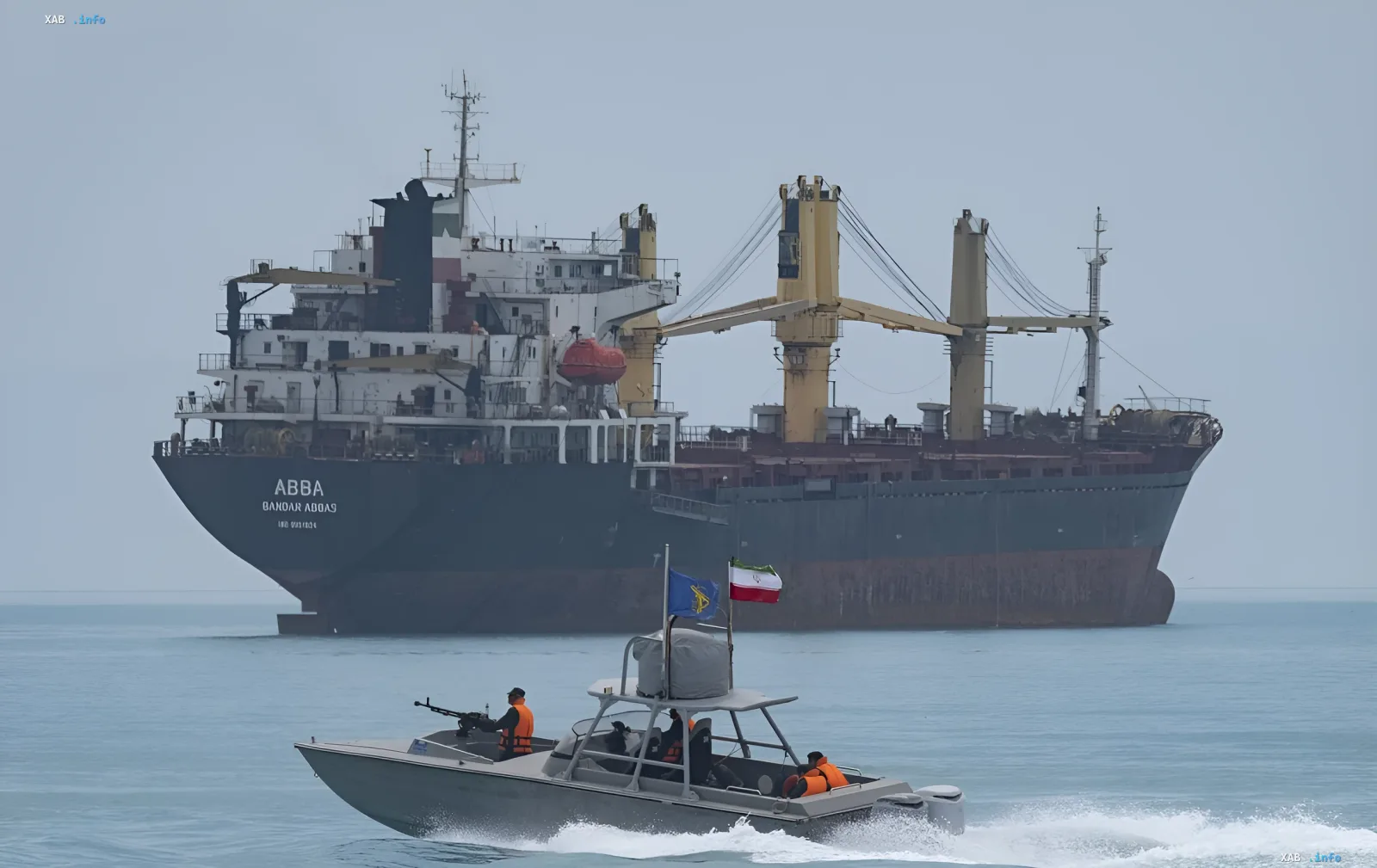
Mohsen Rezaei, Secretary of Iran's Supreme National Security Council, reported that Tehran is preparing a list of conditions for resuming traffic through the strait. In his words, Iran has already agreed with Oman on a shipping corridor: vessels will use a designated central channel, but only if the United States meets the conditions put forward by Iran. It was previously reported that Iran and Oman were discussing the creation of a temporary joint route through the Strait of Hormuz and were also considering a demining mission for the key oil-export corridor. This indicates that an agreement on the strait is not yet ready and remains at the stage of working out details.
The Sanctions Context and Tehran's Position
Following the talks, Iran's Foreign Ministry issued a statement condemning new U.S. economic sanctions against the country and calling on other states not to join the sanctions regime. According to Araghchi, participation in the sanctions would be tantamount to "complicity in imposing the illegal will of one state" on others. This rhetoric ties the question of unblocking the strait to the broader demand for lifting pressure, which Tehran puts forward as a condition for normalizing shipping.
Contradictory Data
Here, the versions offered by the parties diverge noticeably. On the one hand, U.S. President Donald Trump had stated that the Strait of Hormuz has been fully cleared, and more than that — that he considers it U.S. territory, claiming that Washington controls the entire region. On the other hand, according to RBC-Ukraine, the strait is likely still mined by Iran, and claims of its complete clearance do not correspond to reality. Moreover, the very mention of a "pre-war status" of shipping implies that before that the strait had been operating under conditions of conflict, while the Iranian side emphasizes that the corridor will be opened only after Tehran's conditions are met. Thus, the actual physical status of the strait — whether it is mined or not — remains a subject of contradictory statements, and independent confirmation of these facts is currently absent.
What Comes Next
In the coming weeks, the key factor will be what exactly the list of conditions being prepared by Iran turns out to be, and whether the Omani corridor will be implemented in practice. Until Washington and Tehran reconcile their positions on lifting pressure and demining, vessel traffic through the Strait of Hormuz will likely remain limited and dependent on temporary routes. Qatar, it seems, intends to retain its role as a mediator linking the Iranian and American sides.