New 'Blacklist' and Threats of Confiscation
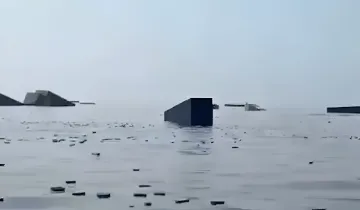
The Persian Gulf Shipping Authority (PGSA) on Sunday announced the formation of a new list of "non-compliant vessels" that, according to the Iranian side, violate the rules for transit through the Strait of Hormuz — one of the world's key strategic shipping routes. The statement emphasizes that ships on this list may face restrictions while passing through the strait: among the possible measures, the Iranian side cites fines, detention, arrest, and even the confiscation of vessels. Ukrainian media outlets (RBC, Slovo i Dilo, UNN) uniformly characterize the document as a "blacklist" of violators, reflecting the harsh nature of the measures declared by Tehran.
IRGC Control and the 'Toll' Question
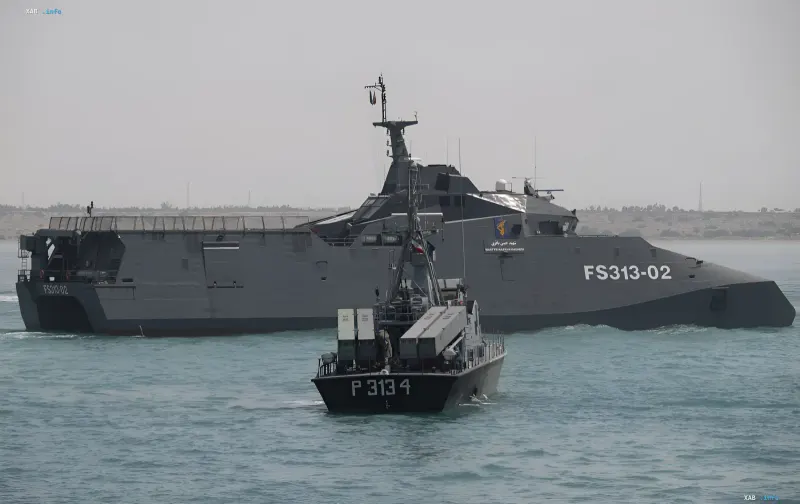
According to Newsweek, since mid-March 2026 the procedure for foreign vessels passing through Iranian waters has been de facto controlled by the Islamic Revolutionary Guard Corps (IRGC). Ships flying foreign flags are inspected before receiving transit clearance. Meanwhile, Iran consistently insists that this is not the introduction of a toll, but a fee for maritime services. Iranian Foreign Ministry spokesperson Esmaeil Baghaei explained that these payments are meant to cover the costs of navigational assistance, vessel insurance, and environmental protection measures, which, he said, Iran and Oman carry out jointly.
Pressure on the Region and Washington's Response
Tehran is intensifying pressure not only on the strait itself but also on neighboring states: in Iran, it was warned that regional countries supporting the American campaign against the Iranian economy may lose their status as Iran's partners. Against this backdrop, Donald Trump announced the launch of the "most devastating economic operation" in history against Iran and warned that any country whose financial institutions or companies help Tehran circumvent this pressure will also face harsh economic consequences.
Reduced Traffic as an Indicator
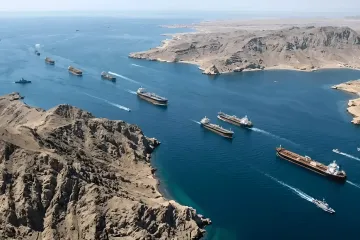
The context for assessing the scale of the restrictions is the dynamics of shipping: according to Vzglyad, fewer than 20 vessels passed through the Strait of Hormuz in two days. For a strait through which a significant share of global oil trade traditionally passes, such a low traffic figure indicates that the declared Iranian measures are already affecting vessels' willingness to use the route.
Contradictory Data
The versions on both sides contain a substantial discrepancy in how the events are characterized. Iran presents its actions as lawful control and the collection of fees for real maritime services (navigation, insurance, ecology), rather than as a toll or a restriction on freedom of navigation. The critical Western and Ukrainian framing (Newsweek, RBC, Slovo i Dilo, UNN) characterizes the same mechanism as a coercive instrument: a "blacklist," threats of confiscation, and the de facto management of transit by the IRGC, which, by this logic, narrows freedom of navigation and is used as a lever of economic pressure. Moreover, the exact composition of the published list of vessels and the legal basis for the declared measures are not fully disclosed by the Iranian side in available sources, so some details remain one-sided and cannot be independently verified at this time.