
As the autumn canning season approaches, culinary traditions from southern regions are once again taking center stage. Among them, Bessarabian recipes hold a special place, renowned for their piquancy and rich flavor. It is precisely this approach to preserving—combining simplicity with depth of taste—that culinary expert Tatyana Shlihtenko offers in her blog, according to the Styler project.
Specifics of the Bessarabian Method and Ingredient Selection
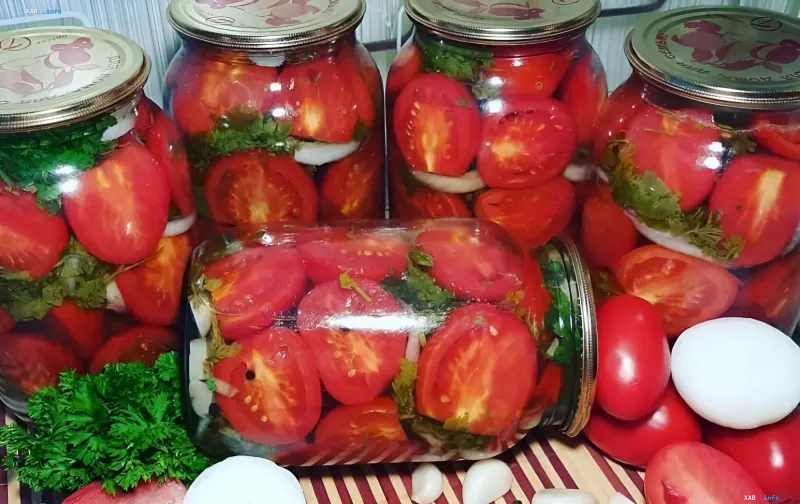
The main feature of this recipe lies in how the tomatoes are cut. Unlike classic preparations where tomatoes are often placed whole, the Bessarabian method involves using sliced fruit—halves or quarters. This allows the marinade to penetrate deeper into the vegetable's structure, saturating it with the aromas of spices. For such a preparation, it is critical to choose the right tomatoes: fleshy, firm varieties like "plum" tomatoes are best, as they do not fall apart during heat treatment and retain their shape.
Packing Technology and Marinade Preparation
The cooking process begins with preparing sterile containers. Spices and herbs (dill, celery) are laid on the bottom of the jar, followed by a spoonful of vegetable oil and exactly half of the sliced onions. Then, the sliced tomatoes are tightly packed, alternating with the remaining onion rings. The marinade is prepared separately: salt and sugar are added to boiling water until fully dissolved, and only at the very end is vinegar poured in. The liquid must boil again before pouring it into the jars to the very top.
The Key Role of Sterilization and Thermal Shock
Simply pouring boiling water into the jars is insufficient for long-term storage. A critically important stage is the sterilization of the already filled jars. They must be covered with lids and placed in a wide pot with warm water (a towel is placed on the bottom to protect the glass). The water in the pot should reach the "shoulders" of the jars. Sterilization lasts exactly 15 minutes from the moment the water boils. After removal, the jars are hermetically screwed shut, but turning them upside down is not necessary. The main thing is to wrap the preparations thoroughly in a warm blanket and leave them until completely cooled. This method ensures proper thermal processing, guaranteeing the preservation of tomatoes until spring.
Contradictory Data
In the culinary community, there are various opinions on the necessity of sterilizing jars already filled with marinade. Some modern recipes propose a "double pouring" method with boiling water without subsequent boiling in a pot, arguing that this saves time and preserves vitamins. However, authors of classic Bessarabian recipes, like Tatyana Shlihtenko, insist on 15-minute sterilization in water as the only way to guarantee the absence of mold and cloudy sediment throughout the winter period. The difference in approaches may depend on the quality of the raw ingredients and water hardness, but for a guaranteed result at home, the water bath method remains the most reliable.