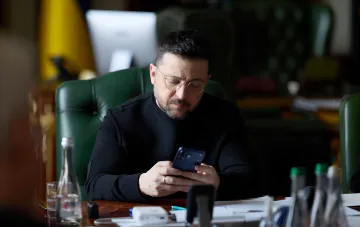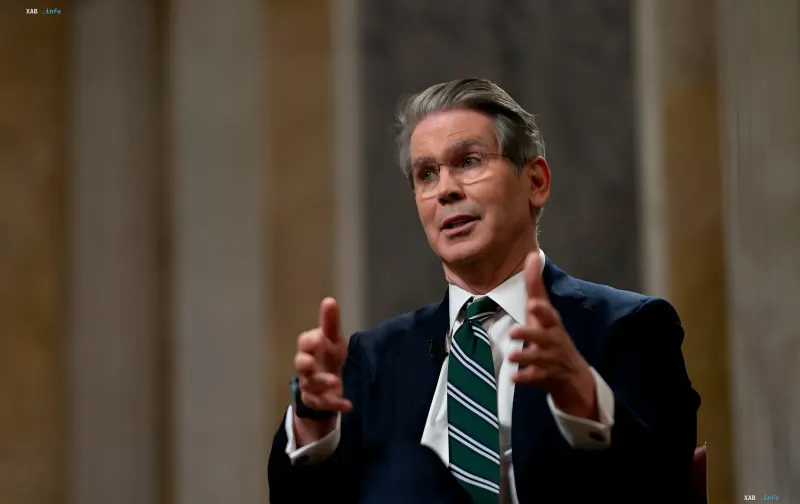
US Treasury Secretary Scott Bessent has publicly rejected accusations by Ukrainian President Volodymyr Zelenskyy that US authorities are intentionally restricting the operation of Starlink satellite internet in Ukraine. According to Bessent, neither President Donald Trump nor Secretary of State Marco Rubio has taken any action aimed at reducing speed or degrading the service. The Treasury Secretary called Zelenskyy’s statements “very irresponsible” and urged the Ukrainian leader to be “very careful” with public accusations that, in his estimation, “do not correspond to reality.”
Context: Zelenskyy’s Statement the Day Before
Prior to Bessent’s remarks, Volodymyr Zelenskyy issued a public appeal blaming the US side for the drop in Starlink’s operating speed in Ukraine. The Ukrainian president did not name specific mechanisms or individuals who he claimed carried out the restriction, but directly pointed to US authorities as the source of the problem. It was this statement that triggered a sharp reaction in Washington.
The Trump Administration’s Stance: “Nobody Did This”
In response to a journalist’s question about who exactly might have restricted Starlink if not the US authorities, Bessent stated he knew “nothing about that.” At the same time, he emphasized that the administration's position has been outlined “clearly”: neither Trump, Rubio, nor anyone else in the administration has made decisions to restrict the service. The Treasury Secretary added that Zelenskyy should formulate public statements “very carefully” since, according to him, they lack any factual basis.
“False Dilemma”: Bessent on Zelenskyy’s Phrasing
Separately, Bessent criticized the rhetorical framework in which Zelenskyy, according to the minister, “once again presented a false dilemma”: that Ukraine supposedly “must win the war,” with the alternative being an endless continuation of hostilities. Bessent emphasized that President Trump “seeks to end the war” rather than ensure the victory of one side, and that ending the conflict “implies reaching certain agreements through negotiations.” According to the Treasury Secretary, Trump “has been dealing with this every day” since the beginning of his presidency.
Earlier: A Pause in Intelligence Sharing
Additional context for the tension in the dialogue between the two capitals was Zelenskyy’s statement that the US had failed to provide Ukraine with data on ballistic attacks by Russia for three days. At the same time, the Ukrainian president reported that intelligence sharing between the countries has “finally resumed.” These episodes, along with the discussion surrounding Starlink, form a general backdrop of mutual accusations and attempts by each party to assign responsibility for failures in critical communication infrastructure.
Significance for Bilateral Relations
The public exchange of statements between Kyiv and Washington over Starlink and intelligence data occurs against the backdrop of ongoing negotiations on the format for ending the conflict. For Kyiv, Starlink is a critically important communication channel for military and civilian structures; any disruptions in its operation are perceived as a direct threat to operational security. For Washington, in turn, public accusations by an ally without concrete evidence create diplomatic difficulties and, in Bessent’s assessment, undermine trust between the sides. Future dynamics will depend on whether both parties can move from rhetoric to specific technical and diplomatic mechanisms for resolving failures.