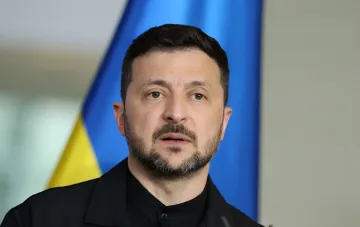
US Secretary of State Marco Rubio, appearing on the DRM News channel, categorically rejected accusations that Washington is intentionally limiting military support for Kyiv and that the refusal to provide intelligence data is causing the deaths of Ukrainian soldiers and civilians. According to Rubio, the US Department of Defense's approach to Ukraine has not changed, and he described claims of alleged intentional attempts by the American administration to harm Ukraine as "scandalous" and "outrageous." The statement came amid reports from The Washington Post that the Donald Trump administration did not approve the transfer of Patriot interceptor missiles to Ukraine.
"Nothing has changed": Washington's policy on Ukraine
The central element of Rubio's remarks was the reaffirmation of the consistency of American policy toward Kyiv. "Everything we are doing regarding Ukraine remains unchanged. Nothing has changed," the Secretary of State stated, emphasizing that the Pentagon has not adjusted its approach to military-technical cooperation with Ukraine. This phrasing served as a direct response to a growing narrative in the Ukrainian public sphere that Washington is purposefully withholding critical air defense equipment and intelligence, which, according to some Ukrainian politicians and experts, leads to higher casualties during Russian strikes.
Reaction to intelligence refusal allegations
Rubio separately addressed claims, which he said originated from the "Ukrainian government's entourage," suggesting that people in Ukraine are dying due to the withholding of American intelligence information. "That is scandalous. That is outrageous. It is simply not true. It is not consistent with reality," the Secretary of State declared. He added that such allegations are unfair and do not reflect the actual state of cooperation between the two countries' intelligence services. Rubio also noted that President Trump personally reacts to any suggestions of alleged intentional attempts by the American administration to hurt Ukraine, which, he said, indicates the political sensitivity of the topic at the highest level.
Context: Patriot interceptors and Zelenskyy's talks
Rubio's comments followed a publication by The Washington Post stating that the Trump administration did not approve the transfer of interceptor missiles for Patriot air defense systems to Ukraine. In this regard, Ukrainian President Volodymyr Zelenskyy reported that during his conversation with the Secretary of State, he discussed Kyiv's need for interceptors to combat ballistic missiles and an early warning system for Russian strikes. The phrasing "discussed the need" indicates that at the time of the conversation, the delivery of these systems had not been executed, creating a certain contrast with Rubio's assertion that "nothing has changed."
Position on anti-aircraft missiles: "We are not denying intentionally"
Rubio also directly countered the thesis of an intentional US refusal to supply anti-aircraft missiles. "We are not denying Ukraine anti-aircraft missiles intentionally," he stated, without, however, specifying which specific mechanisms or delivery timelines were meant. The Secretary of State did not provide quantitative data in his speech regarding the volume of already delivered or planned air defense weapons, which leaves room for interpretation by Ukrainian and international observers.
Significance of the statements for bilateral relations
Rubio's appearance on DRM News marks an attempt by the Trump administration to publicly distance itself from accusations of purposefully curbing Ukraine in the spheres of air defense and intelligence. However, the very fact that Zelenskyy feels compelled to "discuss the need" for interceptors, and that The Washington Post confirms the lack of approval for their transfer, indicates that the issue of supplies remains open. For Kyiv, the key remains not so much a rhetorical denial of intent, but concrete decisions regarding the allocation and transfer of systems capable of intercepting ballistic and cruise missiles, as well as ensuring a continuous, real-time intelligence exchange channel.