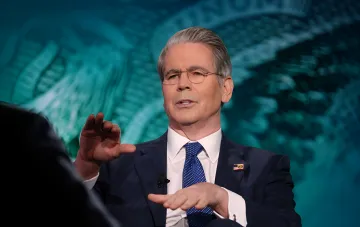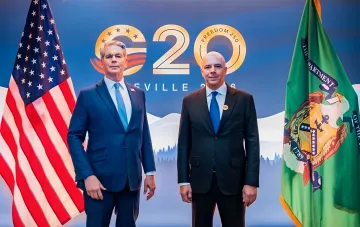
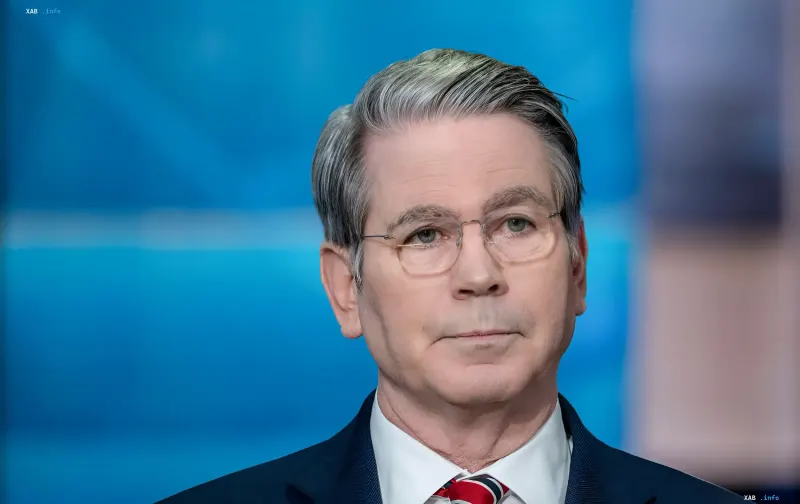
U.S. Treasury Secretary Scott Bessent issued a public warning on air on Fox News to the countries that, in Washington's assessment, are providing support to Iran — primarily Russia. In his words, the fastest way to end the current conflict is a complete refusal by any external players to assist the Iranian regime. The statement came against the backdrop of recent contacts between Moscow and Tehran and the intensification of U.S. sanctions pressure on the financial channels through which, according to U.S. authorities, Iran receives resources.
“Stay Away”: Bessent's Message
During the broadcast, the host reminded him of a meeting between Russian officials and Iranian representatives, at which Moscow, in his words, assured Tehran of its support, and asked what message Washington would address to the Russians. Bessent replied that his appeal was directed at everyone without exception: “Look, my message to everyone is — stay away. We all want this conflict to end. And the fastest way to end this conflict is for no one to provide any support to this regime.” In this way, the head of the U.S. Treasury effectively extended the addressees of the warning beyond Iran, including the states that, in Washington's assessment, support Tehran politically, logistically, or financially.
Sanctions Against Financial Channels
Bessent emphasized that Washington intends to fully isolate the Iranian regime from external financial and logistical channels. As an example, he cited measures taken “last Friday” — sanctions against the Dubai branches of an Egyptian bank that, according to the U.S. Treasury, provided the regime with more than 1.8 billion dollars since 2025. “And we are going to systematically go through and eliminate every such bad actor,” the minister declared, outlining a course of sequentially identifying and blocking the intermediaries through which Iran circumvents the restrictions.
Context: Russian-Iranian Contacts
Bessent's statement came against the backdrop of public contacts between Moscow and Tehran. Earlier, Russian President Vladimir Putin and Iranian President Masoud Pezeshkian held talks on the sidelines of the Shanghai Cooperation Organization (SCO) summit in Bishkek. According to reports, the Iranian leader thanked Moscow for its position, stating that the relations between the countries are “strategic, not ordinary.” Putin, in turn, stated that Russia “strives to provide the necessary assistance,” expressed admiration for Iran's “courage and resilience” in defending its national interests, noted the maintenance of the dynamics of trade and economic relations, and conveyed greetings to Iran's Supreme Leader Ali Khamenei.
The Military-Technical “Trace” of Moscow
Additional context is provided by previously published materials from Western outlets. Financial Times reported that Russia has for years secretly helped Iran develop supersonic cruise missiles, which the publication called one of the most significant known transfers of strategic military technology from Moscow to Tehran. Reuters, in turn, wrote about Russia's possible involvement in Iran's strikes on CIA facilities in the Persian Gulf, after which experts searched for a “Russian trace” in those attacks. These reports are not officially confirmed facts, but they form the basis for the accusations that Washington now publicly addresses to Moscow.
Contradictory Data
Across the sources, several inconsistencies can be traced that are important to take into account. First, the public U.S. rhetoric about the complete isolation of Iran and threats to the regime's supporters coexists with reports of a possible deal between the U.S. and Iran over the Strait of Hormuz, which, according to Armenian media, Bessent himself discussed; this creates a contradictory picture between sanctions pressure and diplomatic channels. Second, the claims by Financial Times and Reuters about secret military-technical assistance and Russia's involvement in the strikes are journalistic investigations and have not been officially confirmed by either Moscow or Tehran, so they should be regarded as versions rather than established facts. Third, the figure of 1.8 billion dollars and the reference to “last Friday” as the date of the sanctions are cited in a single source and have not yet been cross-checked with independent data. These differences in versions and the degree of verification are taken into account in assessing the status of the material.
Reaction and Prospects
Bessent's position signals that Washington intends to link its sanctions policy with a broader diplomatic campaign to isolate Iran's supporters, including Russia. For Moscow, this means public pressure at a moment when official statements about “strategic” relations with Tehran are countered by accusations of transferring military technology. The further dynamics will depend on whether the U.S. can simultaneously maintain its sanctions course and conduct negotiation tracks, and on whether documentary evidence of military-technical cooperation between Russia and Iran emerges.