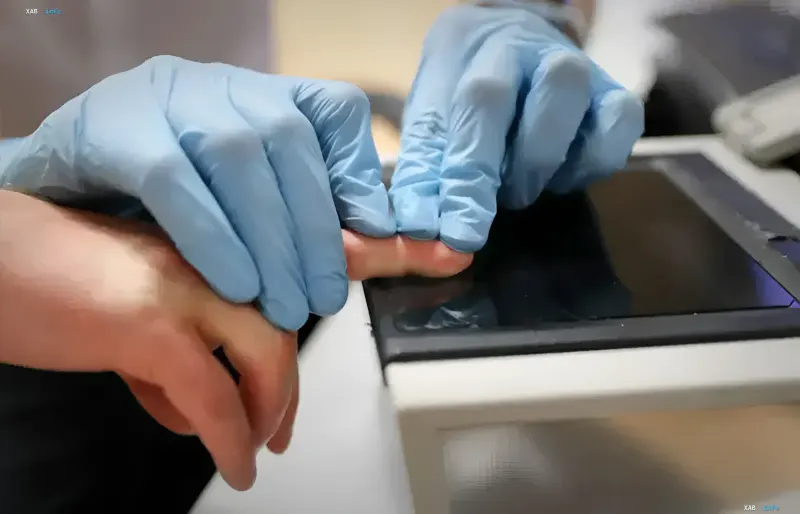
The Russian Ministry of Internal Affairs has released preliminary results of the experiment on collecting biometric data of foreign citizens upon entry into the country. According to the ministry, since the practice was launched, a total of 14 million people have submitted their biometric data during border control, and entry into Russia was denied to nearly 70,000 foreign citizens. The experiment has been in effect since December 1, 2024, and is gradually covering more border checkpoints, shifting the identification of foreigners at the border to a digital format.
How the Identification System Works
Upon entry into the country, foreigners are identified by two main biometric parameters. The data is collected directly at border control points and then verified in a unified electronic system. According to the press service of the Russian Ministry of Internal Affairs, such a system “helps not only to collect biometric data but also to identify individuals who, after being banned from entry, left the country, changed their personal data, and attempted to re-enter Russia.” Thus, biometric control serves as a tool not only for record-keeping but also for countering the circumvention of previously issued entry bans.
Phased Expansion of Coverage
In the first stage of the experiment, the system was connected to Sheremetyevo, Domodedovo, and Zhukovsky airports in Moscow, as well as the Mashkavovo road border checkpoint in Orenburg Oblast. From May 1, 2025, Vnukovo airport was added to the list. A significant step in expanding coverage took place in June 2026: the system was installed at another 11 border checkpoints in Saint Petersburg, Novosibirsk, Krasnoyarsk, and Yekaterinburg, as well as in Altai Krai and Irkutsk, Kurgan, Novosibirsk, Saratov, Orenburg, and Omsk oblasts.
What This Means in Practice
The phased introduction of biometric control means that the process of identifying foreigners at Russia’s borders is being progressively shifted to a digital format, and the geographic scope of the system’s application is expanding beyond the capital’s airports to regional aviation and road border checkpoints. For travelers, this means that upon entry into certain regions they will need to undergo a biometric data capture procedure, while for individuals with previously issued entry bans, the risk of being detected when attempting to cross the border again increases significantly.