Ukrainian Defense Forces have launched a series of successful long-range strikes against the logistics infrastructure of the Russian marketplace Wildberries. According to intelligence data, these attacks are dealing a significant blow to the Russian economy, with direct damages potentially reaching $2 billion.
Targets of the attacks: warehouses and logistics
The report from the Estonian Defense Forces Intelligence Center notes that over the past week, Ukrainian drones have attacked key Wildberries facilities. According to intelligence, the strikes hit warehouses in the Moscow and Tambov regions, as well as in the Krasnodar and Stavropol territories.
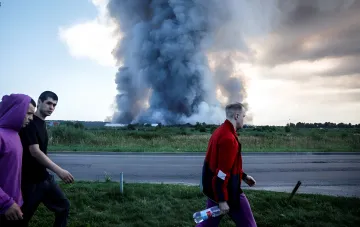
Particular attention is paid to facts confirmed by local residents and authorities. On the night of July 22, a large-scale fire broke out at a Wildberries logistics center in Krasnodar. On the same night, drones struck a warehouse in Nevinnomyssk (Stavropol Territory), where a powerful fire was also recorded. Later, satellite images were released, allowing an assessment of the real scale of the consequences of these strikes.
Civilian platform serving the army
Although Wildberries is positioned as a civilian retail platform, the report emphasizes that it is actively used to meet the needs of the Russian army. Through the marketplace, occupation units and volunteers purchase a wide range of military equipment: from uniforms and body armor to drones and spare parts for them.
"A large part of the Russian population uses Wildberries and its competitor Ozon, so Ukrainian attacks have a significant effect in addition to direct economic damage," the document states.
Economic consequences and business climate
Intelligence emphasizes that systematic strikes against logistics are exacerbating an already weak business climate in Russia. In July, the corresponding index of the Central Bank of Russia fell to -3.6 points, which became the worst indicator since mid-2022.
Alongside strikes on warehouses, Ukraine continues operations to disrupt Russian shipping and logistics in the Azov and Black Seas. As part of the operation codenamed "Molochka," the main targets are ships and vehicles supplying the occupation grouping in Crimea.
To protect critical transport routes, the Russian command is forced to redeploy additional air defense units and special "Rubikon" units to other fronts, creating additional strain on the country's defense system.