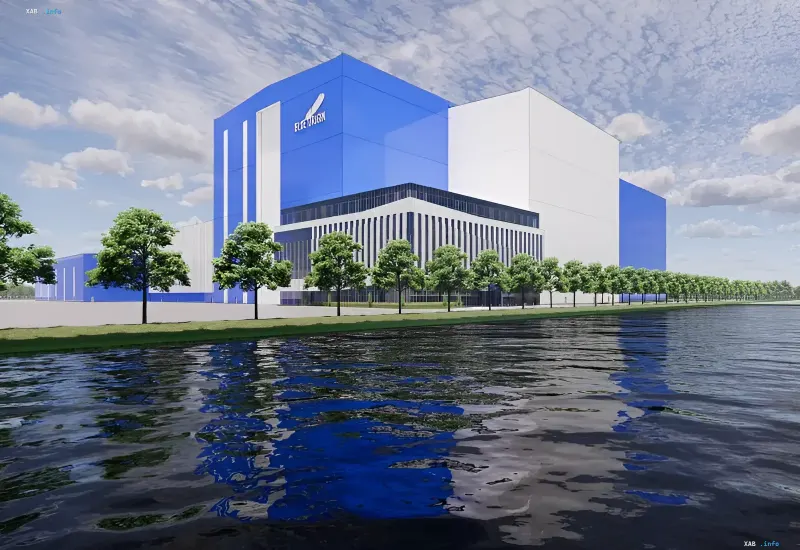
Blue Origin has announced a massive expansion of its infrastructure in Florida, where it intends to build a giant manufacturing facility for producing, preparing for launch, and servicing reusable launch vehicles. In addition to the main production complex, the company's plans include constructing additional launch pads and floating ocean platforms designed to catch returning rocket stages from space. The project spans multiple facilities distributed across two counties in the state and represents one of the largest private aerospace projects on the U.S. East Coast.
Over $3 Billion in Regional Economy and 5,000 Employees
During its presence in Florida, Blue Origin has invested over $3 billion into the local economy. The company's facilities in the state employ more than 5,000 workers, and 500 local contractors are involved in its supply chain. Over the past two years, local spacecraft production volumes at Blue Origin's facilities have more than doubled, and production and support operations are now distributed across more than 20 sites in two counties. The company is the only enterprise on this stretch of the coast that simultaneously manufactures rockets, conducts launches, and prepares stages for reuse. In terms of aerospace employment, Blue Origin is the region's largest employer.
$330M Facility: Up to 150 New Glenn Upper Stages Annually
A key element of the expansion will be a $330 million investment in the Rocket Park site, located in close proximity to NASA's John F. Kennedy Space Center. Here, Blue Origin intends to establish serial production of second stages for the New Glenn 9x4 heavy-lift launch vehicle, capable of delivering more than 70 metric tons of payload to low Earth orbit. Upon completion of the capacity expansion work scheduled for the summer of 2027, annual upper stage production at this facility will reach 150 units. By the end of the current decade, the company aims to secure several rocket launches per week from its Florida infrastructure.
Automation and Reducing Supplier Dependency
Blue Origin highlights automation as a crucial direction for production development: the company is introducing robotic welding and mechanical operations, as well as automated quality control. These measures are designed to standardize manufacturing processes and increase their reproducibility. Concurrently, capacities for spacecraft surface preparation, chemical processing, and warehouse facilities for storing components and tools are being expanded. The strategic goal is to maximize the share of in-house manufactured components and materials, which, amid active production growth, will reduce reliance on external suppliers.
New Processing Facility and LC-36 Launch Pads
A specialized launch preparation facility is also under construction, which will allow simultaneous work on multiple vehicles. It will be compatible with New Glenn 7x2 and 9x4 modifications, and also suitable for preparing launches in the interest of U.S. defense agencies. This facility will assemble New Glenn 9x4 heavy-lift rockets while simultaneously packaging payloads for shipment. The under-construction LC-36B launch pad is specifically designed for New Glenn 9x4 launches. The neighboring LC-36A complex is currently being restored following a serious accident that occurred in late May 2026 during static fire tests, which damaged local infrastructure. Blue Origin intends to increase annual launches from the LC-36 pad from the current 12 to 50 and has already submitted relevant documents for approval. In the future, new pads are planned to be added to the two existing launch complexes, utilizing the installation experience gained from LC-36B.
Floating Platforms for Catching Stages at Sea
The Jacklyn floating ocean platform is already stationed at Port Canaveral, used by Blue Origin to catch returning rocket stages. The company plans to build two more identical platforms and prepare captured stages for reuse at the onshore complex part. The close proximity of all facilities—the manufacturing plant, launch pads, and ocean platforms—is designed to ensure the smooth operation of Blue Origin's aerospace hub and shorten supply chains between the launch, return, repair, and relaunch cycle stages.