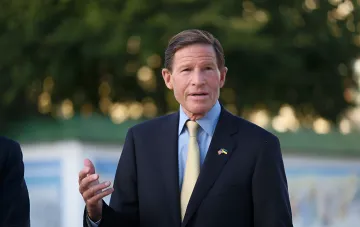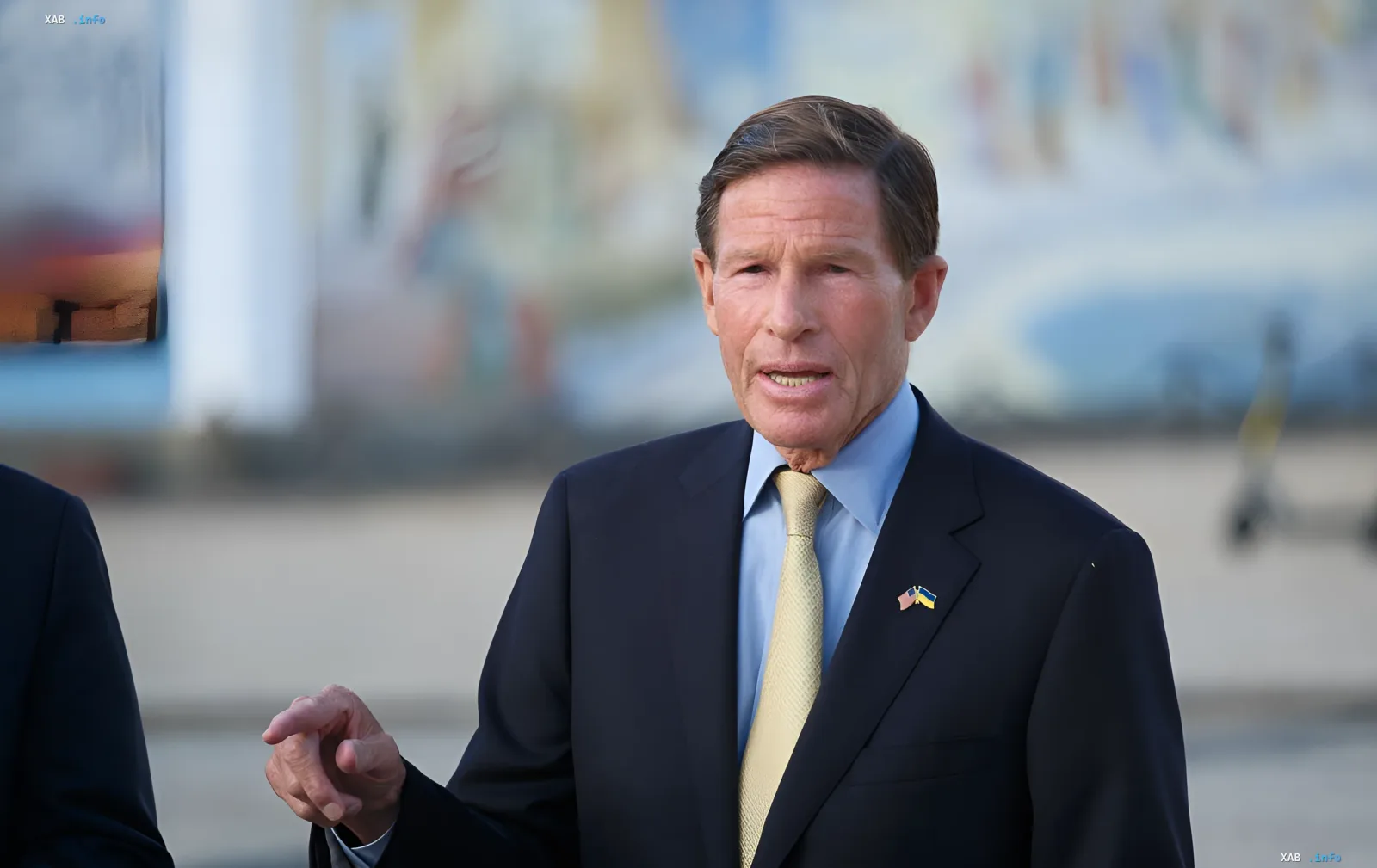
U.S. Democratic Senator Richard Blumenthal, speaking at a press conference in Kyiv, stated that Russia is deliberately and intentionally striking the facilities of American corporations on Ukrainian territory. According to him, half of the affected sites have sustained significant damage as a result of attacks by Russian missiles and drones. "Americans should be outraged that Vladimir Putin is deliberately and intentionally striking American business. Let there be no mistake: these are not missiles or drones that accidentally strayed off course. These attacks are intentional and they are being repeated," the senator emphasized, adding that the damage amounts to millions of dollars and that the strikes constitute "a gross violation of international law, to say nothing of basic moral norms."
The systematic nature of strikes on American enterprises
Blumenthal stressed that this is not a matter of isolated incidents but of a repeated and calculated campaign. As a specific example, he and Ukrainian media cited the strikes on the factory of the American corporation Mondelez International in Trostyanets, Sumy Oblast. On August 23, 2026, the Russian army carried out two drone strikes on the plant's production facility: structures were damaged, several employees were injured, and there were no fatalities. Notably, in early 2026 a missile strike had already been carried out against the same enterprise, damaging one of its production buildings. Thus, Trostyanets became the target of a repeated, deliberate strike within a single year.
Lack of a Washington response and a call for countermeasures
As Radio Free Europe notes, the administration of U.S. President Donald Trump is effectively not reacting to incidents involving strikes on American enterprises in Ukraine, despite their growing nature. Blumenthal expressed hope that American business will more resolutely appeal to President Trump and Congress to "demonstrate U.S. strength to force Putin to the negotiating table and end this war." Earlier, in May 2026, the senator publicly promised to "see through to the finish line" a bill on additional sanctions against Russia, which points to his consistent line in congressional debates on the Ukraine issue.
Midterm elections as a factor in support for Kyiv
In response to a question about how much the topic of support for Ukraine could influence the upcoming U.S. midterm elections and whether financial aid to Kyiv would resume in the event of a Democratic victory, Blumenthal offered a personal forecast: "My personal forecast is that the Democrats will win a majority in the House of Representatives. And, honestly, as a Democrat, I am also hoping for the Senate." At present, the Republicans hold a majority in both chambers of Congress. In November 2026, the United States will hold midterm elections, in which the entire membership of the House of Representatives and one-third of the senators will be up for re-election. In the senator's view, the outcome of these elections could become a key factor in increasing pressure on Moscow and restoring the scale of American aid to Ukraine.
Context: from sanctions to direct consequences for business
Blumenthal's statement in Kyiv fits into a broader context of conflict escalation, in which strikes on civilian and industrial facilities owned by Western corporations are becoming a tool of pressure on NATO countries. If previously sanctions and diplomatic demarches remained the main response mechanisms, now, according to the American senator, the issue is one of direct physical consequences for American capital. This could become an argument for revising the domestic political position in Congress, where the question of the "price of inaction" for American taxpayers and business is beginning to displace abstract debates over the scale of military aid.