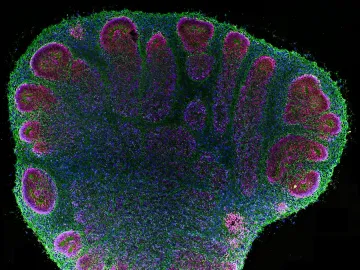
Researchers at the University of Bonn and the University Hospital Bonn have published results of an experiment that could redefine our understanding of how cells shed age-related changes. The team derived induced neural stem cells from blood samples of donors ranging from newborns to 101 years old and demonstrated that the epigenetic age of the oldest participants' cells dropped to 13% of the initial value, and further to 5% with continued cultivation. Based on the biological clocks used, only a negligible fraction of age-related changes remained in the cells. The work, published in the journal Aging Cell, is the first to track the process of cellular rejuvenation in stages rather than recording it as an instantaneous jump.
Two Factors Instead of Full Reprogramming
To convert blood cells into neural stem cells, researchers used only two reprogramming factors — SOX2 and cMYC. Unlike the classic method of creating induced pluripotent stem cells (iPSC), which employs a set of four or more factors (including Oct4 and Klf4), this procedure does not require the cell to pass through a state close to the embryonic. The resulting neural stem cells can give rise to neurons, astrocytes, and oligodendrocytes, but do not turn into universal pluripotent cells. This is crucial from a safety perspective: pluripotent cells can differentiate into almost any tissue type, and their uncontrolled proliferation, combined with active reprogramming factors, is linked to a risk of teratomas and other tumors. By bypassing the embryonic stage, Bonn scientists eliminate one of the key barriers to potential therapeutic application.
Fifty Days of Gradual 'Reset'
The most unexpected result of the work was the duration of the rejuvenation. Classic reprogramming into a pluripotent state occurs relatively quickly—within a matter of days. In the case of neural stem cells, however, age-related epigenetic marks disappeared gradually, with the bulk of the changes taking about 50 days. Scientists tracked this process via DNA methylation—chemical markers located on the DNA molecule used by specialized algorithms to estimate biological cell age. The ability to observe the process in dynamics makes this work unique: previous fast reprogramming did not allow for dissecting rejuvenation into individual stages or determining which molecular mechanisms are triggered first and which occur at the final stage.
Cell Division Is Not the Engine of Rejuvenation
A separate block of experiments tested the hypothesis that the decline in epigenetic age might simply be a consequence of intense division: old cells divide repeatedly, and 'fresh' cells with low age accumulate in the population. Researchers slowed down multiplication using special substances, and in a separate experiment, forced a portion of cells to transition to neuronal specialization, which also limits proliferation. In both cases, the epigenetic age decline continued. This means the disappearance of age markers cannot be explained by a simple replacement of old cells with new ones. The precise molecular mechanism triggering the 'reset' of the epigenetic clock remains a subject for further research.
Caveats and Interpretation Limits
The authors emphasize an important caveat: epigenetic age is not a direct measure of a cell's functional state. Changes in cellular specialization itself can influence biological clock readings, and nerve cells and blood cells have different age characteristics. The researchers admit that this might inflate the degree of observed rejuvenation. Nevertheless, changes affected not only epigenetic clock readings: the resulting neural stem cells also lost other independent signs of aging, including characteristic changes in the cell nucleus, autophagy impairment, and senescence markers. The combination of these data makes the conclusion of real rejuvenation more convincing than if it relied solely on one type of biomarker.
What This Means for Aging Medicine
The main significance of the work is the emergence of a model in which one can verify in detail which molecular mechanisms trigger cellular rejuvenation and which factors influence it. In the future, this could help develop ways to restore aging tissues and treat age-related diseases. However, as the researchers themselves note, anti-aging procedures for humans are still a long way off: the mechanism of the process is not established, and the safety of a similar effect in a living organism has not been proven. Nevertheless, the publication in Aging Cell and confirmation of results by several independent outlets indicate that the work has passed a full peer-review cycle and gained recognition from the scientific community. For the Bonn team, this is just the first step: now they must figure out exactly what happens in the cell on each of the fifty days of the 'reset' and whether this process can be replicated under clinical conditions.