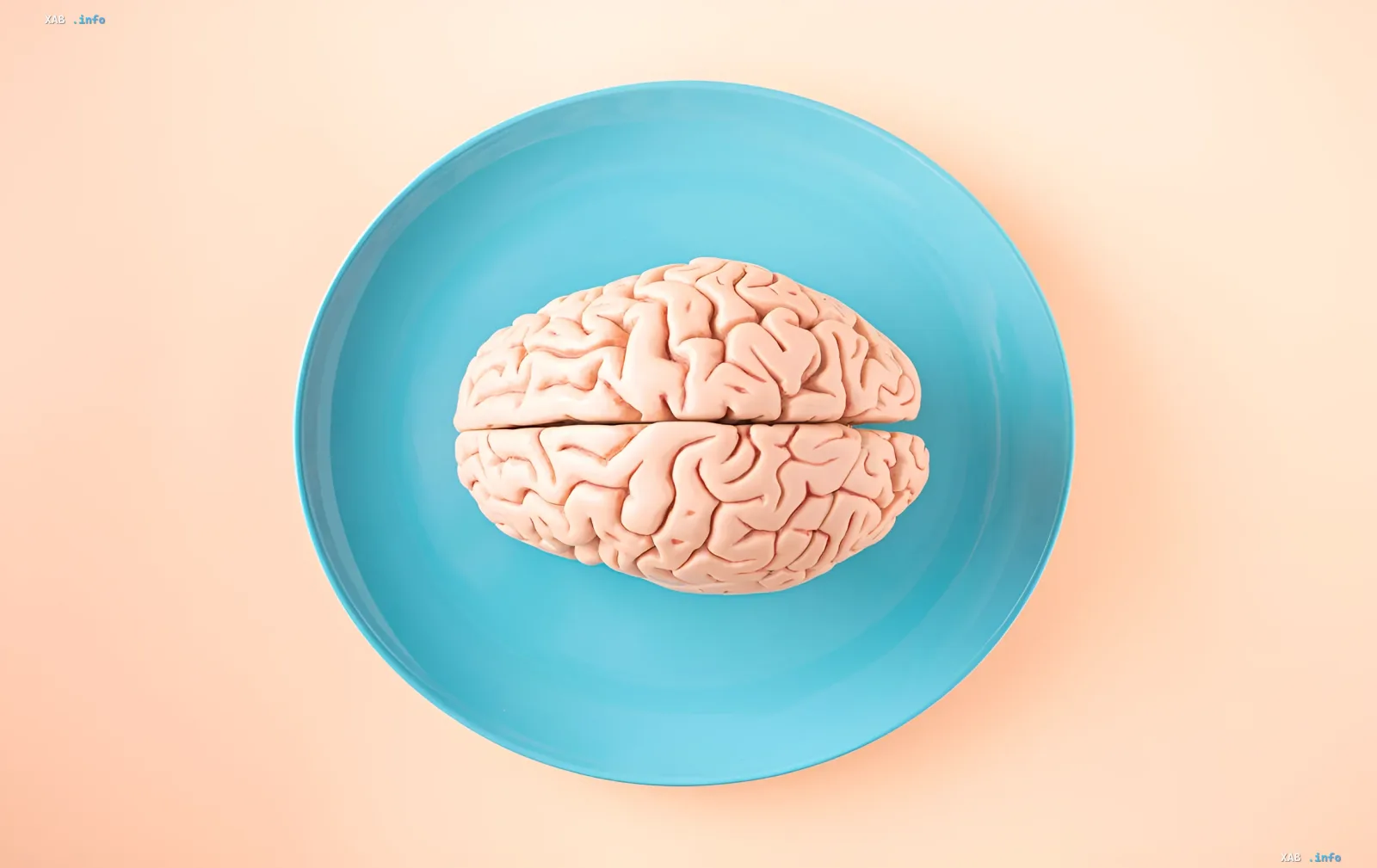
The Harvard Stem Cell Institute has reported that an artificially grown human brain has been kept functioning for seven years. This is reported by RBC-Ukraine, citing a study published in the journal Nature. According to the publication, this is not an implant and not a 'brain in a jar' in the science-fiction sense, but rather tissue organoids that biologists have learned to keep in a working state for a record length of time — and, more importantly, to understand exactly how they age.
What Are Organoids and Why They Do Not 'Think'
Organoids grown from stem cells are no larger than a pea in size. A key clarification provided by the authors of the study: such structures do not possess consciousness or sensations. They merely reproduce the key features of cellular development of a real brain, imitating its architecture at the tissue and molecular level. This is fundamentally important for correctly understanding the news: we are dealing with a model for studying biology, not a 'thinking device.'
'Genetic Clocks' and Biological Memory
Using new so-called 'genetic clocks,' biologists found that organoids age in much the same way as cells in the human head. The scientists discovered that the samples retain a biological memory of the developmental stages already passed. It is important here to distinguish two concepts: a molecular trace is information about past development, imprinted at the cellular level; this is not memory in the everyday sense (such as childhood memories), but biochemical markers of aging. As a result, the cells synchronously repeat the natural chronological stages of maturation.
The 'Time Distortion' Experiment
In the course of the study, the scientists created a 'chimera' by mixing cells from one-year-old and two-week-old organoids. As a result, the older cells immediately 'jumped forward' in development, beginning to form neurons, a process that normally takes about four months. According to the researchers, this 'time distortion' effect will allow the scientific community to study diseases that arise in mature age — in particular, autism, schizophrenia, Alzheimer's and Parkinson's diseases — without having to wait two decades for the tissues to fully mature.
Medical Potential and Lifespan Limits
The practical conclusion of the work is that organoids could become a long-term platform for modeling age-related and neurodegenerative diseases. 'Because the artificial brain is devoid of an organism that is subject to diseases or infections, such organoids could theoretically have an indefinite lifespan,' the researchers summarized. This opens up the possibility of multi-year observations of the same tissue model, which is impossible when working with a living organism.
Contradictory Data
Upon checking the context, a difference in terminology was found between the original source and a number of popular science publications. The study itself (Nature, via RBC-Ukraine) explicitly emphasizes the absence of consciousness and sensations in organoids. At the same time, the headlines of other outlets use anthropomorphic phrasing: thus, in materials from pravda.ru the structure is described as a 'cyborg brain capable of rapid learning and performing complex computations,' while in kp.ru — as a 'thinking broth' that 'learned to play a shooter game.' These formulations refer to other experimental setups and popular-science rhetoric and do not contradict the main conclusion of the Harvard work about seven years of functioning; however, they create a risk of false interpretation: it is important for the reader to understand that 'learning' and 'computations' in popular headlines are not identical to consciousness or cognitive functions, as discussed in the Nature study. The exact date of the article's publication in Nature is not specified in the provided materials, so the chronology is counted from the moment the news was released.