From 10 to 100 kilometers: a revolution in forward logistics
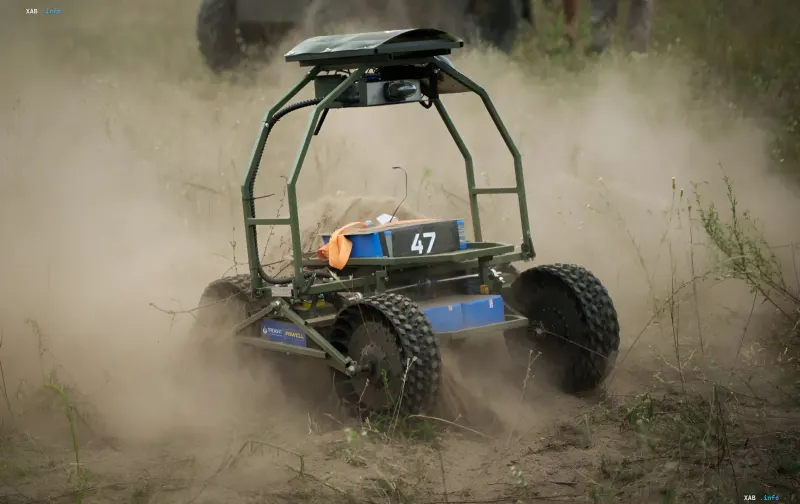
In the conditions of modern warfare, where every step towards the front line is fraught with risk, Ukrainian engineering has found a solution to one of the key problems of autonomous machinery. Lviv-based company PAWELL Battery, specializing in the development of advanced power sources, has made a technological breakthrough, increasing the range of the 'Plastun' ground robotic complex (GRC) fourfold. If the previously specified 25 kilometers were reduced to 10–12 km in reality, the new version of the robot is capable of covering distances of 75–100 km on a single charge.
The 'Plastun' robotic complex, which appeared on the battlefield in 2023, was originally conceived as an ultra-light replacement for infantrymen in the most dangerous tasks: logistics, evacuation of the wounded, and demining. With a weight of only about 35 kg, it can carry a load of up to 50 kg or a wounded person weighing up to 120 kg. However, limited autonomy turned it into a machine with a rigid tie to the rear, forcing it to plot routes along the shortest line, often passing under enemy fire.
Solid-state chemistry vs. lithium-ion
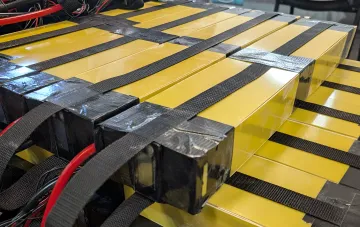
The key to solving the problem was replacing the standard lithium-ion battery with a solid-state one. PAWELL engineers managed to maintain full compatibility with the robot's existing electronics, without requiring the 'Plastun' manufacturer to redesign the power electronics or charging infrastructure. The new battery operates within the same voltage range and uses the same management system.
Thanks to the new chemistry, it is possible to obtain approximately 60% more energy from each kilogram of the battery. As a result, the robot received four times more energy on a single charge, while the battery weight increased only twofold. This allowed maintaining a balance between mobility and autonomy, which is critical for equipment that must fit into the trunk of a passenger car.
New tactics: from a 'one-way trip' to shifts
Increasing the range radically changes the tactics of using the robot on the battlefield. As noted by PAWELL co-founder Pavlo Ysyip, the robot no longer performs a one-way trip and is now capable of working a full shift. "The energy reserve allowed traveling longer and safer: bypassing, through lowlands, on reverse slopes, with pauses in cover," the expert emphasized.
This opens up opportunities for supporting positions deep within the defense, performing multi-point routes in a single trip, and long-term duty of the robot in cover on the route. Now charging points can be located further from the front line, reducing risks for support personnel, and routes can be plotted taking into account the terrain, not just minimizing distance.
Scaling success: the trend towards energy efficiency
The success of implementing solid-state batteries in 'Plastun' is not an isolated case, but part of a general trend in the Ukrainian defense industry. Developers plan to scale the same principle to other ground complexes of the Defense Forces. Batteries continue to remain a key factor determining the combat capabilities of unmanned and robotic equipment.
Recently, it was reported that the Protector GRC also received an upgrade, doubling its payload capacity and receiving a new type of communication. A similar breakthrough occurred in the field of reconnaissance drones, where the flight range was doubled thanks to new batteries. All this indicates that the development of energy is becoming as important a front as the development of combat platforms themselves.