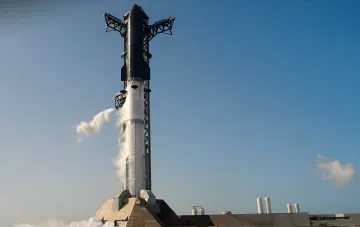
A landmark moment has occurred in the space industry, changing approaches to autonomous satellite power. SpaceX's Falcon 9 rocket, as part of the Transporter-17 mission, successfully deployed the BOHR small spacecraft into low Earth orbit. This launch was historic: for the first time, a commercial satellite equipped with a betavoltaic power cell was sent into orbit.
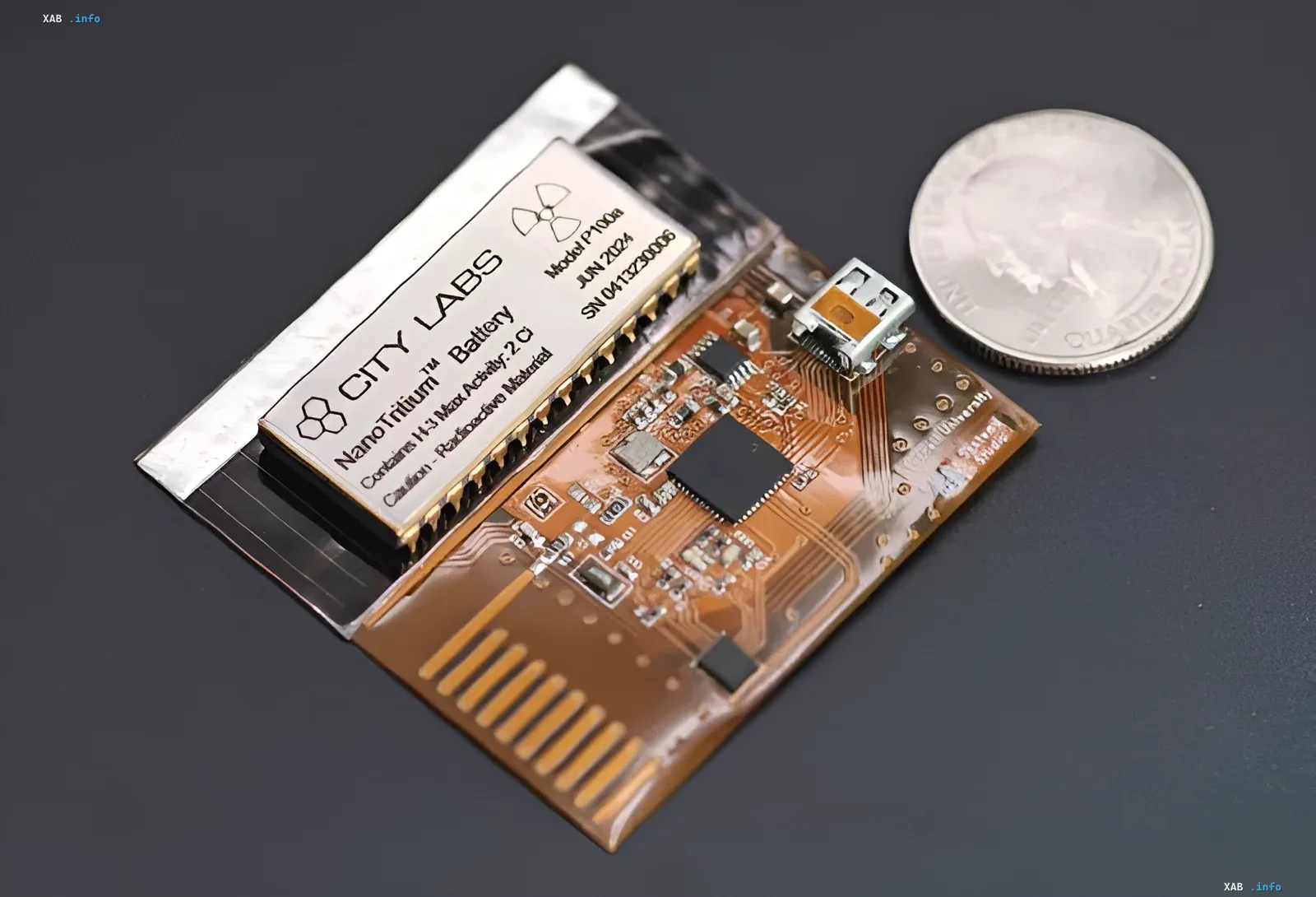
The technology was developed by the Florida-based company City Labs. The spacecraft, named Betavoltaic Orbital High-Reliability, carries an innovative power source that differs radically from conventional solar panels and traditional radioisotope generators.
NanoTritium Technology: Physics without moving parts
The satellite's operation is based on the NanoTritium cell. Unlike RTGs (Radioisotope Thermoelectric Generators) used in government missions, which require converting heat into electricity, the new system works on the principle of direct betavoltaic conversion.
This solution eliminates moving parts, turbines, and liquid coolants from the design, minimizing the risk of mechanical failure in a vacuum. The energy generation process is as follows:
- A semiconductor matrix captures the kinetic energy of beta particles (electrons) emitted during the radioactive decay of tritium.
- This energy is directly converted into electric current.
- The decay product is Helium-3 — a stable, non-toxic, and non-radioactive gas.
Developers paid special attention to radiation safety. The weak beta radiation from tritium is completely absorbed by the protective casing of the cell itself. This means that even in the event of an anomalous deorbiting and destruction of the spacecraft, environmental contamination is ruled out.
Regulatory breakthrough and commercial availability
The success of the Transporter-17 mission was made possible by regulatory efforts. The US Federal Aviation Administration (FAA) classified the NanoTritium cell as a safe commercial payload. This decision allowed BOHR to be launched as part of the standard rideshare program alongside 80 other spacecraft from other customers, which would previously have been impossible due to strict restrictions on nuclear materials.
At the current stage, the betavoltaic cell serves as an experimental payload. Onboard equipment monitors the stability of power generation in real-time under the influence of harsh cosmic radiation, vacuum, and extreme temperature fluctuations.
Prospects: Power for the dark zones of the Moon
Successful FAA licensing sets an important precedent for simplified certification of next-generation autonomous power sources. This opens up the commercial market for systems with a calculated service life of up to 20 years without the need for maintenance.
In the future, similar technologies will become key for deep space missions. The primary target for implementing betavoltaics is the shadowed craters of the Moon's polar regions, where the operation of traditional solar panels is physically impossible due to the lack of light. Partners in the development and testing include NASA and the US Air Force Research Laboratory (AFRL), confirming the strategic importance of this technology.