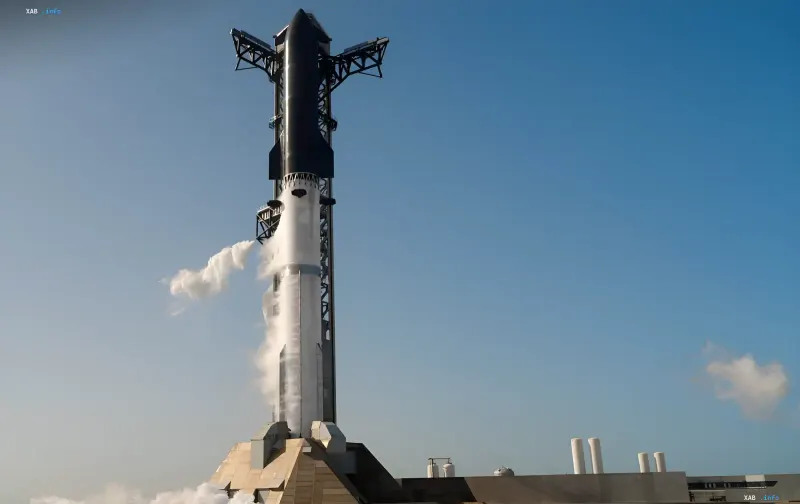
SpaceX successfully launched the Starship megarocket from the Starbase launch site in Texas. The launch took place after an unsuccessful attempt last week, when the launch had to be aborted due to issues with several engines.
This flight, named Flight 13, became the second test of the Starship V3 version. During the first flight of this modification in May, the rocket encountered a series of engine failures, which negatively affected its performance.
Flight Progress and Results
The flight is scheduled to last approximately one hour. According to the mission plan, the Starship upper stage is to perform a controlled splashdown in the Indian Ocean. Meanwhile, the Super Heavy booster, which separated from the ship about two minutes after launch, performed a controlled splashdown in the Gulf of Mexico.
Significance of the Launch for SpaceX
For SpaceX, this launch is of particular importance, as the company is under significant pressure to prepare Starship for a key NASA test flight scheduled for next year. This flight is expected to be one of the decisive stages on the path to the next human landing on the Moon.
Furthermore, this is the first Starship flight since SpaceX went public. The unsuccessful launch attempt last week triggered a sell-off of the company's shares, which are still trading below the initial public offering (IPO) price.
Financial Aspects
It was also reported that Google is committed to paying SpaceX $920 million monthly. This partnership could play an important role in supporting the company's projects and ensuring the stability of its financial performance.