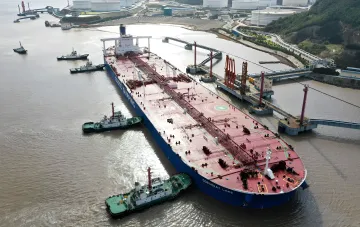

On August 20, 2026, global oil prices rose to levels not seen since late July, marking the fifth consecutive session of gains. As of Thursday morning, October-delivery Brent futures rose $1.20, or 1.3%, to $92.82 per barrel. The more active October contract for American West Texas Intermediate (WTI) crude added $1.13, or 1.3%, to $85.52 per barrel. Consequently, both key benchmarks reached their highest levels since July 24, a trend analysts attribute to lingering uncertainty regarding supplies from the Middle East.
Geopolitical Driver: Pressure on the Strait of Hormuz
The primary factor supporting valuations remains the stalemate in the military confrontation between the US and Iran and its direct impact on hydrocarbon logistics. Shipping through the Strait of Hormuz — the key waterway for Middle Eastern oil exports — has noticeably slowed: most shipowners are avoiding the route due to a lack of clear signals regarding its restoration following the blockade imposed by the US during the conflict. This factor is creating a risk premium that is keeping prices in an elevated zone.
Analyst Assessment: Growth Without New Momentum
"Oil prices remain elevated as the market is supported by sporadic attacks in the Middle East, but it lacks new momentum without significant escalation," said Hiroyuki Kikukawa, chief strategist at Nissan Securities Investment, a division of Nissan Securities. According to him, the market is likely to maintain a gradual upward trend, given the uncertainty surrounding peace talks between the US and Iran, as well as tensions between the United Arab Emirates, Oman, and Iran. In other words, without a sharp escalation or, conversely, a breakthrough in negotiations, the dynamics will remain moderate.
Secret Corridor and Trump's Claims of 'Replacing' the Strait
Against the backdrop of the official blockade, media reports indicate that the US military has quietly created an alternative shipping corridor in the Strait of Hormuz. According to available data, the operation has been ongoing for several weeks: 15 to 20 tankers have entered and exited the strait via a southern channel along the coast of Oman, with millions of barrels of oil transported through it daily. Simultaneously, US President Donald Trump publicly declared a 'replacement' for the Strait of Hormuz, stating that oil could be imported from 'a completely different part of the world,' and previously reiterated plans to declare the Strait of Hormuz US territory. Tehran, in turn, stated that the strait will not be reopened until the US fully complies with all conditions of the Islamabad Memorandum of Understanding and is preparing for a potential escalation not only in the strait area but in the wider region.
Contradictory Data
There is a discrepancy in the figures regarding the American benchmark in the primary materials: one section states that September-delivery WTI futures changed by '-$5,' which contradicts the overall five-day upward trend and the subsequent report of the October WTI contract rising by $1.13 to $85.52. It is likely a typo or refers to a less liquid September contract, whereas the October contract serves as the market benchmark. Furthermore, Washington's public statements about 'replacing' the strait and plans to appropriate it contradict the factual situation: the strait remains blocked, and Iran firmly links its reopening to the implementation of the Islamabad Memorandum. These discrepancies in the versions of the parties make part of the political context conditional, although the fact of prices rising to a three-week high is confirmed by several independent sources.