The UK Ministry of Defence officially launched the PANOPTES project on 2 September 2026 — a programme to develop an autonomous laser air defence system intended for mounting on armoured vehicles and for countering massed drone attacks. This was announced by the British Ministry of Defence, whose data was cited by RBC-Ukraine. The launch marks the first stage of a multi-stage development and procurement cycle that could, in the long term, evolve into a full weapons programme. Up to 5 million pounds sterling has been allocated for the first stage across several contracts, with the actual work set to begin in November–December 2026.
A Response to the Ukrainian Experience: The Drone Swarm Problem
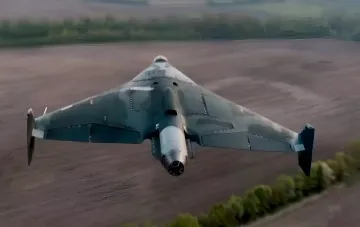
The British military department directly links the need for such a system to the experience of the war in Ukraine, where the mass use of cheap drones forces ground units to spread their limited air defence resources across an ever-wider spectrum of threats. The requirements for PANOPTES assume a fully autonomous cycle: detection, tracking, identification, decision-making and engagement of aerial targets directly from the combat vehicle. The baseline target is defined as Class 1 drones — both individual aircraft and simultaneous or sequential attacks designed to overload local air defence. The autonomous function becomes critically important precisely in the drone swarm scenario: when several threats appear at once, the human operator becomes the bottleneck for rapid target prioritisation.
Laser vs. Missile: The Economics of Repeated Engagement
The Ministry of Defence is primarily interested in directed-energy laser weapon options, although it is also considering other technologies. The main advantage of the laser is that the number of possible engagements is limited not by the ammunition load but by power generation, thermal management and maintenance. This allows repeated engagements without expending expensive missiles, which is critical when facing a swarm of cheap reconnaissance and strike drones. At the same time, the department emphasises: the laser will not replace missiles or artillery. Weather, obstacles, the need for line of sight and the time required to hold the beam on target limit the effectiveness of such a weapon, so this is about complementing a multi-layered air defence system, not replacing it.
From Demonstrator to Combat System: The Legacy of the Land Laser Directed Energy Weapon Demonstrator
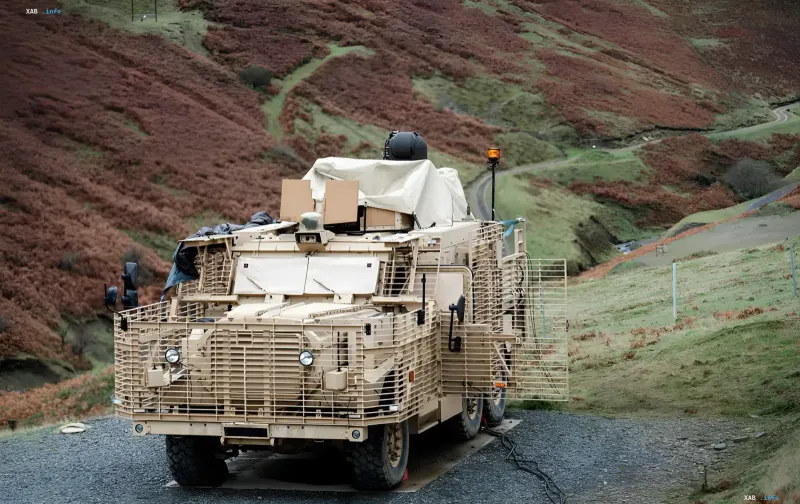
PANOPTES is built on the earlier Land Laser Directed Energy Weapon Demonstrator programme. In July 2024, a Raytheon UK laser mounted on a Wolfhound armoured vehicle hit targets at the Porton Down range at a range of more than one kilometre. In December 2024, the Ministry of Defence confirmed that soldiers of the 16th Regiment of the Royal Artillery had used this laser for the first time at the Rednor range in mid-Wales for tracking and destroying drones — this was the first instance of the British Army using a high-energy laser from an armoured vehicle against aerial targets. The trials demonstrated a range of over a kilometre, the ability to operate with a two-person crew, and crew preparation in less than two weeks. However, unlike the demonstrator, PANOPTES is aimed at creating an integrated, combat-ready system, including integration onto a future uncrewed ground platform. This would allow air defence nodes to be brought closer to forward units, minimising risk to personnel.
Timeline, Budget and Programme Stages
The first stage of the programme does not provide for the purchase of a finished weapon: participants must demonstrate the technological maturity of their solutions and provide well-founded plans for transitioning to the Minimum Viable Product and Minimum Deployable Capability stages. The Ministry of Defence expects to bring prospective solutions into practical use in less than two years, subject to further approvals. The first-stage budget is up to 5 million pounds sterling across several contracts, with work scheduled to start in November–December 2026.
Context: Expanding London–Kyiv Military-Technical Cooperation
The launch of PANOPTES comes against the backdrop of continuing expansion of cooperation between the United Kingdom and Ukraine in the field of unmanned and precision systems. It was previously reported that Ukrainian forces had used British Nyan rocket-powered drones for the first time to strike deep inside Russian territory. These systems, produced by Callen-Lenz, a subsidiary of BAE Systems, have been used in deep strikes for over half a year. Thus, the experience gained during the Ukrainian campaign not only shapes the requirements for new British weapons but also itself becomes a testing ground for joint technologies.