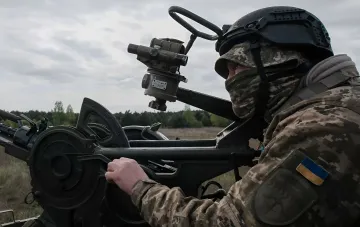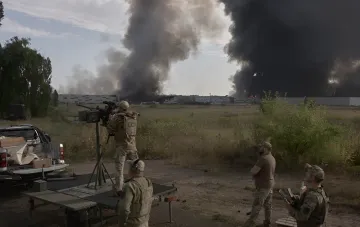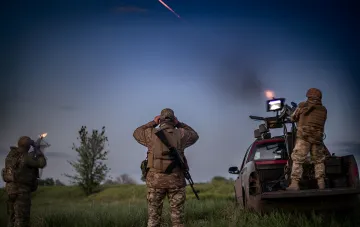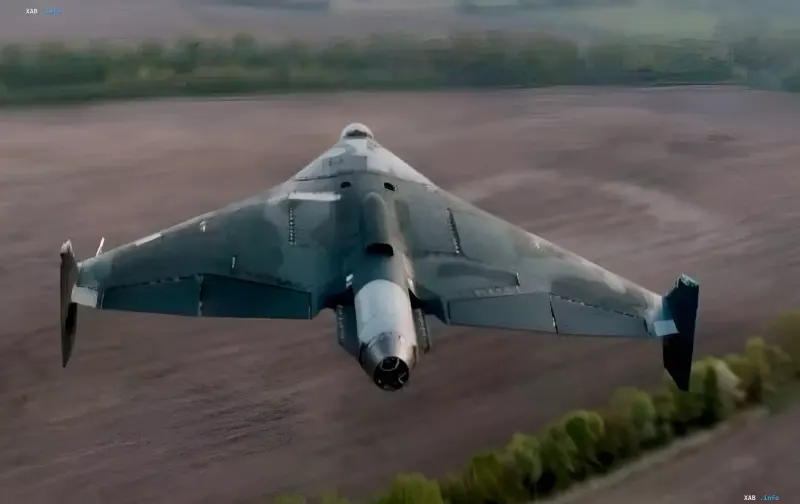
According to The Washington Post, as cited by RBC-Ukraine, Russia has significantly increased the share of jet-powered drones in its attacks on Ukraine. In August 2026, current estimates indicate that more than 2,800 jet drones were used, including the new "Geran-4" and "Geran-5" modifications developed on the basis of Iranian Shaheds. Moscow's strategy boils down to the deliberate depletion and overloading of Ukraine's air defense systems: drone strikes are combined with ballistic missile launches, which multiplies the complexity of air defense operations.
Speed as the Main Weapon
The key difference of the new models is speed. According to the main version, the "Geran-4" and "Geran-5" reach about 400 km/h, which is almost twice as fast as previous versions and shortens the interception window. This is precisely why, in certain episodes, Ukrainian military personnel have had to involve combat aviation to counter drones, further straining the defense. President Volodymyr Zelenskyy has noted that jet drones already account for more than half of all the drones Russia uses to wear down air defenses.
Scale of Production
Serhiy Beskrestnov, the Ukrainian president's advisor on defense technologies, estimates Russia's production capacity at roughly 3,000 new drones per month. According to him, Moscow plans to produce between 36,000 and 40,000 drones per year, of which about 60% may be jet models, with the rest being older Shahed-136 and "Geran-2" units. Over four days, according to available data, Russia launched about 1,500 drones of various types, roughly 800 of which were jet-powered.
Contradictory Data
Sources disagree on the figures for the maximum speed of the new drones. The main version, citing The Washington Post, refers to about 400 km/h for the "Geran-4" and "Geran-5". Meanwhile, the publication Eurasian Times (citing its own estimates) names a speed of around 600 km/h for the "Geran-5", claiming that it is precisely this speed that "drives crazy" Ukraine's air defense. The gap between 400 and 600 km/h is significant: it directly affects the assessment of air defense reaction time and the real effectiveness of interception. Until independent, confirmed in-combat speed measurements are available, both figures should be treated as estimates.
Ukraine's Response and the Missile Shortage
Ukraine, for its part, is ramping up the production of its own long-range drones and improving its means of countering Russian drones. Negotiations between the United States and Ukraine on a license for the production of missiles for Patriot systems are ongoing, however, launching its own production will take time. One of the main problems remains the shortage of air defense missiles: Zelenskyy has repeatedly called on Washington to provide additional missiles for Patriot. Experts also warn that the new long-range drones are capable of striking targets across western Ukraine, expanding the risk zone for civilian infrastructure.