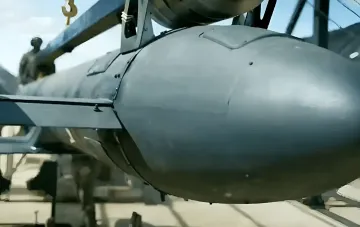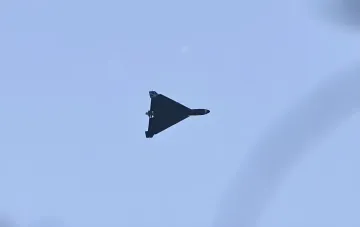
The main challenge in intercepting jet-powered drones is the speed of the aerial target. It drastically reduces reaction time and creates additional difficulties for engagement, notes Kirill Lyukov, head of the drone technologies department at the Serhiy Prytula Foundation, in a column for RBC-Ukraine titled "Why Russia is terrorizing Ukraine with jet-powered Shaheds and what to expect in the future." According to him, the enemy's shift from electric propulsion to jet power on their drones has sharply changed the balance of power in the airspace and forced a rethinking of the set of countermeasures.
Speed as the main enemy of interception
When shooting down jet-powered drones, "classic" interceptor drones lose effectiveness due to limitations in peak speed and time aloft, while surface-to-air missile systems remain a scarce resource primarily because of a shortage of interceptor missiles and their high cost. At speeds of around 400–600 km/h, the demands on operators grow so much that one of the key development directions becomes the automation of the entire process — from launch and reaching the target area to automatic capture and detonation.
What works today
That said, jet-powered UAVs are already being successfully engaged. There are successful cases of using interceptor drones, although multirotor interceptors hit such targets only in exceptional cases. One of the working techniques is interception during turns and maneuvers, when the "Geran-4" drones lose speed. Man-portable air defense systems (MANPADS) also remain an effective means: their effectiveness depends on the target's range and altitude, as well as on the crews' training and combat experience, while MANPADS have to be modernized and equipped with thermal imaging sights and auxiliary systems.
Firing teams, turrets, and the search for a jet interceptor
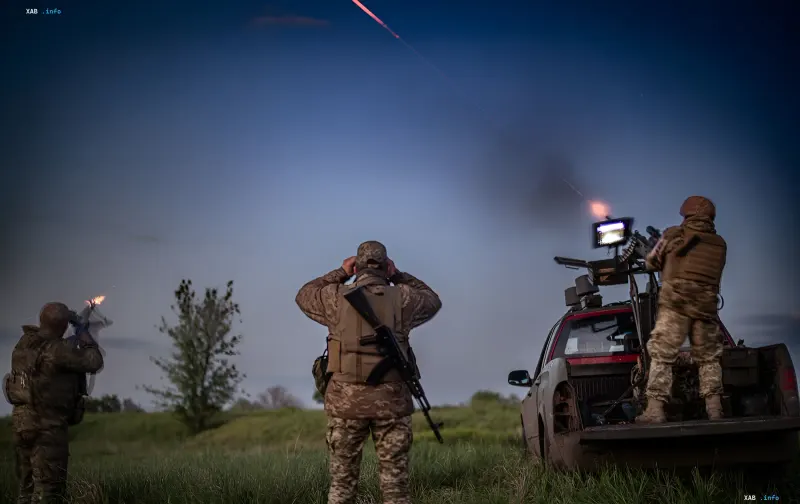
Mobile firing teams with machine-gun armament are still limited by range and by the speed of reaction to a faster target. For the protection of specific objects, automated turrets with machine-gun armament remain one of the working options, while anti-aircraft guns with fragmentation rounds, whose range can reach 2.5 km, also show results. In parallel, a search is underway for jet-powered interceptors to counter the new threat, but there is no serial solution yet due to the difficulty of scaling jet engines and the high cost of the finished product.
Contradictory data
Assessments of the current effectiveness of interception means differ in the expert community. On the one hand, individual successful engagements of jet-powered targets by interceptor drones and anti-aircraft fire are recorded, which indicates that the existing arsenal is functional. On the other hand, a number of specialists emphasize that army aviation and multirotor interceptors are systemically unable to shoot down high-speed targets, while surface-to-air missile systems are limited by a shortage and the cost of missiles. In other words, there is no consensus on whether the current set of means is sufficient for sustained interception: some speak of exceptional but real successes, others — of a systemic lag of air defense behind the pace of attacks.
Wave tactics and production rates
As the Center for Countering Disinformation previously reported, Russia launches jet-powered drones at Kyiv in waves. According to the CCD's assessment, the main goal of such tactics is to exhaust the air defense system and paralyze the capital's daily life through constant alerts. The enemy's industry, according to the same data, is operating at an accelerated pace, which is why jet-powered drones are launched against Ukraine almost straight from the assembly line, even without prolonged storage in warehouses.