Ukrainian military officials have accelerated work on a new class of weapon — high-speed interceptor drones designed to counter the jet-powered strike drones that Russia is increasingly deploying in its night attacks. In early July, according to sources familiar with the exercises, the Ukrainian side invited a large group of manufacturers to test the prospective interceptors. However, the first trials did not go to plan: some of the aircraft exhibited handling problems at high speeds, casting doubt on the timeline for developing an effective response to a growing threat.
Tests That Failed to Meet Expectations
Sources told Reuters that some Ukrainian interceptors reached speeds of over 400 km/h during the trials. At such performance levels, controlling the aircraft became extremely difficult, and a number of machines, losing control, crashed into neighboring fields and wooded areas. These incidents clearly showed the technological challenge Ukraine faces ahead of winter: it is not only about defending against Russian ballistic missiles with a limited number of Western air defense systems, but also about countering faster and more powerful drones that Western air defense complexes intercept inefficiently and at too high a cost.
Sixfold Increase in the Threat and the Winter Challenge
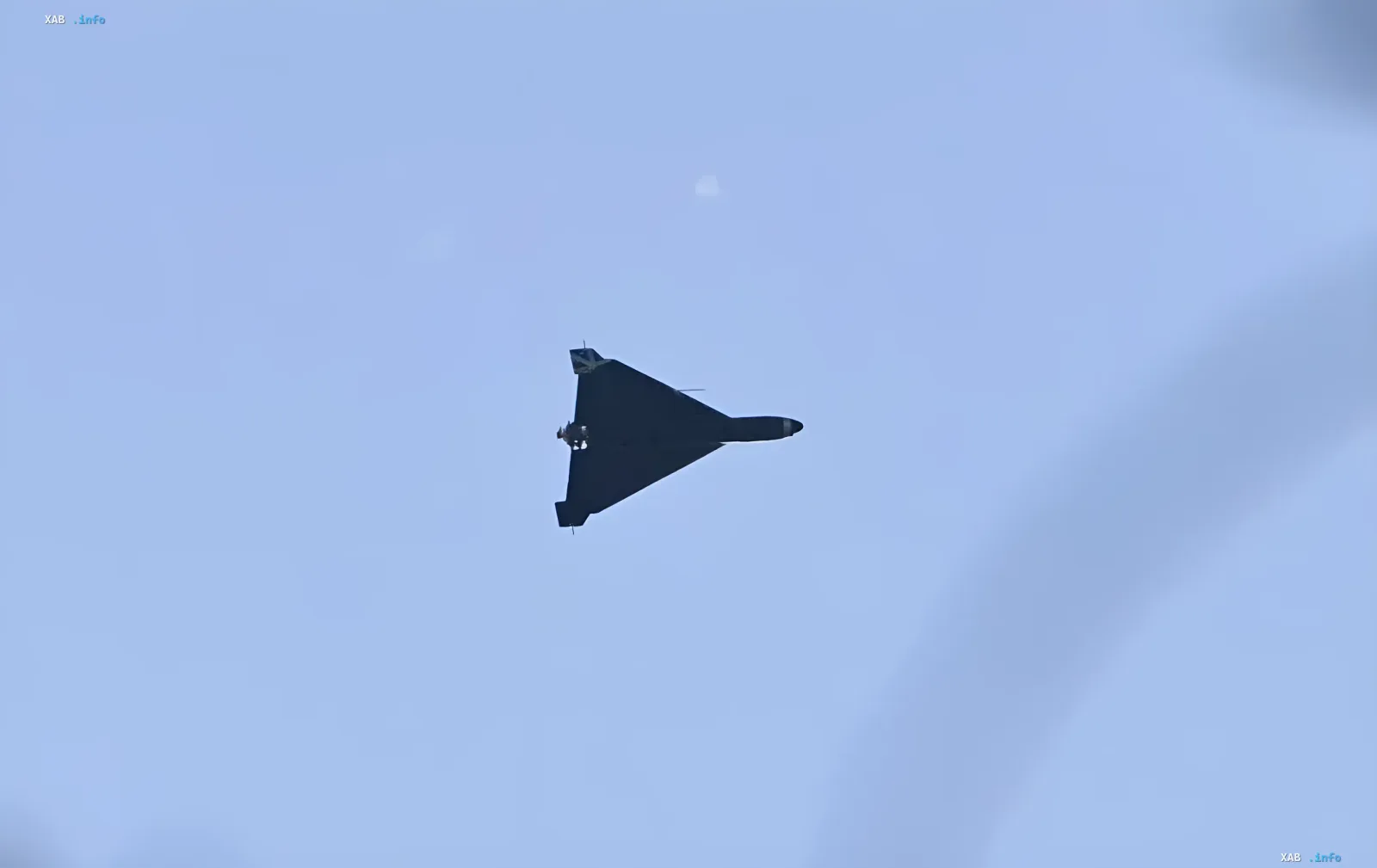
According to Ukrainian military data, over the three summer months Russia increased its use of jet-powered drones by roughly six times. This sharply changes the nature of the air threat: jet-powered Shaheds fly faster than conventional propeller drones, reducing the time available for detection and interception and overloading existing defense systems. Against this backdrop, Kyiv acknowledges that Russia has already established mass production and deployment of jet-powered drones, while Ukraine still lacks a sufficiently effective and mass-produced response to this threat.
"Completely Lost the Initiative" Versus the Air Force's Optimism
Assessments within the Ukrainian military leadership are divided. Deputy Commander of the 3rd Army Corps Maksym Zhorin stated that Ukraine has once again lost the initiative in the sphere of jet-powered drones: "On jet-powered drones, we have once again completely lost the initiative — that is a fact." At the same time, Deputy Commander of the Air Force Yuri Cherevachenko, while acknowledging the difficulties of developing high-speed interceptors, offered a more positive outlook: in his words, Ukraine is close to deploying a number of serial, low-cost solutions and will soon be able to form a full class of weapons to counter jet-powered UAVs. President Volodymyr Zelenskyy, for his part, called countering jet-powered Shaheds the main challenge for Ukraine's defense industry and reported that new developments are being tested at an accelerated pace.
Contradictory Data
The available statements and reports on the progress of the trials record significant inconsistencies, which is important to reflect honestly. On the one hand, the July exercises, according to two sources, ended in failure: the interceptors lost controllability at speeds above 400 km/h and crashed. On the other hand, by September 15 there are reports of a successful trial of another interceptor that hit its target, although the developers still need to refine the control system. Thus, between the "failure" of July and the "success" of September lies a short interval during which, judging by public statements, some of the problems were eliminated — but without independent confirmation of the details of what exactly was refined. Moreover, the public assessments of two senior officers directly contradict each other: Zhorin states a complete loss of initiative, while Cherevachenko speaks of being close to serial solutions. Both versions are presented as they are, without any attempt to reconcile them.
First Successful Interception and What Comes Next
As of September 15, 2026, Ukraine, according to available data, has successfully tested another interceptor of Russian jet-powered Shaheds: during the test the drone was hit, but the developers still need to refine the interceptor's control system. This result can be viewed as interim rather than final: it confirms the viability of the concept but does not resolve the questions of serial production, reliability at extreme speeds, and the cost of mass manufacturing. For Kyiv, the key task remains to turn isolated successful tests into an accessible and reproducible class of weapon before the winter campaign, with its dense jet-powered attacks, fully exposes the gaps in air defense.