Secret Program: London Confirms Drone Deliveries for Strikes on Russian Territory
On August 16, 2026, British publications The Sunday Times and BBC published a joint investigation revealing details of a secret program supporting Ukraine. According to the journalists, Kyiv has been using British-made unmanned aerial vehicles (UAVs) for more than six months to strike targets deep within continental Russia. This announcement marks the first public admission that London has effectively crossed another 'red line' in arms supplies, permitting the use of its technology to attack strategic objects outside the combat zone.
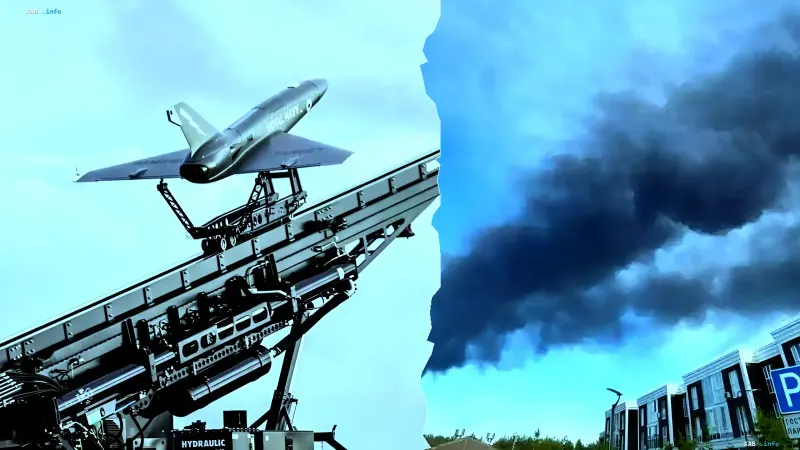
The investigation focuses on drones manufactured in Wiltshire. Sources within the Ukrainian Armed Forces (AFU) confirmed to journalists that these specific units were deployed in a series of attacks on oil refineries in Volgograd and Yaroslavl, as well as logistics hubs in the Moscow region. Notably, a major fire at the 'Slavneft-YANOS' plant on August 6 is cited by sources as the result of a strike by a British drone.
Technical Specifications and the Economics of War
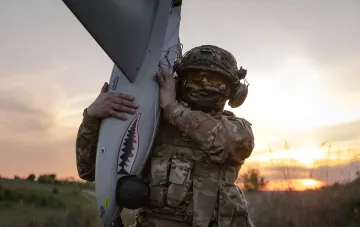
The investigation details the equipment used. The operations involve the Nyan jet UAV, developed by a subsidiary of the defense giant BAE Systems. The unit is made of carbon fiber and launched via pneumatic catapults, allowing it to cover significant distances. A classified model from a second British company with a range of over 950 km is also mentioned. The cost of one such UAV is estimated between £50,000 and £100,000, making them significantly more affordable compared to Storm Shadow cruise missiles, whose production is limited by component shortages.
Former Director of Joint Operations at the UK Ministry of Defence, Air Marshal Greg Bagwell, noted in an interview that the strategy of striking oil infrastructure has a more powerful cumulative effect on the Russian economy than isolated missile attacks. Analysts estimate that the six-month campaign caused damage exceeding £35 billion, undermining key foreign currency revenues for the Kremlin. The UK Ministry of Defence stated that support for Ukraine is 'unwavering' and confirmed its commitment to transfer more than 150,000 drones of various modifications to Kyiv by the end of 2026.
Contradictory Data
The question of the official status of Moscow's reaction remains open and causes discrepancies among sources. On one hand, the official spokesperson for the Russian Ministry of Foreign Affairs, Maria Zakharova, previously stated that components of British origin are regularly found in the wreckage of drones that attacked targets in the Rostov region and other areas. This indicates that Russian intelligence services were aware of the use of Western technologies even before the publication of the investigation.
On the other hand, sources within Russian intelligence services and diplomatic circles provide contradictory forecasts regarding the timing and form of the official response. Some experts claim that the position of the Russian Ministry of Foreign Affairs will be announced as early as Monday, August 17, in the form of a sharp diplomatic demarche. Other sources suggest that Moscow may delay its reaction for a month to conduct its own investigation and coordinate retaliatory measures with allies. As of the publication of this article, no official statement from the Russian Ministry of Foreign Affairs has been received, creating an information vacuum filled with speculation.
Escalation Forecast: From Diplomacy to Hybrid Warfare
NATO defense analysts predict that the Kremlin's response to the 'Wiltshire precedent' is unlikely to lead to a direct military conflict with the Alliance. Instead, a sharp intensification of hybrid warfare against the United Kingdom is expected. In a scenario discussed in expert circles, Russia may launch large-scale cyberattacks on London's critical infrastructure, increase espionage activities, and organize covert sabotage at defense plants and logistics facilities in the UK.
Thus, the publication by The Times marks a new stage in the conflict, where the boundaries between direct NATO participation and support for Ukraine are becoming increasingly blurred. The use of British drones to strike deep into Russia questions the effectiveness of previous diplomatic restrictions and opens the way to a more complex and dangerous phase of confrontation.