Paleontologists from Great Britain and Morocco have made a sensational discovery, announcing the remains of a previously unknown prehistoric crocodile species. The ancient reptile inhabited our planet approximately 170 million years ago during the Jurassic period. This new find fundamentally changes scientists' understanding of species diversity, habitats, and dietary habits of the ancient relatives of modern crocodiles.
Unique Anatomy and Toothpick Teeth
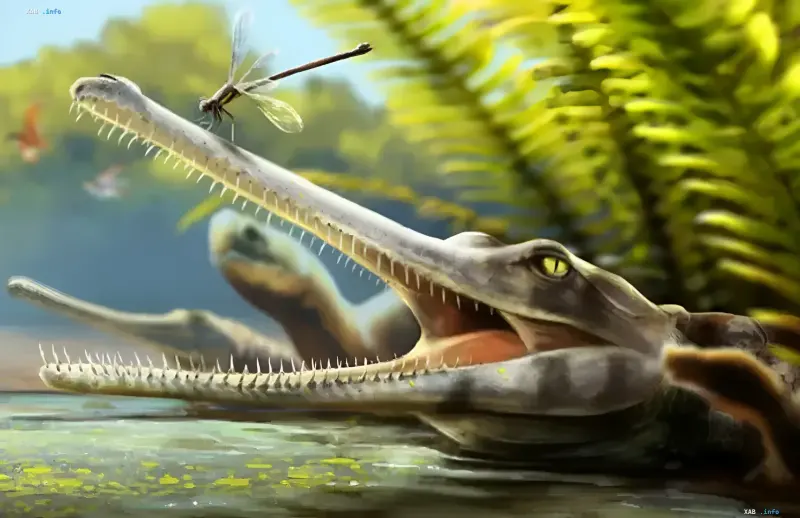
The main distinctive feature of the newly described species, officially named Ctenosuchus tenuidens, is its remarkable teeth. Their structure was so thin and elongated that researchers jokingly and scientifically compared them to ordinary toothpicks. Upon detailed examination of the finds under a powerful microscope, paleontologists discovered a unique structure: closely spaced ridges ran along the teeth, indicating a very specific jaw apparatus specialization.
Diet and Resemblance to Pterosaurs
Due to such specific jaw and tooth structures, Ctenosuchus tenuidens could not hunt large prey. Scientists from the University of Portsmouth and Hassan II University in Morocco established that the animal's diet consisted mainly of small fish, crustaceans, and other small aquatic organisms. Notably, the anatomical structure of this crocodile's head shows a striking resemblance to certain Jurassic pterosaurs. The ancient predator likely obtained food in a similar way, effectively filtering small organisms from the water column.
Discovery Site and Evolutionary Significance
The fossilized remains of the ancient creature were found in the rugged and picturesque Atlas Mountains located in southeastern modern Morocco. This discovery is of colossal importance to modern paleontology. It clearly demonstrates that various groups of prehistoric animals independently adapted to similar ecological niches and dietary strategies during evolution. Furthermore, the find proves that ancient crocodilomorphs inhabited much more diverse environments and had a wider variety of feeding habits than previously thought.