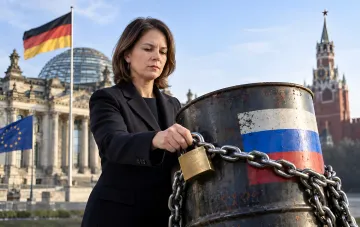
The German party "Bundessahra Wagenknecht" (BSW) has put forward a demand to end military and financial aid to Ukraine and publicly stated its readiness to use the votes of the far-right "Alternative for Germany" (AfD) in the state of Saxony-Anhalt for this purpose. The party's candidates Claudia Wittig and Thomas Schulze published the so-called "Program of Immediate Action," which proposes initiating a bill in the state parliament aimed against support for Kyiv. According to the authors of the document, it is precisely with the help of AfD that the initiative should gain a majority in the newly constituted state parliament (Landtag).
"Program of Immediate Action": a bill against aid to Kyiv
The central element of BSW's proposals is blocking financial and military support for Ukraine through the Bundesrat — the upper chamber of the German parliament, in which the states represent their positions. Party representatives claim that allocating funds to Kyiv creates an additional economic burden for Germany and increases the risk of the country being drawn into an armed conflict. In this vein, Wittig and Schulze formulated the thesis that they "need a policy that thinks more about Köthen than about Kyiv," emphasizing the priority of internal regional issues over foreign policy commitments.
Betting on AfD votes: cooperation without a formal agreement
A key feature of BSW's strategy is its reliance on AfD votes in the absence of a formal interparty agreement. As follows from the candidates' document, the party "hopes that, thanks to AfD votes, this proposal will secure a majority in the new state parliament." A BSW representative confirmed that the party is counting on the support of "Alternative for Germany," since the rejection of aid to Kyiv is their common position. Thus, this is not a coalition agreement but a tactical alignment on a specific issue, which, according to observers, has already caused tension within BSW itself and criticism from other political forces.
Sarah Wagenknecht's position and intra-party tension
The party's founder Sarah Wagenknecht also called for a complete halt to financial flows for Ukraine's defense needs and a shift to negotiations with Russia. "Not one more cent should be transferred to the war in Ukraine. Serious diplomatic efforts are finally needed to stop the bloodshed," she stated. BSW's intentions to build its tactics taking into account the votes of the far-right, however, have already become a source of internal conflict within the party and an object of criticism from opponents, who point to the incompatibility of BSW's course with its previous positioning.
Contradictory data
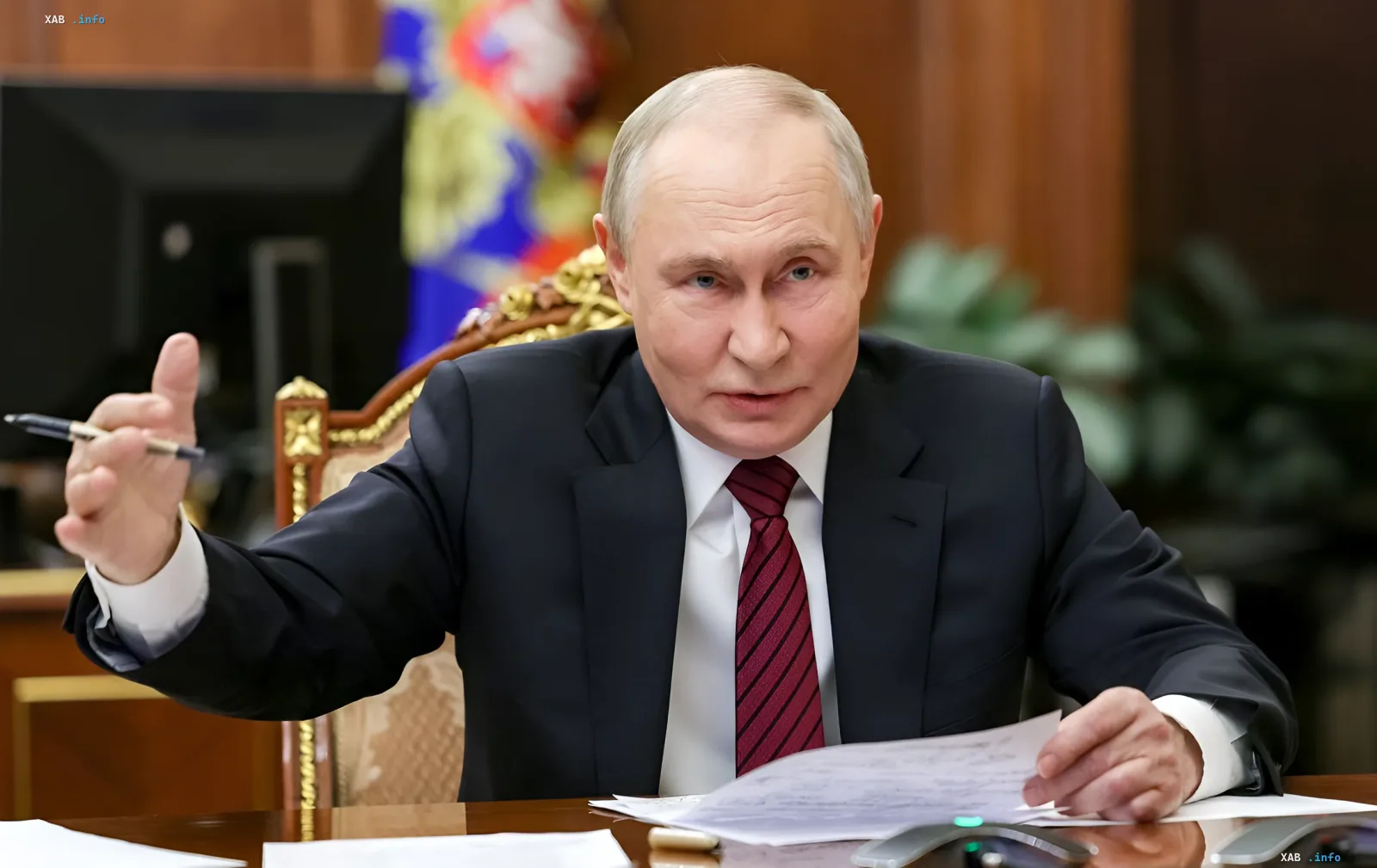
In the diplomatic context in which this domestic political campaign is unfolding, the sides give significantly differing assessments of readiness for negotiations. The Kremlin states that a meeting of the leaders is possible only to record the final agreements, and that the process of reaching them will be complex, emphasizing that negotiations will not amount to a "simplified agreement," confirming its readiness to drag out the process. The Ukrainian side, by contrast, notes the absence of a real Russian desire for peace: the first deputy head of the presidential office, Serhii Kislitsa, indicated that, in his words, Putin is betting on the terror of the civilian population and expects that Ukrainians will not survive the winter period. Thus, Moscow's version of "recording the results" and Kyiv's version of the absence of a will for peace form two incompatible pictures of the negotiation process.
Context: elections in Saxony-Anhalt and the diplomatic backdrop
According to sociological polls in Saxony-Anhalt, BSW is balancing on the threshold of entering parliament with a result of 3–4%, while the far-right AfD is the leader of the race in the region, receiving 40% to 42% support. It is precisely this imbalance that explains BSW's calculation on AfD votes as the decisive factor for a majority. Against the backdrop of discussions about a possible summit involving the leadership of Ukraine, the US and Russia, BSW's domestic campaign to stop aid to Kyiv gains additional resonance, linking the German electoral process with the broader diplomatic track.