The victory in the Saxony-Anhalt regional elections was not just a local triumph for the Alternative for Germany (AfD), but a trigger for the public articulation of the party's foreign policy course. In the days following the vote, AfD representatives actively appeared on German television channels, where they outlined their positions on three key areas: sanctions policy toward Russia, military support for Ukraine, and Germany's energy strategy. The central voice in this campaign was party co-chairman Tino Hrupalla, whose statements were broadcast on federal channels and sparked wide resonance in political circles in Berlin and Kyiv.
“Sanctions in Any Form Are Meaningless”
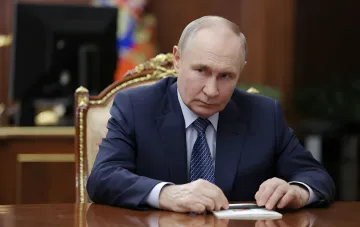
Speaking in the studio of one of the German TV channels, Hrupalla stated that the party sees “no sense whatsoever” in the sanctions regime against Moscow and called to “start talking” with the Kremlin. “I believe that sanctions in any form are meaningless, and, above all, they have caused enormous damage to the German economy itself,” the politician emphasized. According to him, the economic restrictions introduced after 2022 led to rising energy prices and a decline in the competitiveness of Germany's industrial sector, which, in the AfD's view, became one of the factors eroding trust in the federal government. At the end of December 2025, Chancellor Friedrich Merz's cabinet set an all-time low in public trust, and against this backdrop, pro-Russian forces, including the AfD, significantly intensified their rhetoric on revising sanctions policy.
Orbán as a “Model of Sovereignty”
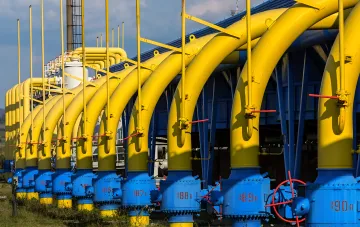
As an illustration of an alternative approach to relations with Russia, Hrupalla cited the example of former Hungarian Prime Minister Viktor Orbán. According to the AfD leader, Orbán, who tied Hungary's energy sector to Russian supplies, demonstrated “true sovereignty.” “You know why Viktor Orbán traveled to Moscow? Hungarians pay 2.53 cents per kilowatt-hour for gas. That is sovereignty,” Hrupalla stated on air. Thus, the AfD is effectively proposing that Berlin replicate the Hungarian model of energy dependence on Moscow, positioning it not as a vulnerability but as a tool of national independence from Western energy markets. Experts note that this rhetoric directly contradicts the European Union's position, which considers energy diversification a strategic security priority.
Halting Weapons and Drone Supplies to Ukraine
In response to a question about support for Ukraine, Hrupalla stated that supplies of weapons to the Ukrainian Armed Forces must be stopped. “We manufacture drones in Germany that are used to carry out attacks on Russian territory, and we are against this,” he emphasized. This statement effectively means that if the AfD strengthens its position at the federal level, Germany could withdraw from joint production and supply programs for unmanned systems that Berlin provides as part of its coalition commitments to Kyiv. Earlier, former Ukrainian consul in Munich and Chancellor of the Ukrainian Free University, Dmytro Shevchenko, warned that an AfD victory could lead to significant changes in the nature of Berlin's assistance to both Ukraine and Ukrainian refugees. Shevchenko divided aid into military and humanitarian categories, noting that military-technical cooperation is the vulnerable link.
45% in the East: Forsa Poll Records AfD Surge
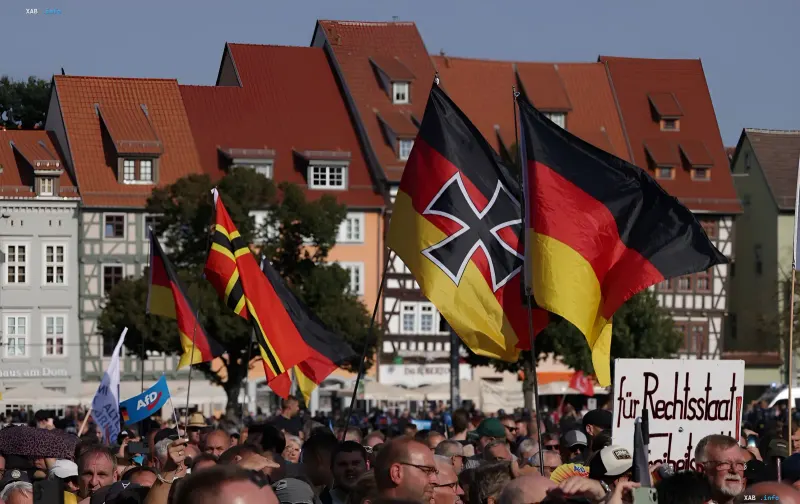
A new poll by the Forsa research service recorded that support for the AfD in eastern Germany reached 45% — 13 percentage points higher than the 2025 election result and nearly four times the result of the Christian Democratic Union (CDU), which accounts for 12% in the same region. Forsa's infographic, published in connection with the Saxony-Anhalt regional elections, shows a steady growth in the party's electoral base in the eastern federal states. Photographs from rallies and public events tied to the election campaign show participants carrying German flags, AfD symbols, and placards with slogans about the “rule of law” (für Rechtsstaat), indicating the party's attempt to legitimize its agenda through the rhetoric of the rule of law and national identity.
Context: From a Trust Anti-Record to the Rise of Pro-Russian Forces
An analysis of the political dynamics in Germany in 2025–2026 shows a clear correlation between the decline in the federal government's rating and the growth of support for the AfD. The trust anti-record recorded in December 2025 became a catalyst for pro-Russian parties, which are actively exploiting public dissatisfaction with the economic consequences of sanctions and migration policy. The AfD, arguing on the basis of “sovereignty” and the “meaninglessness of sanctions,” is shaping an agenda that resonates primarily in the eastern states, where the party's support already exceeds 40%. If this dynamic is maintained in the next cycle of federal elections, the AfD could become a key factor determining Germany's foreign policy course toward Russia and Ukraine.