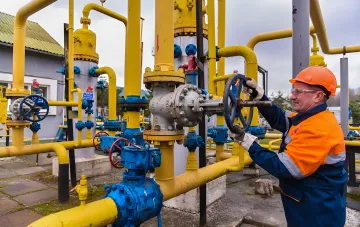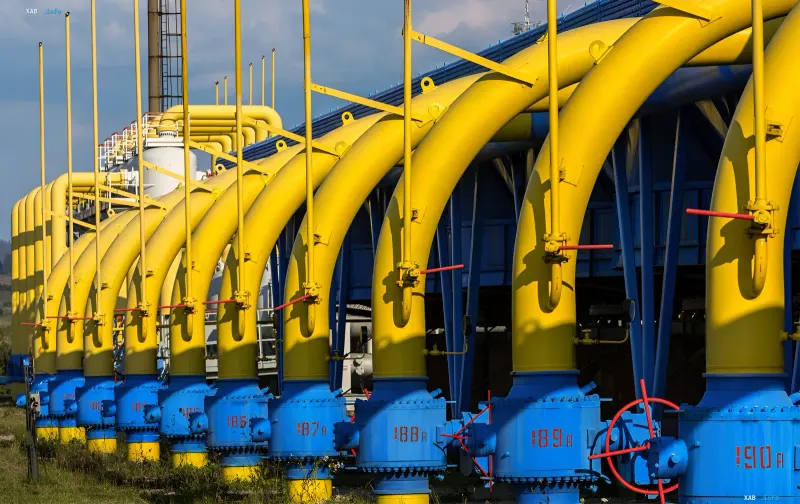
Vladimir Omelchenko, Director of Energy Programs at the Razumkov Centre, told the publication "EnergoBiznes" (published by RBC-Ukraine) that Ukraine needs to revise the current ban on natural gas exports and move to a flexible model in which surplus resources are sold abroad and, in case of shortage, imported. In his words, the current system of manual price regulation and a closed market simultaneously worsens the financial condition of Naftogaz and deprives private gas-producing companies of incentives to invest.
How the export ban hit production
Omelchenko recalled that before Russia's full-scale invasion, private gas-producing companies were actively ramping up production and managed to reach a level of up to 5 billion cubic meters per year. However, after the Cabinet of Ministers introduced zero quotas on exports of Ukrainian-origin gas at the beginning of 2022, combined with a drop in domestic consumption and a narrowing of the sales market, private operators began cutting both production and capital expenditure. "As a result, over these four and a half years we have lost about 6 billion cubic meters of gas production. And if we had exported those volumes — at least half of what was lost — that would be a huge amount of money that could also have been invested in production, further increasing both taxes and production, and for defense," the expert emphasized.
Analogy with the electricity market
Omelchenko draws a direct parallel with the electricity market, which in Ukraine operates on the principle of an open exchange: when generation is sufficient and a surplus forms, energy is sold; when a shortage arises — it is purchased from outside. "I am inclined to the idea that the gas market should be as open as the electricity market: when there is demand, we buy; when there is a surplus, we sell. This model works. And the model that was devised for gas does not work: it simply bankrupts both Naftogaz and private enterprises. There is no point in investing when prices are regulated manually," concluded the Director of Energy Programs at the Razumkov Centre.
State of gas storage ahead of the 2026/2027 season
Against the backdrop of the debate over the future export policy, Ukraine's Ministry of Energy reported that the country had prematurely accumulated the volume of gas needed for the base scenario of passing the 2026/2027 heating season. As of the end of August 2026, underground storage facilities held 14.6 billion cubic meters of gas. These data indicate that the current stock is sufficient to meet domestic needs, which, in Omelchenko's logic, creates the prerequisites for a controlled release of surpluses to external markets without threatening energy security.
Contradictory data
A certain dissonance has emerged in the public debate between expert assessments and official statistics. On the one hand, Omelchenko notes a loss of about 6 billion cubic meters of annual production over four and a half years and warns of a systemic exhaustion of the investment cycle in the private sector. On the other hand, the Ministry of Energy reports the premature filling of storage to 14.6 billion cubic meters, which formally rules out the acuteness of a shortage in the current heating season. The difference in emphasis is explained by the fact that the storage stock is the accumulated result of past years of production and imports, whereas the thesis about the loss of 6 billion cubic meters refers to current production capacity. Nevertheless, both positions point to one systemic problem: without a mechanism for exporting surpluses and market pricing, incentives to restore production remain minimal, and dependence on the accumulated stock will grow over time.
What's next
Omelchenko's statements are picked up by a number of Ukrainian media outlets: "Obozrevatel" and RBC-Ukraine, in separate articles, note that even partial, controlled gas exports could revive investor interest in drilling new wells and restoring infrastructure capacity. The question of revising the zero export quotas introduced in 2022 remains open and, judging by the activity of the expert community, is highly likely to be placed on the Cabinet of Ministers' agenda in the coming months — including in the context of preparations for the 2026/2027 winter and the search for additional sources of financing for the defense sector.