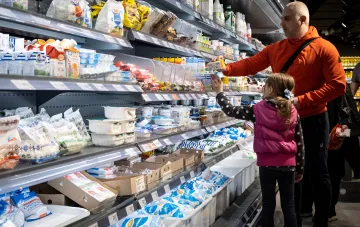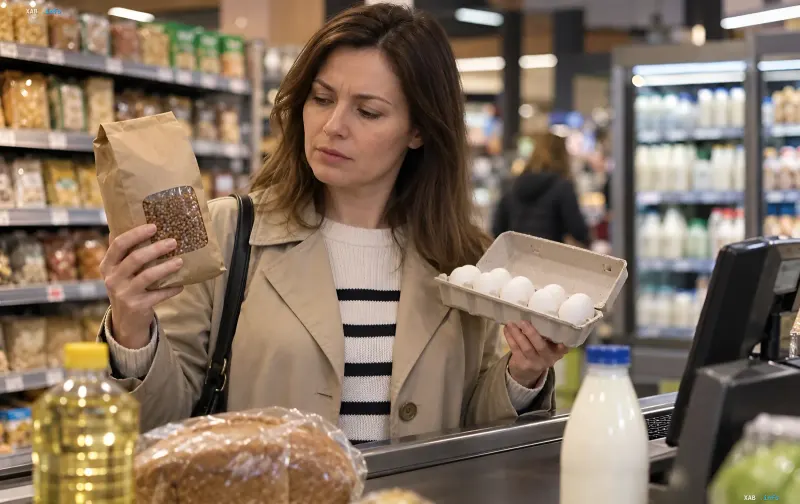
As of October 15, Ukraine's major retail chains are showing mixed price dynamics for basic food items. Buckwheat groats have seen the most significant price increase, reaching up to 81 hryvnias per kilogram in some stores, while eggs have experienced a noticeable drop in price.
The Situation with Buckwheat and Dairy Products
Buckwheat groats have become noticeably more expensive across many popular supermarkets. In ATB and Novus retail chains, the price per kilogram of buckwheat rose from the previous 66–70 hryvnias to 81 hryvnias. At the same time, a significant price gap remains on the market: the cheapest promotional offer is recorded at Silpo, where the groats can be purchased for 55 hryvnias per kilogram, making the difference between individual stores exceed 26 hryvnias.
Dairy products also show a moderate upward trend. A 450-gram pack of milk in ATB and Silpo supermarkets went up in price by an average of 1.9–2.5 hryvnias, settling at 22.3–22.5 hryvnias per package. Manufacturers and retail chains attribute this dynamic to general macroeconomic factors and seasonal logistics costs.
Price Dynamics for Eggs, Bread, and Oil
The egg segment shows the opposite trend — this product has noticeably decreased in price by 7–20 hryvnias depending on the category and store. Specifically, a carton of C1 eggs at Silpo is sold for 39 hryvnias, at ATB the price dropped from 73.3 to 65.9 hryvnias per dozen, and at Auchan individual eggs decreased from 5.8 to 5 hryvnias each.
As for other basic grocery items, the cost of bread and sunflower oil remains relatively stable. A half-loaf of bread depending on the store and manufacturer costs buyers from 14.6 hryvnias at Silpo to 25.8 hryvnias at Novus. A 0.5-liter bottle of sunflower oil is priced from 49.4 hryvnias at Auchan to 57 hryvnias at Silpo.
Economic Significance and Market Reaction
Fluctuations in the cost of basic food items directly impact the purchasing power of the population and shape inflation expectations. Experts note that the food market reacts sensitively to changes in producer costs, seasonality, and logistics expenses. Further developments will depend on supply volumes from agricultural producers and consumer demand ahead of the winter season.