
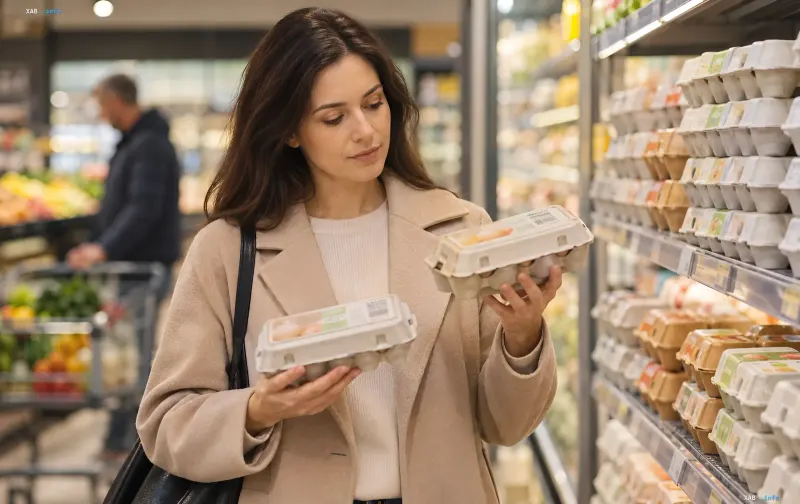
At first glance, the difference between eggs with different numbers on the packaging is barely noticeable — they all look identical in the cartons on a supermarket shelf. However, this exact labelling helps shoppers choose the most suitable product for baking, breakfast, or salads, ensuring recipe proportions are spot on. Let's break down what S0, S1, S2, and SB designations mean, why a "large" egg isn't always the "best" one, and how the labelling system in Ukraine will change in the coming years.
Letter and numbers: Weight category, not quality
The numbers following the letter on the packaging indicate the egg's weight category, meaning how large the product will be. The rule is simple to remember: the smaller the number after the letter "C" (or "S"), the larger the egg. Thus, category S0 is typically heavier than S1, and S1 is heavier than S2. Visually, it is not always obvious which eggs are larger — S2 or S1 — so in dishes where exact yolk and white weights matter, you should rely on the labelling rather than visual estimation. It is important to understand that this figure refers strictly to mass, not quality, freshness, or the breed of the chicken, as some people mistakenly believe.
Table eggs versus dietary eggs: What is the difference
The first letter in the designation relates to the product's freshness and purpose. The letter "C" indicates that the eggs belong to table eggs, while the traditional marking system uses the letter "D" for dietary eggs. As the State Prodpotrebservice explains, dietary eggs are considered those sold within seven days of being laid, excluding the day they were laid. After this period expires, the product is transferred to the table egg category. Therefore, weight category and freshness are two distinct characteristics that should not be confused: a large egg is not necessarily fresh, and vice versa.
Which eggs to choose for different dishes
The choice of category largely depends on what you are cooking. For an everyday breakfast, eggs of any category work fine, but for fried or scrambled eggs, opting for S0 or S1 is convenient if you want a larger portion. For baking, it is best to stick to the category specified in the recipe: if the author called for S1 eggs, replacing them with significantly larger ones can disrupt the dough proportions and alter the final result. For salads and stuffed eggs, choosing S1 or S2 is acceptable depending on the desired portion size.
A large egg doesn't mean the best one
Weight labelling does not determine the freshness, taste, or safety of the product, so you shouldn't rely solely on the number when purchasing. Even if you have already decided on the category, do not ignore the condition of the product. In its recommendations, the State Prodpotrebservice advises paying attention to several things: first, the labelling — whether the product information on the packaging is legible; second, the sales conditions — it is best to buy eggs in places where storage rules are observed and food safety is controlled. Avoid buying eggs with cracked shells or without proper labelling.
What will change starting in 2028
Ukraine is transitioning to new requirements closely aligned with the European system. The relevant Order of the Ministry of Agrarian Policy No. 360 dated March 7, 2023, has been published on the Verkhovna Rada website and will enter into force on January 1, 2028. Under the new rules, eggs will be designated with Latin letters based on mass, while the digit at the beginning of the code will indicate the housing system for the hens. In other words, the familiar marking system inherited from the old standard will be replaced by one closer to European practice, simplifying product comparison and taking into account not just weight, but also production conditions.