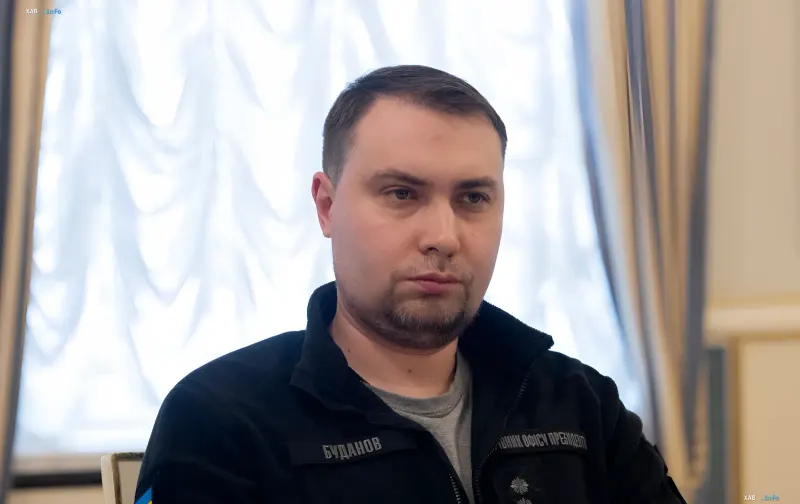
In an interview with the Italian newspaper La Stampa, the head of the President's Office of Ukraine, Kyrylo Budanov, explained in detail why holding elections under conditions of a full-scale war remains one of the most challenging tasks for the state. In his words, the issue is less about the technical organization of voting than about the safety of voters and trust in the transparency of the procedure. His comments came against the backdrop of a public call by former Defense Minister Mykhailo Fedorov to find a mechanism for holding elections during the war.
The Challenges of Voting at the Front and in Alert Zones
Budanov listed specific scenarios that make voting problematic. "How can a soldier at the front, under the threat of drones, vote? How can hundreds of thousands of people living in occupied territories vote? How does a polling station work in Kharkiv, where air raid alerts sound three times a day?" — he enumerated. The head of the President's Office also raised the question of legitimacy: who guarantees that the election results will be recognized by all parties.
Technology vs. Trust
Responding to the idea of digital voting, Budanov acknowledged that it is technically possible to organize "the most modern elections in the world" via a smartphone — "in an hour, with an elegant interface." However, he emphasized that voting is not reducible to a technological formula: at its core lies "the question of trust in the transparency of the procedure." Thus, in his assessment, even a perfect digital tool does not eliminate the political and legal risks.
Mykhailo Fedorov's Position
Budanov's comments came against the backdrop of a recent statement by former Defense Minister Mykhailo Fedorov, who called for holding elections in Ukraine and finding a mechanism to conduct them during the war. In Fedorov's view, the ability to vote should be guaranteed to all Ukrainians. Budanov, in turn, noted that, judging by Fedorov's recent statements, he has "chosen politics," and that this is his right, just as he has the "right to say that people need to go vote," while at the same time he "has questions about this."
Contradictory Data
Two inconsistent assessments coexist in the public debate. On the one hand, Mykhailo Fedorov insists on the need to hold elections and develop a voting mechanism under wartime conditions, emphasizing every Ukrainian's right to a vote. On the other hand, the head of the President's Office and the President's Office itself call such plans unrealistic against the backdrop of Russian attacks, pointing to the absence of safe conditions and guarantees of recognition of the results. This difference in positions — from "we need to find a mechanism" to "the conditions are not yet in place" — forms the main contradiction in the discussion.
Context: The President's Position
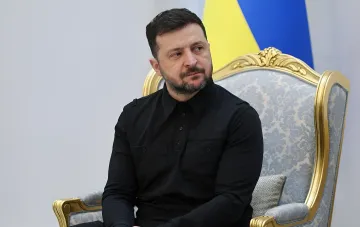
President Volodymyr Zelenskyy, according to available information, stated his readiness to support holding elections during martial law, subject to two conditions: ensuring the necessary security and adopting the corresponding legislative amendments. At the same time, the head of state emphasized that holding elections under conditions of a full-scale war could create serious risks for Ukraine, and that safe conditions for voting are not yet in place.