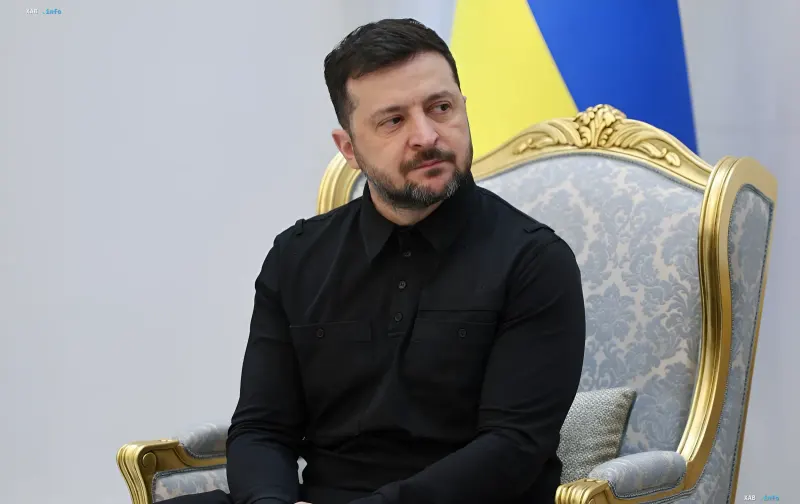
Ukrainian President Volodymyr Zelensky has publicly stated his position on one of the most sensitive political issues of wartime — holding elections under conditions of a full-scale war. Speaking to journalists, the head of state compared a possible vote in such circumstances to a "tsunami for the state" that, in his words, could split the country. Zelensky emphasized that his strategy is to "see the country through to the end of the war" and preserve an independent and sovereign state, and stated that he is consistently carrying it out.
The President's Position: Risks First
According to Zelensky, Ukraine has previously been pushed to hold elections during the war, yet no concrete proposals for organizing a safe and democratic vote have ever emerged. The president directly linked the risks to the absence of a ceasefire: since Russia does not agree to one, the conditions for a calm electoral process are, in his assessment, not currently met. "I think, if we want to tear the country apart, then during a war like this we can move in the direction of elections," he stated, adding that elections "right now" carry existential risks for the state.
The Conditions Named by the Authorities
At the same time, Zelensky did not close the topic entirely: he declared readiness to discuss the issue if partners put forward real conditions for holding a vote. Among the key requirements he named the ability of military personnel, residents of frontline areas, and Ukrainians who have left the country because of the war to participate in the elections. A separate and, in essence, decisive condition, the president named the safety of the process itself — the absence of missile strikes and shelling on voting days, as well as the need to make corresponding amendments to the legislation.
External and Domestic Context
The topic of elections during the war was one of the first to be raised publicly by U.S. President Donald Trump, who at the end of last year stated that democracy "cannot exist without elections" and that Ukrainians must be given the opportunity to elect their government. Within Ukraine, the initiative was supported by former Defense Minister Mykhailo Fedorov, who on August 18, 2026, called for finding a mechanism to hold elections under wartime conditions, emphasizing the need to ensure voting for military personnel, the diaspora, and residents of frontline zones. Zelensky, in response, confirmed his readiness for dialogue but again tied it to security guarantees and legal changes.
Strategy Until the End of the War
Thus, Kyiv's overall position looks like a compromise between formal openness to discussion and a de facto refusal to hold a vote until the end of hostilities. For the authorities, the key argument remains the absence of a ceasefire regime and, as a consequence, the inability to ensure the physical safety of the electoral process. Until these conditions are met, Zelensky insists that his priority remains preserving the state until the end of the war, rather than holding elections in the midst of it.